A Cousin of the Purslane
Today we discuss a plant that originates from South America, specifically _Portulaca grandiflora_, known for its creeping habit and vibrant flowers.

Today we talk about a plant that originates from South America. Although many of us see them in Asian bazaars.
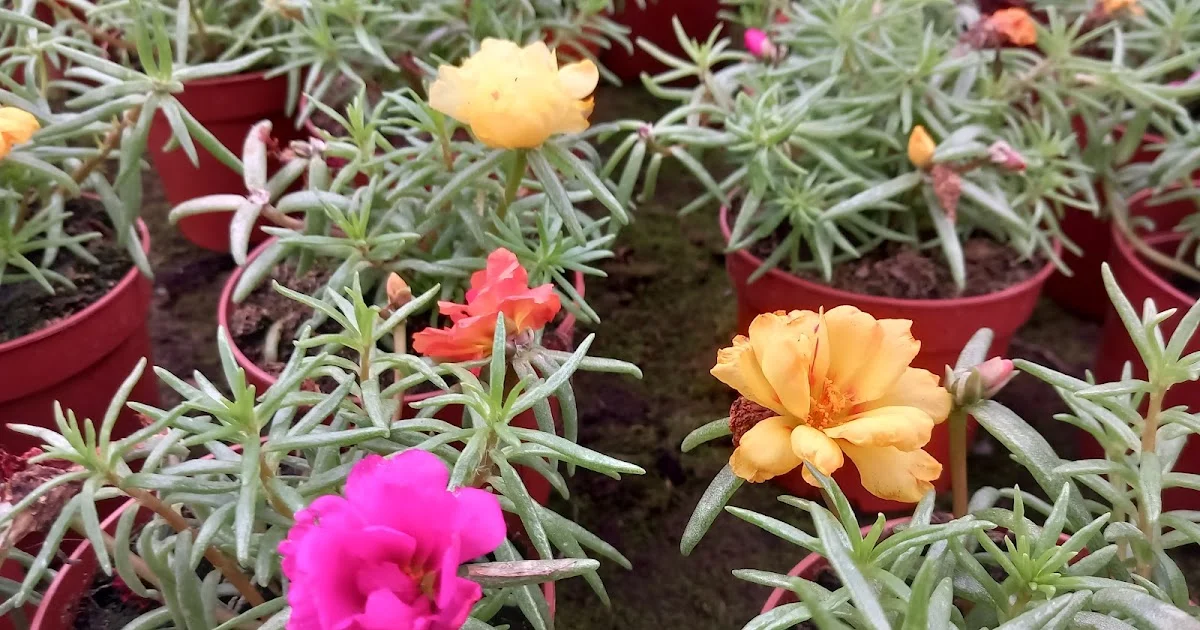
It is a species of the genus Portulaca (and family Portulacaceae), specifically Portulaca grandiflora, an annual plant related to our Portulaca oleracea or Purslane. Originating in Brazil, it has established itself worldwide thanks to its use in gardening.
In our case, we are interested in this annual plant for its creeping habit and cylindrical, succulent-looking leaves, which, without rising more than 10 cm from the ground, cover "empty" spaces without occupying verticality in the design and provide flowering (There are various flower colors from white, yellow to pink, even in a single specimen, with variations of single or double flowers. It blooms in a staggered manner for months. The bell-shaped flowers only open during the day, closing at sunset, which may lead one to choose or discard it if the habits of the people for whom we design the garden are opposite and they will not see the plant in its splendor.

It is an annual plant (perennial if the climate is very mild) that is quite popular now in spring and summer. Lately, it has made a place for itself in nurseries and "oriental bazaars," at least in my area. It is as common, or almost, as Petunias, Verbenas, Gazanias, or Geraniums...
It is a drought-tolerant plant; in fact, it perishes in waterlogged soils (this is not an excuse to forget to water it). It withstands poor soils, does not tolerate the cold, and prefers to live in sunny exposure. If possible, we will avoid calcareous soils or provide more acidic substrates to cultivate Portulaca.

It is widely used in gardening, as it adapts well as a ground cover, spreading up to 40 cm or more. It can be used in rock gardens, "flowering" walls, in front of much taller plant compositions, in containers, vertical gardens, and to delineate paths.

It is a hardy plant, although it can suffer from some pests, but it is not very delicate, making it interesting for those who do not want to be constantly attentive or require treatments repeatedly...
They can be propagated by stem cuttings or by seed; in this regard, all the websites and books consulted agree.
To be honest, I don't "love" it, but I recognize that it has its audience.
Until next week.