Winter-Hardy Hibiscus: 3 Beautiful Varieties and Care Tips
If you're considering planting a hibiscus, it's crucial to know which varieties can withstand winter temperatures. Discover three beautiful types and how to care for them.
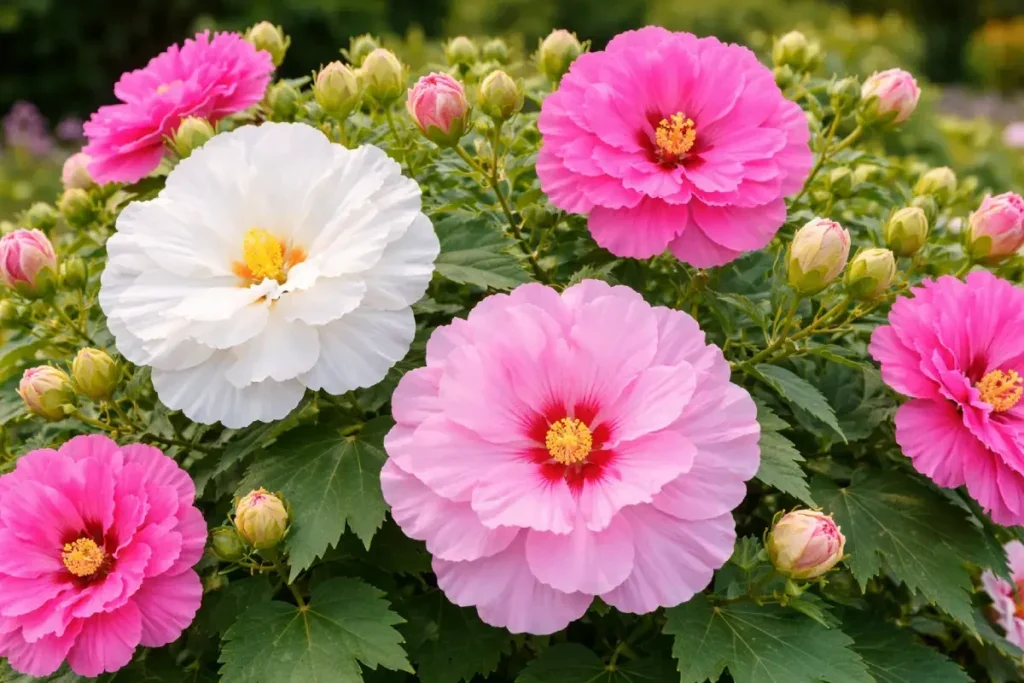
If you're considering planting a hibiscus in your garden, it's essential to pay attention to its winter hardiness. Not all varieties can withstand cold winter temperatures. Here, I will explain which ones can and how to keep them healthy year-round.
A hibiscus in your garden adds a touch of tropical flair with its large, vibrant flowers in shades of white, pink, violet, or deep red, instantly drawing attention. However, as winter approaches, one may wonder: can the hibiscus handle the cooler temperatures?
Indeed, there are significant differences among hibiscus species. While some varieties are sensitive to frost and must be overwintered in pots, others can endure temperatures well below freezing. Below, I will outline which types are winter-hardy and how to care for them throughout the year.
Winter Hardiness in Hibiscus
Most hibiscus plants available at garden centers belong to the species Hibiscus rosa-sinensis, commonly known as the Chinese hibiscus. This variety is not winter-hardy and becomes sensitive to temperatures below approximately 10 °C, suffering damage when frost occurs. Consequently, these plants should never be left outside during the winter in Germany. As temperatures drop in the fall, it’s crucial to properly overwinter the hibiscus indoors in a bright, cool location.
In contrast, certain outdoor hibiscus species have been specifically bred for cooler climates or originate from regions with harsh winters. Depending on the species, garden-planted specimens can survive temperatures ranging from about -15 °C to -25 °C, and often even lower if well-established.
Notable winter-hardy species include the garden hibiscus (Hibiscus syriacus), the swamp hibiscus (Hibiscus moscheutos), and, to some extent, the mandel hibiscus (Hibiscus mutabilis).
Winter-Hardy Hibiscus Varieties
🌺 Garden Hibiscus (Hibiscus syriacus): The Classic for Gardens
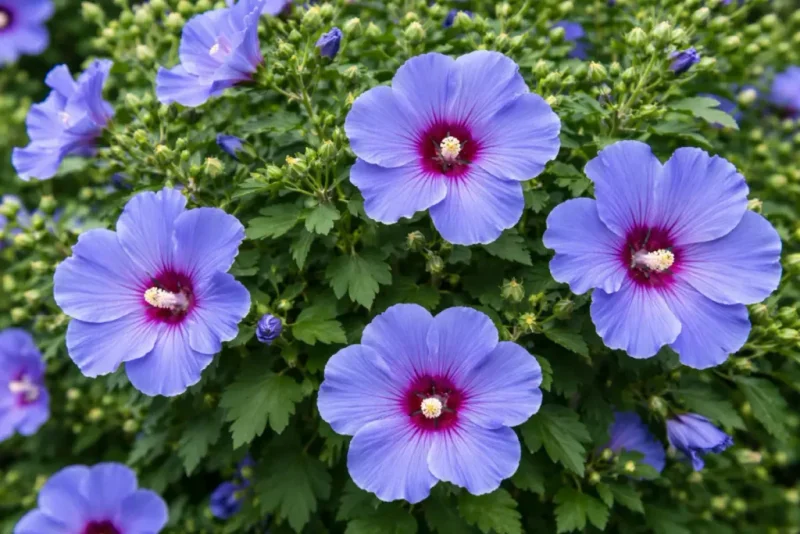
The garden hibiscus is perhaps the most recognized winter-hardy hibiscus species in Germany. This upright shrub has a loose branching structure and can reach heights of about 2 to 4 meters. Its leaves are medium green with a slight lobed appearance.
Unlike other hibiscus types, this variety blooms relatively late in the year, typically between July and September, making it particularly appealing as many other shrubs have already finished blooming by this time.
❄️ Frost Hardiness and Location
Well-established plants can tolerate temperatures down to about -20 °C. However, a sunny, sheltered location is essential, especially in windy areas. The soil should be well-draining and nutrient-rich, as the garden hibiscus does not tolerate waterlogging.
Popular Varieties of Garden Hibiscus
- ‘Blue Bird’: Large, blue-violet flowers with a striking dark center, very robust.
- ‘Duc de Brabant’: Filled, dark red flowers, looks particularly lush in the garden.
- ‘Red Heart’: White flowers with a red center, classic and elegant.
These varieties are considered reliably winter-hardy and are widely available at garden centers.
🌺 Mandel Hibiscus (Hibiscus mutabilis): The Transformer
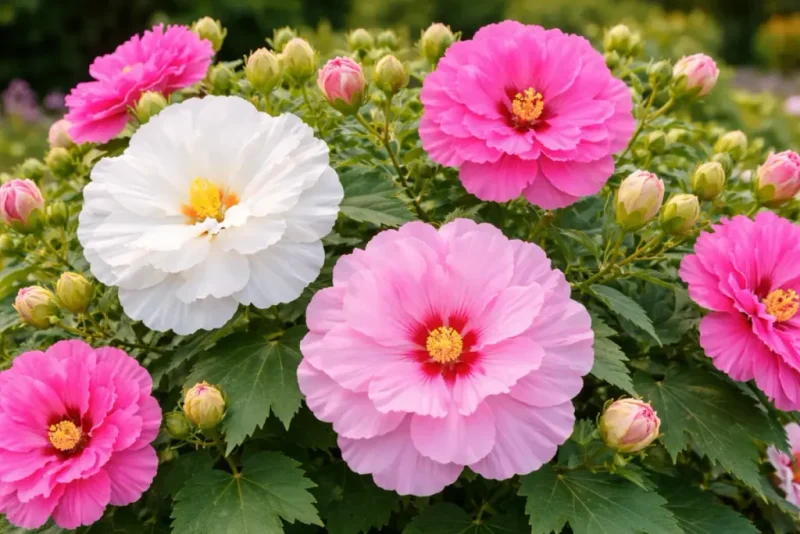
The mandel hibiscus is somewhat less well-known. It typically grows as a small tree or large shrub, reaching heights of about 2 to 3 meters. Its leaves are reminiscent of maple. What sets this plant apart are its flowers, which open white and gradually change color throughout the day to shades of pink and eventually a deep red, creating the appearance of multiple colors blooming simultaneously.
❄️ Frost Hardiness and Location
The mandel hibiscus is only conditionally winter-hardy, tolerating temperatures down to about -10 °C. If temperatures drop further, it requires winter protection. Ideally, it should be placed in a sheltered location, such as against a house wall.
Popular Varieties of Mandel Hibiscus
- ‘Rubra’: Striking deep red coloration, particularly eye-catching.
- ‘Plena’: Filled flowers with soft color gradients.
Important: In milder regions of Germany, this hibiscus species can be grown outdoors, while in colder areas, it is better suited for container cultivation.
🌺 Swamp Hibiscus (Hibiscus moscheutos): Large Flowers for Sunny Spots
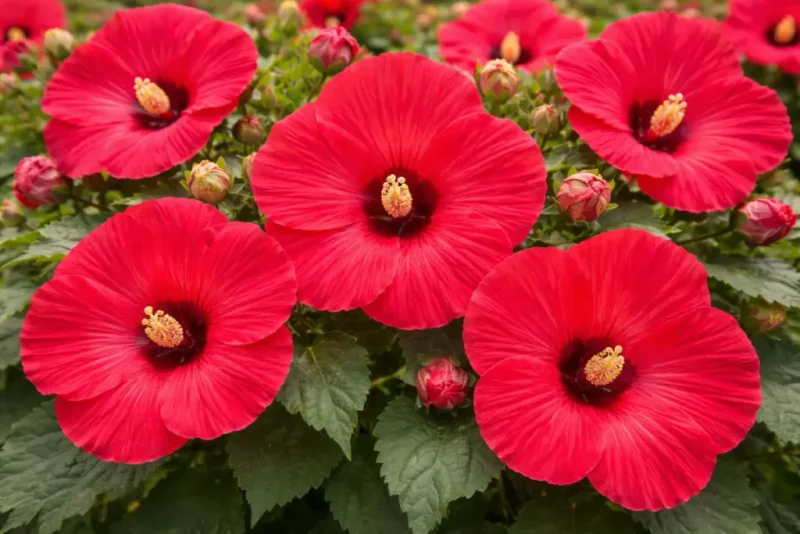
The swamp hibiscus boasts enormous flowers, giving it a nearly tropical appearance. This species grows herbaceous and dies back completely in winter, sprouting anew in spring to heights of about 1 to 1.5 meters. Its flowers bloom between July and September, reaching diameters of up to 25 cm.
❄️ Frost Hardiness and Location
The rootstock is highly frost-resistant and can survive temperatures down to about -25 °C. However, a sunny location with ample moisture is crucial, as the swamp hibiscus thrives in wet soils and can even tolerate periodically flooded areas.
Popular Varieties of Swamp Hibiscus
- ‘Luna Red’: Bright red flowers with compact growth.
- ‘Luna White’: Pure white flowers, very striking.
- ‘Summer Storm’: Pink flowers with dark foliage.
These varieties are well-suited for sunny perennial borders and look stunning along garden ponds.
Tips for Overwintering Winter-Hardy Hibiscus
Being winter-hardy does not mean these plants can survive winter unprotected. Even robust varieties can be sensitive to certain weather conditions. In the initial years after planting, additional protection is recommended as the roots are not yet sufficiently developed and are thus more susceptible to frost and temperature fluctuations. Here are some tips to consider:
- A mulch layer of leaves or bark mulch protects the root area from severe freezing and retains moisture in the soil.
- In very cold winters, using a fleece can shield the shoots from icy winds and frost damage.
- Container plants should be kept frost-free or at least protected, ideally near a house wall or under an eave.
- Ensure excess water can drain well.
- Do not remove winter protection too early, as late frosts in spring can cause more damage than the winter itself.
Planting Tips for Winter-Hardy Hibiscus
▪️ Timing:
The best time to plant is in spring, around April to May, allowing the plant ample time to establish before winter.
▪️ Location:
A sunny spot is ideal for winter-hardy hibiscus. While it can tolerate partial shade, it generally produces fewer flowers in such conditions.
▪️ Soil:
The soil should be loose, well-draining, and rich in humus. If you have heavy soils in your garden, you can improve them with sand or compost.
▪️ Planting Instructions:
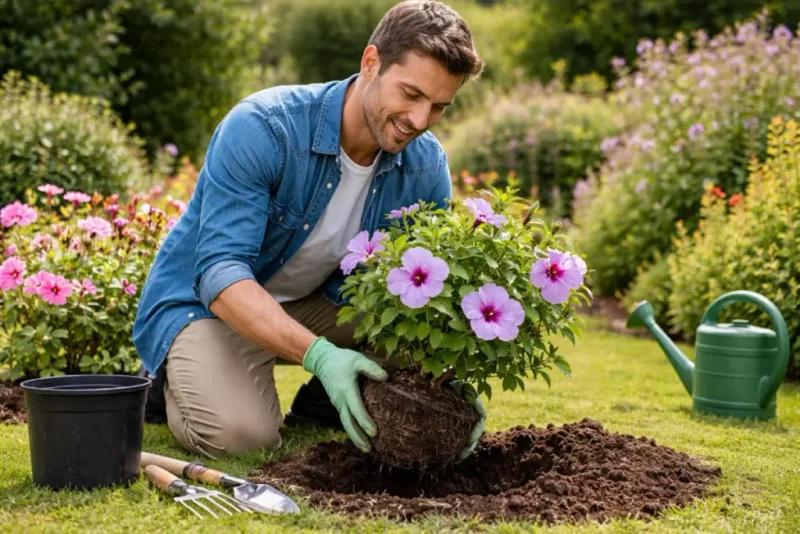
- Dig a planting hole approximately twice the size of the root ball.
- Loosen the soil in the hole thoroughly.
- Place the plant so that it is at the same level as it was in the pot.
- Fill the hole with soil and lightly press it down.
- Water thoroughly afterward.
- To ensure optimal water access to the roots, create a watering rim around the plant.
To ensure your winter-hardy hibiscus thrives throughout the seasons, it requires some care. Here are a few tips:
▪️ Watering:
During the growing season, particularly in summer, the hibiscus needs plenty of water. Ensure the soil remains evenly moist, but avoid waterlogging.
▪️ Fertilizing:
From April to August, fertilize your winter-hardy hibiscus, preferably with organic fertilizers like compost, which provide long-term nutrients to the soil. This is especially ideal for planted hibiscus shrubs, as compost not only supplies nutrients but also improves the soil's water retention ability. Alternatively, you can use liquid fertilizer for flowering plants, adding it to the watering can every one to two weeks.
💡 Tip: Never fertilize the hibiscus on completely dry soil. Water the plant first with plain water, then follow with the fertilized water to avoid root damage and enhance nutrient absorption.