
Understanding and Managing Martens in Your Garden
Martens can create disturbances in gardens. Learn how to identify their presence, understand their behavior, and discover effective strategies for managing them.

If you notice signs of disturbance in your garden at night, it could be a marten. These small creatures can cause quite a stir in your green space. Here are some tips for managing their presence.
Discovering disturbed flower beds, scattered feathers, or droppings in your garden can indicate that a marten has been active in your space. These adaptable predators thrive in urban environments, posing challenges for gardeners.
Martens are curious, agile animals and exceptional climbers. Gardens provide them with essential resources such as food, shelter, and quiet retreats. They tend to roam at night when it's calm, leaving behind clues that may initially seem puzzling.
To help you identify whether a marten is in your garden, this article outlines key information about these animals, including how to recognize them, the damage they can cause, and effective measures to deter them.
Which Marten Species Live in Germany?

Germany is home to several marten species, with the stone marten and the pine marten being the most common.
The stone marten is a cultural follower, adept at living in human environments. It often makes its home in barns, garages, attics, and quiet corners of gardens.
In contrast, the pine marten prefers a more secluded lifestyle, primarily inhabiting forests. It is less frequently seen in urban areas and is more common in large parks or wooded regions.
| Species | Characteristics | Habitat | |----------------|-------------------------------------|-----------------------------| | Stone marten | Light grey to brown fur, white throat patch | Cities, villages, attics | | Pine marten | Darker fur, yellowish throat patch | Forests, large parks |
How to Identify Martens
Martens are among the smaller carnivores in Europe, with adults measuring about 40 to 55 cm in body length, complemented by a bushy tail of 20 to 30 cm. They typically weigh between 1 and 2 kg.
Their slender, elongated bodies allow them to squeeze through tight spaces and climb effortlessly over walls and branches. This adaptability enables them to access attics, sheds, or garden houses, often through openings as small as 5 cm.
A notable feature is their bushy tail, which aids in climbing and balancing. Despite their short legs, they navigate heights with ease.
Their fur is generally grey to brown, with distinctive throat patches—white and often forked in the stone marten, and yellowish to orange and round in the pine marten.
Martens possess a keen sense of smell, allowing them to detect food from considerable distances. This ability helps them locate hidden eggs, small rodents, or fallen fruit in gardens quickly.
Marten Lifestyle

Habitat:
Martens are highly adaptable animals. Originally forest dwellers, stone martens have increasingly settled in urban areas, finding refuge in attics, wood piles, garden sheds, or dense hedges.
Typically, they rest in their shelters during the day and become active at night, foraging for food. They can cover several kilometers in a single night, skillfully jumping over fences and squeezing through small openings.
Diet:
While foraging, martens are not particularly picky eaters. As omnivores, they have a strong preference for animal-based food, targeting mice, rats, birds, eggs, insects, and frogs. In rural areas, they may also raid chicken coops.
They supplement their diet with berries, fallen fruit, and other plant-based foods, especially during late summer and autumn when fruits are abundant. They also enjoy nuts, garden produce, and scraps from compost heaps.
Reproduction:
Mating season occurs in the summer, during which martens are especially active in their search for mates. Although mating happens in summer, the young are not born until the following spring due to a phenomenon known as delayed implantation. The embryos develop later, after several months.
Typically, a female marten gives birth to three to four young, which are born blind and entirely dependent on their mother. They remain hidden in the nest during their early weeks. After a few months, the young martens leave the nest to establish their own territories, where they will forage for food and find shelter.
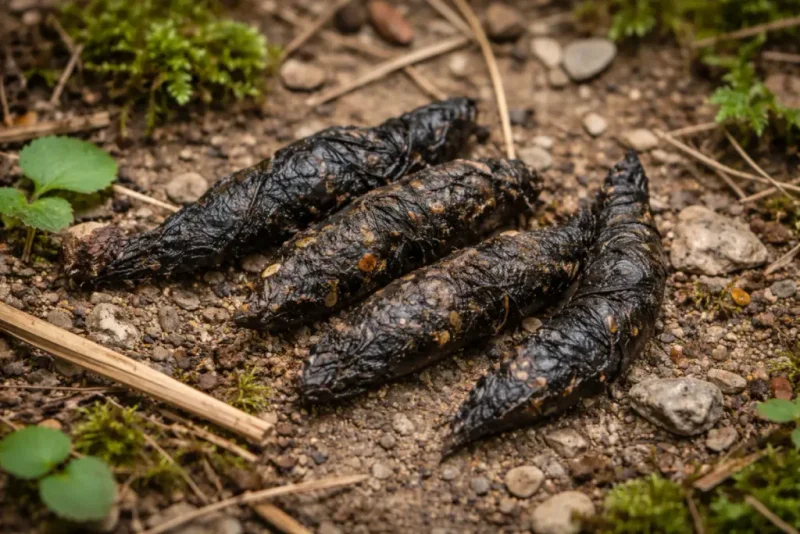
Gardeners often notice martens first through unusual noises or signs. At night, these creatures can be heard making sounds like thumping, scratching, or quick footsteps in gardens or attics. However, there are clearer indicators of their presence:
- Droppings with twisted ends
- Scattered feathers or animal remains
- Upset flower pots
- Ripped garbage bags
- Nibbled fallen fruit
- Small paw prints in soft soil
Marten droppings are particularly recognizable, often containing fur, bones, or fruit seeds. They tend to leave droppings in visible spots, such as on stones, walls, or patio slabs, to mark their territory.
Scattered feathers in the garden can also indicate a marten's presence, especially if it has preyed on birds, leaving behind a trail of feathers.
Additionally, you may notice small pathways in tall grass or between flower beds, as martens often use the same routes through their territory repeatedly.
Damage Caused by Martens in Gardens
A single marten can wreak significant havoc in a garden, particularly in areas with easy access to food. Common damages include:
- Raided chicken coops
- Destroyed insulation in garden sheds
- Turned-over flower beds
- Disturbed compost piles
- Damaged pond liners
- Scattered food remnants
- Opened trash bins
These visible damages are often accompanied by noise, as martens can be quite active at night, running and playing, particularly under roof tiles or in wooden structures.
Plants may also suffer indirectly; when martens dig through flower beds or hunt for mice, they can uproot young plants or newly planted seedlings.
Deterring Martens in the Garden
If you discover a marten in your garden, it's important to note that these animals are protected in Germany. It is illegal to harm or kill them. Thus, managing a marten problem is about deterring rather than eliminating them.
➜ Using Odors Against Martens
One initial approach is to use scents as a deterrent. For instance, distributing dog hair around potential entry points or placing vinegar-soaked cloths in areas frequented by martens can be effective. Strong-smelling plants like lavender, garlic, or peppermint can also serve as natural repellents due to their intense odors. Commercial repellents are also available.

The effectiveness of these home remedies is often temporary, as martens can quickly acclimate to new smells. Therefore, these measures need to be reapplied regularly. As the scent diminishes, so does its repellent effect.
➜ Technical Solutions
Various devices are available for deterring martens. These include ultrasonic devices with intense flashing lights. They emit sounds that are barely audible to humans, with frequencies that automatically change to prevent martens from getting used to them. The flashing light can irritate nocturnal animals and may encourage them to avoid certain areas. For best results, place these devices on house walls, garden sheds, or along fences.
The advantage of ultrasonic devices with flashing lights is that they can also repel raccoons, foxes, and deer from your garden.

- Double Protection: The device combines sound and light to deter martens effectively.
- User-Friendly: Easy to install and maintain, ensuring a hassle-free experience.
By understanding the habits and characteristics of martens, gardeners can implement effective strategies to protect their green spaces from these nocturnal intruders.