The Unexpected Benefits of White Clover in Gardening
Experienced gardeners are rediscovering the benefits of white clover, a spontaneous legume that enriches soil naturally. This article explores its agronomic advantages and ecological impact.
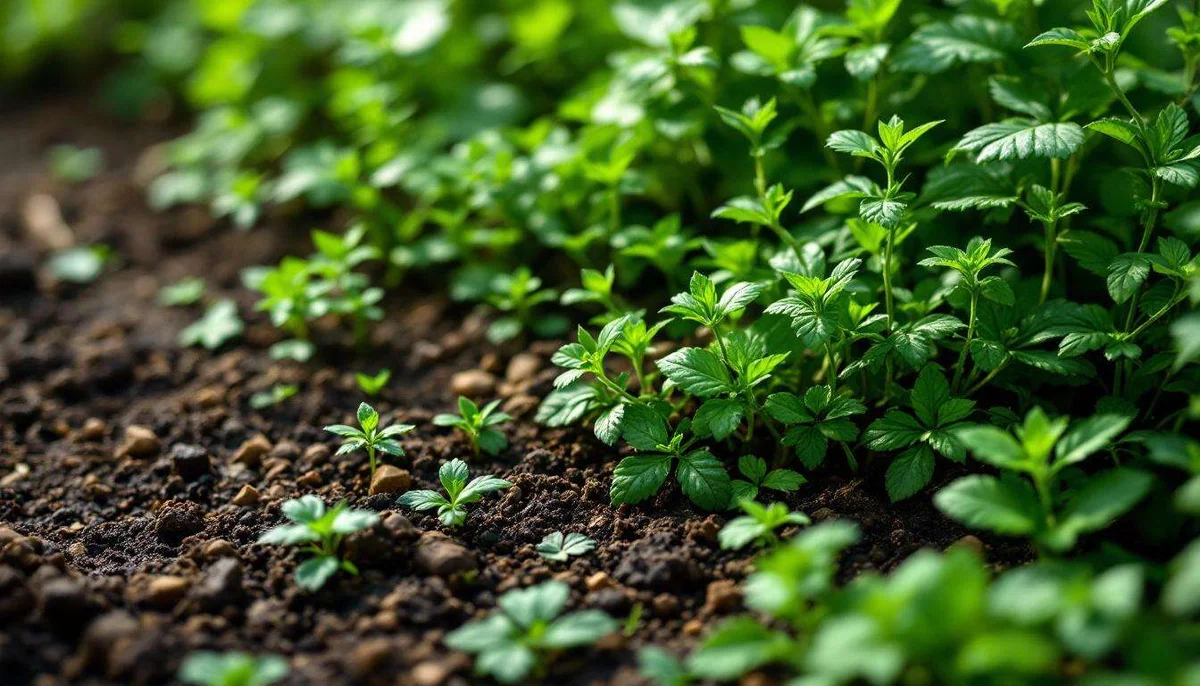
Experienced gardeners are rediscovering a surprising ally that thrives naturally in our green spaces. Often uprooted and discarded without a second thought, this plant possesses remarkable agronomic virtues. White clover, a spontaneous legume that populates lawns and flower beds, converts atmospheric nitrogen into nutrients accessible to plants. Its extensive root system and ability to enrich the soil naturally make it an ecological alternative to traditional amendments.
Unveiling the Beneficial Wild Herb
Identifying White Clover
White clover, or Trifolium repens, is easily recognized by its characteristic three-lobed leaves and small spherical white flowers. This perennial plant belongs to the Fabaceae family, which is known for its exceptional biological properties. Its rapid growth and resilience to foot traffic explain its ubiquitous presence in gardens, parks, and along pathways.
Exceptional Agronomic Properties
The primary advantage of white clover lies in its ability to fix atmospheric nitrogen. Through a bacterial symbiosis with microorganisms of the Rhizobium genus, its roots develop nodules that capture nitrogen from the air and convert it into usable nitrogen compounds for plants. This natural process enriches the soil gradually, requiring no human intervention or chemical input.
- Fixation of 100 to 200 kg of nitrogen per hectare per year
- Improvement of soil structure due to a dense root system
- Protection against erosion and nutrient leaching
- Creation of a microclimate favorable to soil biodiversity
This pioneering plant prepares the ground for more demanding crops while maintaining a permanent vegetative cover. Scientific observations confirm that its presence significantly increases the natural fertility of even depleted soils.
How the Wild Herb Enhances Soil Quality
The Nitrogen Fixation Mechanism
The biological process employed by white clover relies on a sophisticated symbiotic collaboration. Rhizobium bacteria colonize the roots and form root nodules visible to the naked eye. Inside these structures, microorganisms convert gaseous nitrogen into ammonia, which is readily assimilated by the host plant. This transformation requires a substantial amount of energy provided by the clover's photosynthesis.
Physical Structure Improvement
Beyond chemical enrichment, white clover profoundly alters the soil architecture. Its fine, branched roots create an underground network that improves porosity and promotes air and water circulation. This natural structuring facilitates the establishment of decomposer organisms essential for humus formation.
| Soil Parameter | Before Planting | After 2 Years of Clover | |---------------------|-----------------|-------------------------| | Available Nitrogen | 15 mg/kg | 45 mg/kg | | Organic Matter | 2.1% | 3.8% | | Bulk Density | 1.45 g/cm³ | 1.28 g/cm³ |
These data illustrate the measurable impact of white clover on the overall quality of the substrate. The reduction in bulk density indicates better aeration and an increased capacity for water retention.
Compost vs. Wild Herb Comparison
Benefits of Traditional Compost
Compost remains an invaluable reference for soil amendment. Its richness in diverse organic matter provides a complete nutritional spectrum, including phosphorus, potassium, and trace elements. Its rapid action and visible effects make it a favored choice for nutrient-hungry crops. Additionally, the advanced decomposition of the composed materials ensures immediate availability of nutrients.
Specific Advantages of White Clover
In contrast to compost, which requires production, transportation, and spreading, white clover operates in an autonomous and continuous manner. Its nitrogen production spans the entire growing season, avoiding concentration peaks that can harm roots. The lack of handling reduces the burden of gardening while ensuring a steady supply.
- No production or purchase costs
- No storage or handling required
- Extended fertilizing action over several months
- Simultaneous improvement of soil structure and chemistry
- Maintenance of a protective living cover
White clover proves particularly effective on poor or degraded soils where compost alone struggles to restore fertility sustainably. Its integration with other cultural techniques optimizes agronomic outcomes.
Cultivation and Maintenance Techniques for Wild Herbs
Installation and Seeding
Establishing white clover requires no special skills. A simple broadcast seeding on bare or weeded soil is typically sufficient. The ideal period extends from spring to autumn, with a preference for moist conditions that favor germination. A density of 5 to 10 grams per square meter ensures rapid and uniform coverage.
Minimal Management and Maintenance
Once established, white clover demands little intervention. Occasional mowing stimulates its growth and encourages tillering. These clippings can be left in place as natural mulch or superficially incorporated into the soil to accelerate decomposition. Watering becomes unnecessary after rooting due to the species' natural resistance to moderate drought.
Gardeners can also practice selective mowing to control expansion while preserving areas where fertilizing effects are desired. This flexibility allows for the adaptation of clover presence to the specific needs of each plot.
Ecological Impact of Using Wild Herbs
Reducing Carbon Footprint
The adoption of white clover as a natural fertilizer significantly diminishes the environmental impact of gardening. The production of synthetic nitrogen fertilizers consumes large amounts of fossil energy and generates greenhouse gas emissions. By biologically fixing atmospheric nitrogen, this legume eliminates the need for these polluting inputs.
Biodiversity Preservation
The presence of white clover in cultivated spaces creates favorable habitats for numerous beneficial species. Pollinators, particularly bees and bumblebees, are particularly fond of its nectar-rich flowers. This biological diversity enhances the ecological balance of the garden and naturally limits pest populations.
- Refuge for beneficial insects
- Attraction of essential pollinators
- Limitation of nitrate leaching into groundwater
- Carbon sequestration in biomass and soil
This approach aligns perfectly with the principles of regenerative agriculture and permaculture, which prioritize natural solutions over artificial interventions.
Tips for Integrating This Herb into Your Garden
Companion Planting with Vegetables
White clover harmoniously integrates between rows of vegetables or at the base of fruit trees. This technique of living ground cover protects the soil while nourishing the main crops. Tomatoes, squash, and cabbage particularly benefit from this gradual nitrogen input that supports their development without excess.
Use as Green Manure
To maximize fertilizing effects, some gardeners practice mowing the clover before flowering and superficially bury it. This green manure technique quickly releases the nutrients accumulated in the aerial biomass. A delay of two to three weeks allows for decomposition before planting new demanding crops.
Management in Ornamental Spaces
Flower beds and ornamental lawns can easily accommodate moderate white clover presence. Its dense and low foliage contrasts pleasantly with vertical blooms. Regular mowing maintains a tidy appearance while preserving agronomic benefits.
Thus, savvy gardeners transform a spontaneous plant into a genuine tool for sustainable fertilization. This pragmatic approach reconciles productivity with respect for natural cycles, demonstrating that agronomic efficiency and ecology can coexist. White clover exemplifies how observing nature inspires innovative and environmentally respectful cultural practices.