Winter Storks: A Sign of Adaptation or a Broader Message?
The winter presence of storks raises questions about environmental adaptation and ecosystem health. Discover the implications of stork sightings during the colder months.
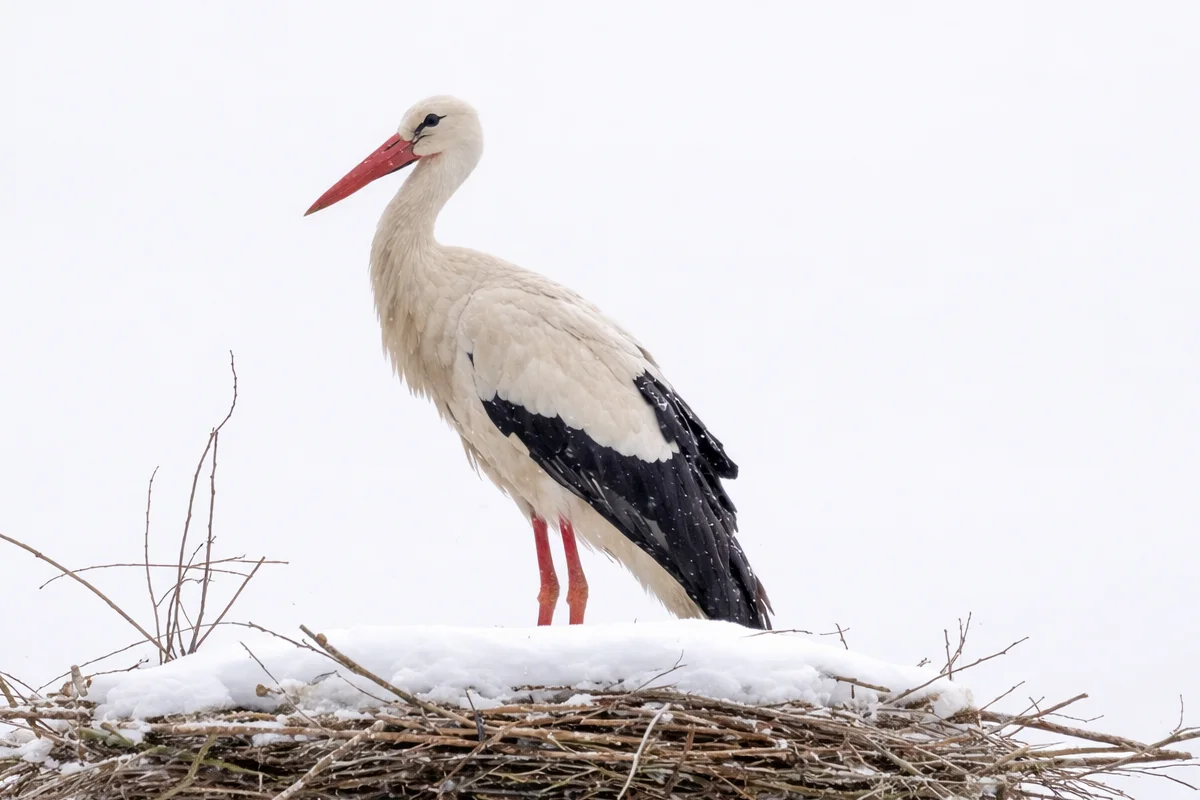
On a January morning, the frost lingers over the low meadows, and the sky appears pale and almost silent. Perched on an electric pole is a striking silhouette: a stork with its long red beak and folded wings. As we gaze up, a question arises: is it a bit early for this bird to be here? Or perhaps, is it late for it to still be around?
In recent years, sightings of storks during winter months have become more common in regions where they were once absent at this time. This phenomenon raises an intriguing question: is it merely a temporary adjustment, or does it signal something more significant regarding their territory?
More Flexible Migrations Than We Think
The white stork is known for its migratory behavior, traditionally spending winters in sub-Saharan Africa. However, migrations are not rigid; they adapt to environmental conditions.
When winters become milder, wet areas remain accessible, and the ground does not freeze deeply, some storks may shorten their migratory routes. Others might even opt to remain in their breeding areas rather than embark on long journeys.
This behavior reflects an opportunistic adaptation rather than a drastic change.
An Indicator of Territory
Storks remain in an area only if they can find food, relying on the availability of earthworms, insects, and small amphibians. In essence, their presence is tied to soil activity and the health of meadows.
If storks are spotted in winter, it may indicate:
- Soil that does not freeze deeply
- Regular warm spells
- Sustained biological activity
- Functional wetland areas
Thus, winter sightings are not merely about climate; they reflect the state of the ecosystem.
A More Variable Climate Context
Recent winters have shown a pattern of extended mild periods interspersed with shorter, intense cold spells. This variability creates favorable conditions for certain species.
For storks, just a few weeks of accessible soil can lead to changes in migratory behavior. However, this does not mean that winter has vanished; instead, it highlights a more contrasting seasonal experience.
New Presence Through Cohabitation
In some communities, nesting platforms have encouraged storks to establish a more permanent presence. Open agricultural landscapes provide suitable hunting grounds for them.
Seeing a stork in winter alters our perception of the seasons; it is no longer just a harbinger of spring but rather a permanent indicator of the territory.
Mini Table: Interpreting Winter Presence
Observation | Possible Interpretation --- | --- Storks in January | Soil not frozen deeply Meadows frequented in winter | Sustained biological activity Nests occupied continuously | Shortened migration
What to Observe This Winter
Look closely at nearby meadows after a warm spell. Are they soft underfoot? Do you see signs of worms or birds probing the ground?
These indicators often accompany the winter presence of storks. The answer usually lies in the consistency of observations. An isolated sighting may correspond to a particularly mild season, whereas recurring sightings over multiple winters suggest a deeper adjustment.
Wildlife adapts quickly, while the territory evolves more slowly. This balance is being redefined.
Spotting a stork in the depths of winter should not trigger immediate concern; rather, it calls for careful observation of the soil, water, and landscape.
Ultimately, the question may not be whether it is an adaptation or a sign, but rather understanding what your territory is already revealing.