Japanese White Strawberries: The Luxurious Fruit of Japan
Japanese white strawberries are rare, luxurious fruits gaining popularity for their unique appearance and refined taste. Discover their cultivation, varieties, and where to find them.
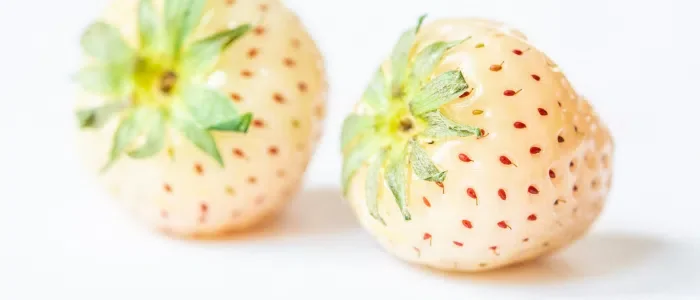
Japanese white strawberries are gaining popularity among fruit enthusiasts and curious consumers worldwide, despite being relatively unknown in France. These rare fruits captivate with their elegant, delicate appearance, embodying a symbol of luxury in Japanese cuisine.
What Are Japanese White Strawberries?
🍓 The Japanese white strawberry is a unique variety characterized by its ivory to cream-white color. Contrary to common belief, these are not unripe fruits or standard strawberries that have lost their color. Instead, they are a specific variety developed through selective breeding by specialized Japanese producers. They grow similarly to traditional strawberries.
Among the notable varieties are:
- White Jewel (Shiroi Houseki)
- Hatsukoi no Kaori (one of the most expensive)
- Yuki Usagi
These strawberries tend to be larger than average, with individual fruits weighing around 50 grams. The “White Jewel” stands out as one of the most prestigious and rarest strawberries globally, cultivated in very limited quantities, enhancing its status as an exceptional product.
Origin and Cultivation of White Strawberries
Japan is renowned for its agricultural expertise 👩🏼🌾 and its relentless pursuit of perfection in fruit production. The white strawberries are the result of years of varietal selection aimed at achieving:
- A unique and aesthetic appearance
- A melting texture
- A sweet and refined taste
- Controlled and stable production
These strawberries are primarily grown in greenhouses, under meticulously controlled conditions. Producers closely monitor light, humidity, and nutrients to ensure a uniform and defect-free fruit. This complete mastery of production explains why these strawberries are so rare and often command high prices.💰
Cultivating White Strawberries
The cultivation of white strawberries 🍓 is not done on an industrial scale. Instead, it relies on specialized farms that prioritize quality over quantity.
Each fruit is individually monitored to ensure:
- Uniform color
- Perfect texture
- Optimal ripeness
The cultivation of Japanese white strawberries utilizes highly controlled agricultural techniques to manage every stage of their development. Producers predominantly operate in greenhouses to stabilize growth conditions, including temperature🌡️, humidity, and light☀️. Light is crucial, as the absence or limitation of certain wavelengths directly affects the pigment formation responsible for the red color in standard strawberries.
The plants are also grown in carefully enriched substrates to optimize fruit quality. Each strawberry is tracked individually to guarantee uniform ripeness, regular shape, and perfect texture. This level of precision in production results in aesthetically flawless fruits with exquisite taste, while maintaining a deliberately limited output.
This high standard is why white strawberries are regarded as luxury fruits in Japan.
Where to Find White Strawberries
In Japan, the primary producer, white strawberries are relatively accessible through high-end outlets. They can be found in specialized luxury fruit shops, select department stores, and as elegant gift boxes, often favored for special occasions. Outside Japan, particularly in France and across Europe, these strawberries remain rare and challenging to acquire. However, they can occasionally be sourced from specialized markets like Rungis, certain retailers like Grand Frais, or local producers and short supply chains. Some online boutiques specializing in rare fruits also offer these products, with prices reaching around 8 € for 100 grams of premium packaging.🫰🏼
🧑🏼🌾 For gardening enthusiasts, there is the option to purchase seeds or plants, often from closely related varieties like pineberries. However, replicating true Japanese white strawberries at home is complex, as their quality heavily relies on very specific and challenging cultivation conditions.👎🏼
White vs. Classic: What Are the Differences?
It is essential to distinguish Japanese white strawberries from other white varieties like pineberries. The Japanese strawberries are typically more refined, rarer, and positioned in a much higher market segment.👍🏼
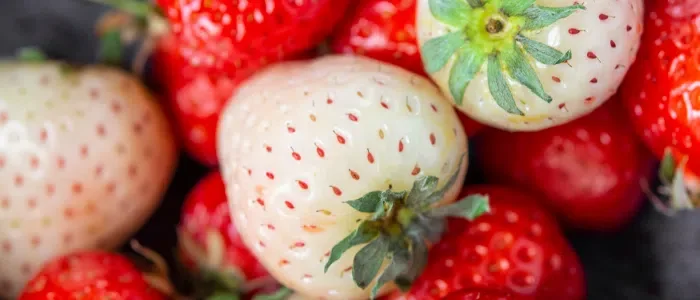
The main differences include:
- Color: uniform ivory white versus spotted white
- Taste: sweeter and more refined, reminiscent of pineapple
- Price: significantly higher
- Rarity: limited and controlled production
Did you know? Maintaining a vegetable garden is eligible for a tax credit! If you decide to venture into growing white strawberries🍓, consider hiring a gardener affiliated with a cooperative.