Growing, Caring for, and Propagating the Two-Colored Flockenblume
Purplish-pink flowers from June, minimal maintenance required, no winter protection needed. The Two-Colored Flockenblume is a rewarding perennial for sunny gardens. This article covers its ideal location, soil requirements, pruning, and division tips for abundant blooms.
Purplish-pink flowers from June, minimal maintenance required, no winter protection needed. The Two-Colored Flockenblume is a rewarding perennial for sunny gardens. This article covers its ideal location, soil requirements, pruning, and division tips for abundant blooms.
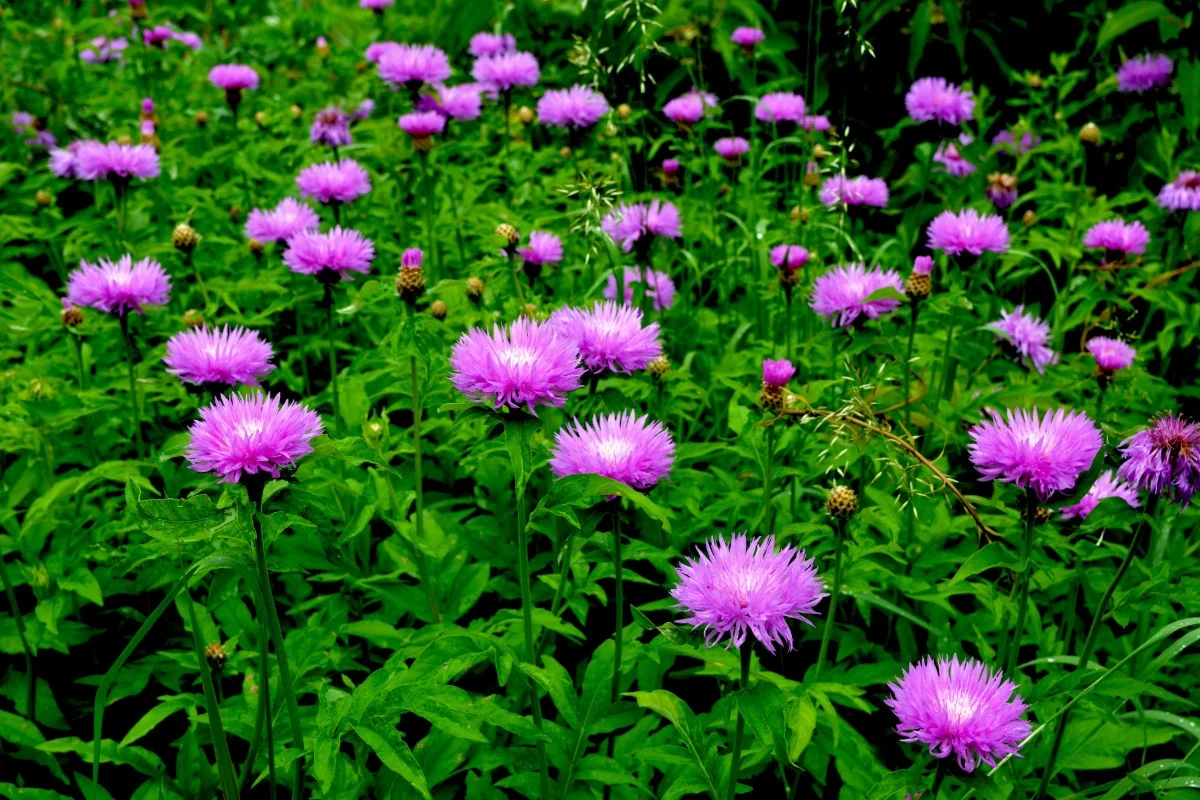
In June, while wandering through my garden, I first noticed the thistle-like buds of the Two-Colored Flockenblume (Centaurea dealbata), which had seemingly self-seeded. Soon after, the first pink, finely fringed flowers with their light centers began to bloom, transforming the plant into a bee-friendly haven. Since then, I have come to appreciate this low-maintenance perennial, especially for its ability to forgive minor care mistakes and thrive during dry summers.
Overview of the Flockenblume
Flockenblume (Centaurea dealbata)
- Height: 60 – 80 cm
- Width: 50 – 70 cm
- Blooming Period: June – July
- Location: Sunny
- Soil: Dry to fresh, well-drained
- Special Feature: Bee-friendly wildflower and cut flower
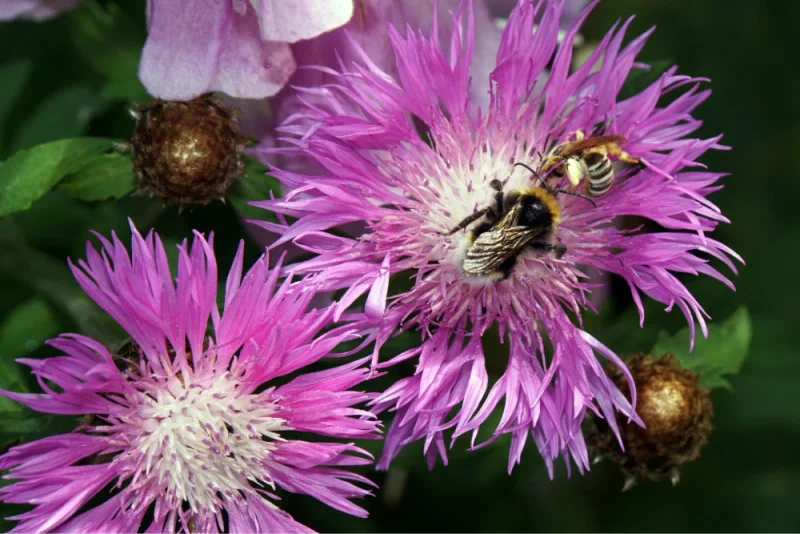
The Two-Colored Flockenblume grows as a clump-forming perennial, reaching heights of 60 to 80 cm depending on its environment. Its feathery foliage is striking even before flowering, with lush green tops and silvery-white undersides, a characteristic reflected in its botanical name “dealbata,” which means “whitened.”
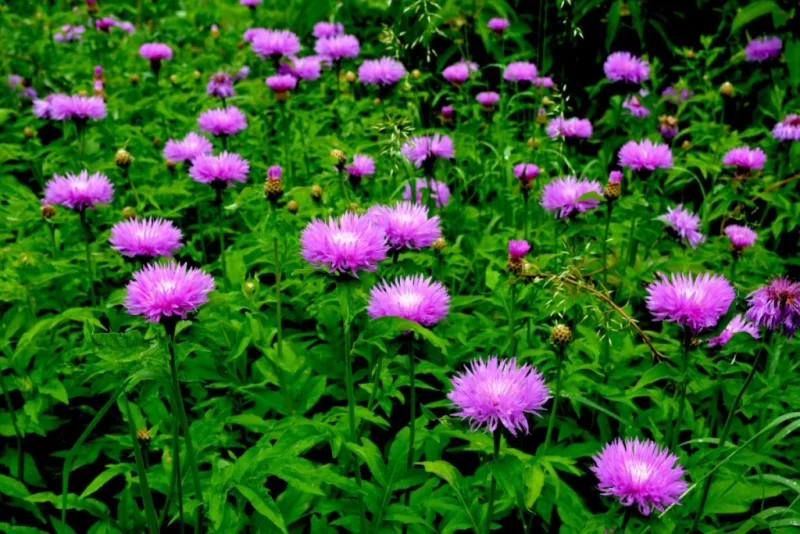
From June to July, the plant produces flower heads measuring about 4 to 5 cm, with purplish-pink fringes on the outside and lighter, almost white centers. It thrives in naturalistic plantings, cottage gardens, and sunny borders. Additionally, the long stems remain surprisingly durable in a vase.
Plant Family and Origin
Botanically, Centaurea dealbata belongs to the Asteraceae family, which includes sunflowers, asters, and cornflowers. This species originates from the mountain meadows of the Caucasus, explaining both its frost tolerance and preference for open, sunny locations. The Mountain Flockenblume (Centaurea montana), from the same genus, blooms a month earlier in rich blue-violet hues.
Grown in spring between March and May, Centaurea dealbata will bloom in the same summer. If planted in early autumn, ideally by mid-October, the roots have time to establish, but the plant does not tolerate waterlogging in winter, making autumn planting advisable only in well-drained soil.
💡 Tip: Summer planting is also an option, but it requires regular watering during heatwaves.
Ideal Location
For the most abundant blooms, the Flockenblume thrives in sunny spots. While it can grow in light shade, it tends to bloom less and may become leggy, making it unsuitable for permanently dark garden corners. In such areas, bee-friendly shade perennials like foam flower or Bergenia are better suited.
Soil Requirements
The ideal soil for the Flockenblume is well-drained and moderately nutrient-rich. The plant tolerates lime and even slightly alkaline pH levels. However, it struggles with waterlogged conditions, as prolonged wet soil can lead to root rot.
💡 Tip: To determine if your soil is suitable, conduct a simple test after heavy rain. If puddles drain within a day, all is well. If water remains, improve heavy clay soil by mixing in sand or fine gravel before planting. Rich, humus-heavy soil is not advantageous for this plant, which will be discussed further in the fertilizing section.
Step-by-Step Planting Guide
- Loosen the soil to a depth of 20 to 30 cm and remove any perennial weeds.
- Dig a planting hole about twice the size of the root ball.
- Briefly water the Flockenblume root ball before planting, ensuring the top of the ball is level with the soil surface.
- Maintain a planting distance of 50 to 60 cm. No more than 2 to 3 plants per square meter are needed, as the plant will fill in gaps with its runners.
- Firm the soil around the plant, water thoroughly, and keep it evenly moist for the first few weeks.
- A thin layer of mulch made from grass clippings or leaves can help retain moisture but is not essential.
Companion Plants for the Flockenblume
The Flockenblume pairs well with other perennials that share similar requirements. Steppe sage and catmint bloom simultaneously in blue-violet, enhancing the pink tones of the flowers, while yarrow in yellow or white provides a calming contrast. Ornamental grasses like feather grass add lightness to the bed. Daisies are also compatible, as they prefer sunny, lean conditions. For those looking to create a complete perennial bed, the Flockenblume can serve as a mid-height companion plant in front of taller specimens like delphinium.
Caring for the Flockenblume
Caring for the Flockenblume involves only a few tasks each year. Most common mistakes arise not from neglect but from over-attention.
Watering
Established Flockenblumen typically do not require additional watering during normal summers. Only during prolonged heat and in the planting year does the plant need water, which should be applied thoroughly, preferably in the morning and directly at the root zone.
Fertilizing
A single application of mature compost in spring, around 2 to 3 liters per square meter, is sufficient for the entire season. Mineral fertilizers are unnecessary and can be harmful, as excess nitrogen can weaken stems. Following heavy summer rains, the flower heads may flop in the bed. In contrast, plants in lean soil remain compact and upright without the need for supports.
Pruning
After the main flowering period in July, cut back the spent stems to about a hand's breadth above the ground. This practice can encourage a second bloom in late summer and helps prevent excessive self-seeding. The complete cutback of foliage occurs in early spring, as the leaf rosette protects the plant in winter, and the dry stems provide a habitat for beneficial insects.
Winter Care
In the garden, the Flockenblume requires no winter protection; its Caucasian origin makes it one of the hardiest perennials. Only freshly planted autumn specimens may benefit from a loose covering of twigs.
💡 Tip: Wintering Flockenblumen in Containers Container plants are more vulnerable, as their root balls can freeze completely. Therefore, move the pot against a sheltered wall, place it on a wooden or Styrofoam base, and wrap it in breathable materials like fleece or jute. Specialized winter protection sets for container plants offer adequate protection. It is crucial to use breathable materials, as plastic can trap moisture and harm the Flockenblumen. For garden plants, such accessories are unnecessary.
 and Its Strawberry-Flavored Berries](https://plantculturehub.com/cdn/images/cd56be48e689cfa67788d65f007c1ce2/w1200.webp)