Essential Risk Assessment Document for Landscaping Businesses
Learn about the mandatory Single Document for Professional Risk Assessment (DUERP) for landscaping businesses, including how to create it and where to display it.
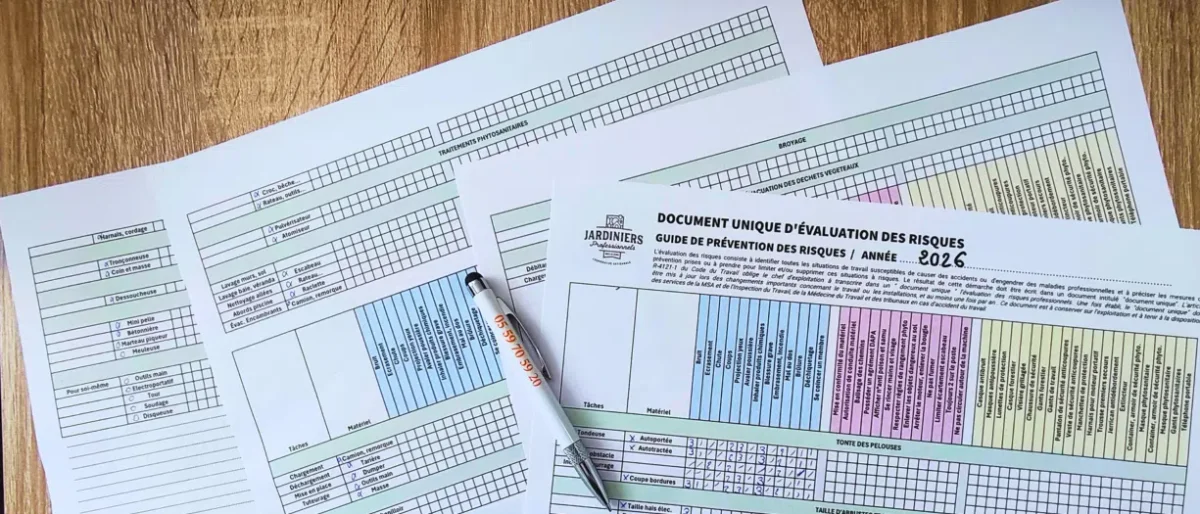
As a business leader in the landscaping sector or an aspiring entrepreneur in green spaces, you are likely familiar with the Single Document for Professional Risk Assessment (also known as DUERP)📑. This document is mandatory from the moment you hire your first employee, irrespective of your company's size or structure. To create it, employers must first identify and evaluate all the risks present in their business. Since its implementation in 2011 ⚖️, this document aims to highlight the various professional risks that employees, apprentices, and interns may face, allowing for the establishment of appropriate preventive measures.
Free Printable DUERP Template for Landscaping Companies
Customizable Free Excel File for DUERP
You know that at the Cooperative, we have one primary goal: to make life easier for our member business leaders. That’s why we have prepared an easy-to-fill DUERP template, tailored to the main risks faced by landscapers. Simply print it, fill it out (see guidelines in the next section), and display it.
Key Information About DUERP for Landscaping Companies
Important Points to Remember About the Risk Document:
Where Should It Be Displayed in the Company?
In your current or future company, you must have a display board for all mandatory documents. The best practice is to place it in a break room or changing area. This location should be accessible to all employees, apprentices, and interns, whether they are landscape workers, secretaries, site managers, or third-year interns! It is also advisable to conduct a review of the display at each new term (for example, in September): Are all the mandatory documents present? Are they clearly legible? Are the contact details still up to date? 📅💡
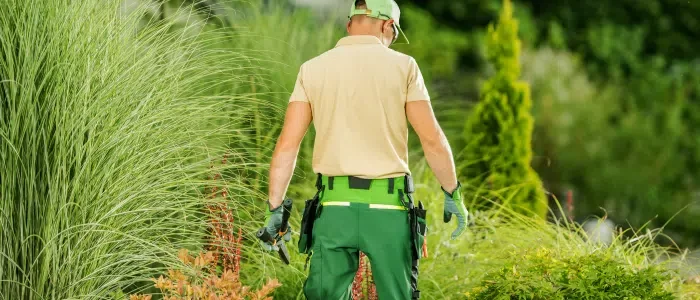
Identifying Specific Risk Factors in Landscaping Businesses
As mentioned earlier, there is no mandatory format for the DUERP. The key is to detail all types of risks that could occur, whether they are common or rare, across all activities of the business.
For instance, if your landscaping business includes masonry work, it is crucial to document the risks associated with these specific tasks. Similarly, if your work involves installing outdoor lighting and handling electrical tasks🔌, ensure to include that in the DUERP.
Below, you will find two tables:
- The first lists the various risks for landscaping businesses and the activities that may contribute to them.
- The second outlines the risks associated specifically with garden maintenance or creation tasks.
Both methods are valid for drafting your DUERP ✅. Furthermore, regarding risk rating and frequency assessment, there are no strict rules. You can adopt the approach that seems simplest and most suitable for your business while ensuring it accurately reflects the reality of risks and facilitates their monitoring and prevention (see the second table for a sample).
| Type of Risk | Concrete Examples | Preventive Measures | |---------------------|----------------------------------------------------|--------------------------------------------------------| | Mechanical Risk | Use of mowers, brush cutters, chainsaws (cuts, projections) | Use of PPE (gloves, glasses, helmet), training on equipment use | | Chemical Risk | Exposure to phytosanitary products, fertilizers | Masks, gloves, adherence to safety data sheets, secure storage | | Posture-Related Risk | Lifting heavy loads, repetitive motions | Training on movements and postures, using appropriate tools | | Climatic Risk | Working in extreme heat, rain, cold | Adjusting schedules, regular breaks, suitable clothing | | Fall Risk | Working at heights (pruning), slippery surfaces | Harnesses, anti-slip safety shoes | | Road Risk | Frequent travel with utility vehicles | Vehicle maintenance, road safety compliance | | Noise Risk | Exposure to loud machinery | Use of hearing protection | | Biological Risk | Contact with insects, allergenic plants | Protective clothing, first aid kit | | Organizational Risk | Stress, heavy workload, tight deadlines | Planning, internal communication, breaks |
| Tasks | Risk | Dangerous Situation | Severity (1-4) | Frequency (1-4) | Preventive Measures (1-4) | |---------------------|-----------------|----------------------------------------------|----------------|----------------|-----------------------------| | Green Space Maintenance | Mechanical Risk | Use of brush cutter / projections | 3 | 4 | PPE, training, equipment maintenance | | Pruning | Fall Risk | Working in trees without safety measures | 4 | 3 | Harness, training, equipment checks | | Treatment | Chemical Risk | Use of phytosanitary products | 3 | 3 | Masks, gloves, secure storage | | Handling | MSD | Lifting heavy loads (soil, bags) | 2 | 4 | Mechanical aids, training | | Travel | Road Risk | Frequent driving of utility vehicles | 4 | 2 | Vehicle maintenance, road safety training | | Outdoor Work | Climatic Risk | Working in extreme heat | 2 | 3 | Hydration, breaks, adjusted hours | | All Positions | Noise Risk | Prolonged exposure to machines | 2 | 4 | Noise-cancelling headphones | | Site Work | Biological Risk | Insect bites / allergies | 2 | 3 | Long clothing, first aid kit | | Organization | Stress | High workload | 2 | 2 | Planning, communication |
The Cooperative: Supporting Gardening Professionals
We are the Cooperative for gardeners, providing free services to professionals in green spaces without any administrative burdens. 🌿 Supporting you with tools and resources to assist in your daily operations as a landscaping business leader is our priority. Please feel free to share your needs with us!