Understanding the Role of Ants in Your Vegetable Garden
Explore the dual role of ants in your vegetable garden, from beneficial soil aerators to potential pests, and learn how to manage their presence effectively.
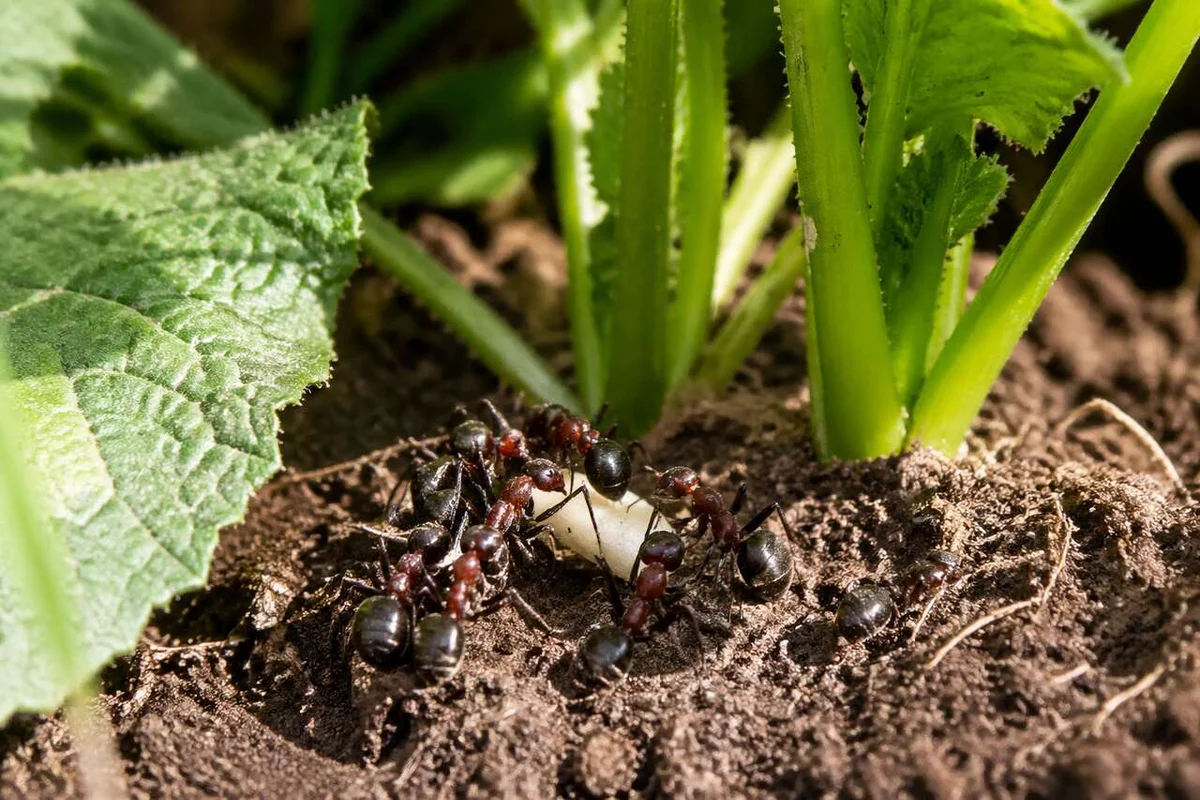
Ants are a common sight in vegetable gardens, particularly noticeable as temperatures rise and crops thrive. For some gardeners, their presence indicates a lively and well-structured soil, while others see them as a sign of imbalance, especially when they accompany aphids on tender stems. Balancing their ecological benefits against potential nuisances requires careful observation of their behavior in the garden.
The Beneficial Role of Ants in the Garden
Soil Engineering
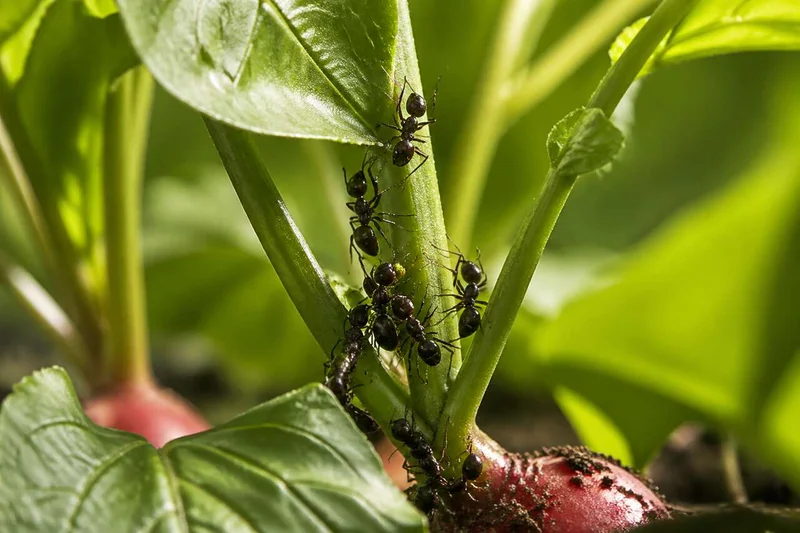
Ants contribute significantly to soil aeration and drainage through their tunneling activities. This process enhances air and water circulation, gradually breaking down compacted areas. Their actions, akin to those of earthworms, lead to more functional soil where plant roots can explore more freely. Additionally, the movement of fine particles can improve local porosity, an effect that varies based on species and colony density.
- Creation of micro-tunnels that promote water infiltration.
- Restructuring of soil surfaces, which can be beneficial in heavy soils.
- Transport of organic debris back to their nests, aiding in recycling.
Recycling Organic Matter and Garden Cleanup
Ants gather plant fragments, dead insects, and various organic residues. This behavior aids in decomposition and nutrient cycling. In a vegetable garden, their "cleaning" actions help prevent the accumulation of mold and speed up the return of biomass to the soil. While they are not large-scale composters, they play a vital role in a network of organisms where every participant contributes, particularly evident in mulched areas.
Varieties and Behaviors of Common Ants
Not all ants behave the same way. The garden ant (Lasius niger) is often found in vegetable gardens, especially on plants infested with aphids. Other species, known as fungus-farming ants, cultivate fungi to feed their larvae, showcasing a form of symbiotic agriculture. This diversity means that the presence of ants can have multiple interpretations, emphasizing the importance of observing what they do, not just their existence.
| Observed Behavior | Likely Effect in the Garden | Level of Vigilance | |-------------------------------------------|----------------------------------------------|--------------------| | Tunnels and small mounds | Aeration, drainage, looser soil | Low | | Transport of organic debris | Local recycling, cleanup | Low | | Regular trails to infested stems | Protection of aphids, risk to young plants | High |
However, the benefits can shift when ants establish themselves on weakened plants, particularly in association with aphid colonies.
Ants and Aphids: A Relationship to Monitor
Honeydew: A Sweet Resource
Aphids secrete a sugary liquid known as honeydew, which ants collect. In return, ants protect aphids from certain predators. This relationship is often likened to a form of "agriculture," where ants maintain a food source. Problems arise in the vegetable garden when this protection leads to an explosion of aphids on beans, nearby roses, tomatoes, or young cucurbits, directly impacting plant vigor.
Identifying Ant-Aphid Associations
The ant-aphid duo can be easily spotted with careful observation. Ants do not merely pass by; they patrol and frequently return to the same stems. Aphids congregate on tender areas, causing visible stress in the plant. Observational skills become crucial to avoid unnecessary treatments and to target the actual blockage.
- Ants marching in lines towards the tips of shoots.
- Curled leaves, stunted growth, sticky stems.
- Presence of black sooty mold on accumulated honeydew.
- Fewer aphid predators visible on "guarded" plants.
Why This Relationship Can Upset the Garden
When ants actively protect aphids, they deter or disrupt beneficial predators like ladybug larvae or hoverflies. This creates a locked system: aphids thrive, plants weaken, and gardeners witness rapid degradation in the most sensitive crops. The risk is particularly pronounced for young plants and fast-growing crops, where sap loss results in a notable delay in growth.
| Indicator | Implication | Recommended Action | |------------------------------------------|-------------------------------------------|--------------------| | Few aphids, occasional ants | Normal presence, opportunistic | Monitoring | | Many aphids, numerous ants | Active protection, risk of infestation | Limit aphid numbers and access for ants | | Sooty mold and deformed leaves | Abundant honeydew, prolonged stress | Quick intervention |
This vigilance should also take into account a lesser-known aspect: ants can act as predators and help regulate other pests.
Ants: Natural Predators in the Garden
Opportunistic Hunting
Ants do not solely feed on sweet substances; many species also consume prey or insect fragments, thereby playing a regulatory role. In the vegetable garden, they may target eggs, larvae, or weakened insects. This predation is opportunistic but can sometimes help limit pests like flea beetles or young slugs, with an effect that is local and variable depending on conditions.
Advantages Over Other Beneficials
The strength of ants lies in their organization. A colony can quickly mobilize workers to a food source, potentially reducing the survival of a small pest population. While some beneficials act alone, ants exploit density and repetition. Although not a standalone biological control solution, they can be a contributing factor in a diverse vegetable garden, where balances are achieved through cumulative effects.
- Ability to continuously explore large areas.
- Rapid response to newly available resources.
- Consumption of dead insects, limiting certain local outbreaks.
Limitations and Trade-offs of Ant Predation
The same ant may hunt an insect one day and protect aphids the next, showcasing a major ambiguity. Additionally, some ants can disrupt beneficials by patrolling plants, affecting the visitation rates of helpful insects. Therefore, it is crucial to assess whether the observed presence corresponds to hunting activity or aphid farming, as the implications for crops differ significantly.
When activity shifts towards massive and repeated occupation of sensitive areas, the benefits diminish, and signs of invasion become more apparent.
When Ants Become Harmful: Signs of Invasion
Visible Indicators in Crops and Soil
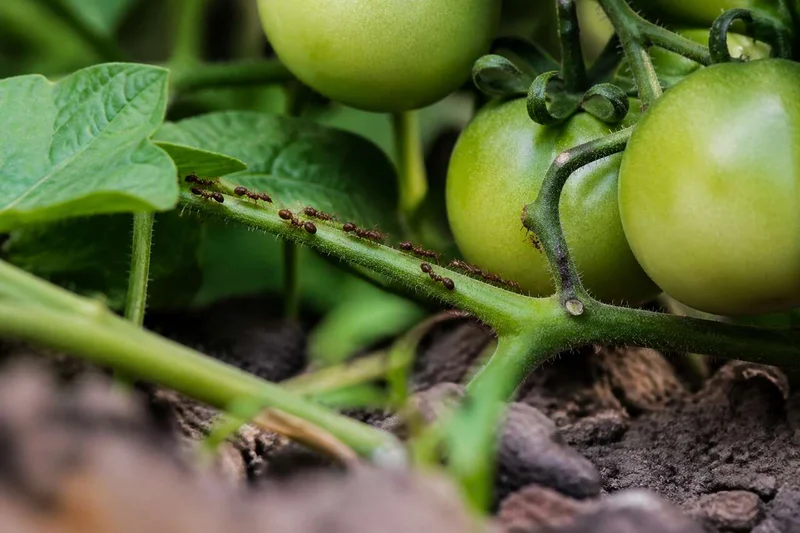
In the vegetable garden, the term "invasion" refers to an unusual intensity: continuous lines, multiple nests, and presence across many beds. Ants may destabilize clumps around young plants, particularly in dry soil, or establish nests at the base of crops, interfering with watering and root development. The most concerning signal remains a sustained association with aphids and increased pressure on plants, often observed rapidly on tender shoots.
- Multiplication of small mounds and fine soil brought to the surface.
- Well-trodden paths between nests and plants.
- Young plants wilting despite adequate watering.
- Persistent aphid colonies despite the presence of beneficials.
When Presence Spills Over to Home Areas
The vegetable garden is not isolated. High food pressure may drive ants to explore terraces, sheds, and kitchens in search of sweet products. This expansion is not always systematic but is frequent when food sources are accessible and pathways are secure. Observing "ant highways" indicates a well-established colony and a stable resource, leading to both practical and sanitary nuisances if food items are involved.
Assessing Severity: Occasional Nuisance or Structural Problem?
The presence of ants does not automatically necessitate action. The severity is gauged by the impact on crops, recurrence, and nest locations. An isolated nest on the periphery, without associated aphids, may be tolerated. Conversely, multiple nests in the heart of beds, with aphid colonies on several species, signal a significant imbalance. This evaluation helps in choosing proportionate methods, favoring targeted and natural solutions.
| Situation | Typical Impact | Level of Action | |-----------------------------------------|------------------------------------------|--------------------| | Isolated nest on the periphery | Low effect, sometimes beneficial | Observation | | Ants on plants without aphids | Often neutral | Monitoring | | Ants + aphids on multiple crops | Weakening, honeydew, sooty mold | Targeted intervention | | Multiple nests in beds | Disruption of watering, stress on young plants | Regulation |
Once the diagnosis is made, the challenge becomes clear: act without disrupting the ecosystem, relying on gradual and natural methods.
Natural Methods to Regulate Ant Presence
Cutting Access to Aphid-Colonized Plants
When ants climb stems to "milk" aphids, limiting their access reduces the protection afforded to these colonies. On young fruit trees and certain stakes, sticky bands can interrupt their movement. The goal is not eradication but to disrupt logistics. These devices should be applied carefully, ensuring they do not trap other beneficial insects, and removed once pressure decreases. A horticultural glue ribbon or sticky band is often used in this context.
-
Sticky Band for Horse Chestnut Leaf Miner – Sticky Trap to Capture Butterflies – Protection for Horse Chestnuts - SOLU’TRAP
🌳 PROTECTION FOR HORSE CHESTNUTS: helps capture butterflies responsible for the horse chestnut leaf miner 🪤 READY-TO-USE STICKY TRAP: easy installation directly on the trunk 🚫 INSECTICIDE-FREE: mechanical action without chemical spraying 📅 MONITORING FLIGHTS: allows tracking of butterfly activity throughout the season ☀️ OUTDOOR USE: adhesive tape resistant to outdoor conditions 🏡 IDEAL FOR GARDENS AND PARKS: suitable for individuals, communities, and green spaces 🔍 CONTINUOUS ACTION: captures insects moving on the trunk day and night
-
SOLU'TRAP Sticky Band for Crawling Insects 10 m x 16 cm – Non-Insecticide Sticky Trap – Ants, Aphids, Leaf Miners
🌿 NON-INSECTICIDE: effective mechanical solution for controlling crawling insects 🌱 EASY TO INSTALL: simply wrap around the trunk or stake 🐜 TARGETS ANTS AND APHIDS: disrupts their movement and feeding habits
By understanding the role of ants in your vegetable garden, gardeners can better manage their presence and maintain a healthy balance in their ecosystems.