Understanding Soil for Effective Watering in Gardens
Gardening success hinges on understanding soil types and their water management. Learn how to adapt your watering practices to suit your soil for healthier plants.
Une même météo… des réactions très différentes
Comparing nearby gardens can reveal striking differences in how they respond to the same weather conditions, particularly when water is scarce. In one garden, the soil remains pliable and slightly moist just beneath the surface, allowing plants to thrive without visible stress. Conversely, in another garden, the soil dries out quickly, hardens, and plants display signs of fatigue almost immediately.
This disparity primarily stems from the soil's characteristics: its texture, structure, and ability to retain or allow the movement of water.
Understanding how your soil functions is crucial for adapting your gardening practices.
Tous les sols ne gèrent pas l’eau de la même façon
To water effectively, one must consider how different soils behave with water. Each soil type has its unique way of storing and releasing moisture.
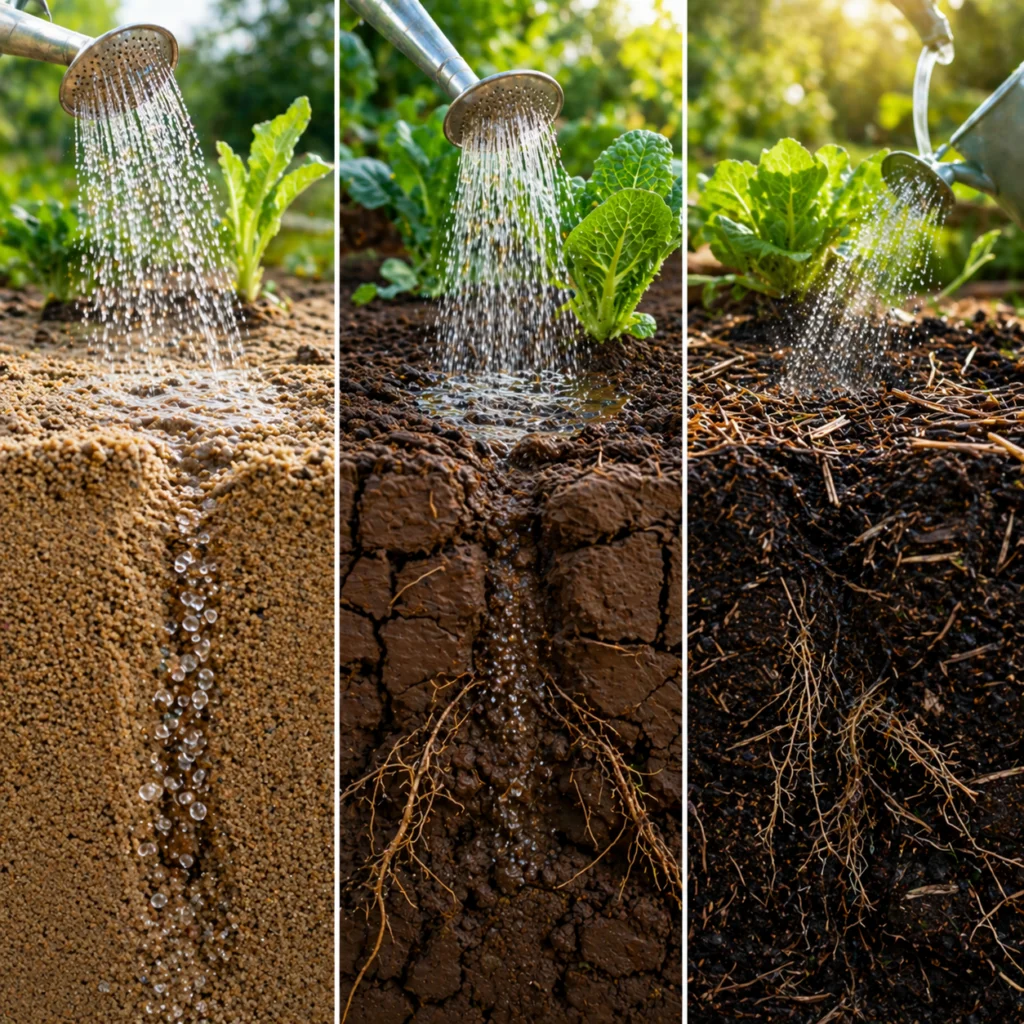
For instance, sandy soil allows water to drain quickly, facilitating its movement between particles without retaining much. While this trait can prevent waterlogging during heavy rains, it becomes a challenge during dry spells, as the soil can dry out rapidly, sometimes even at deeper levels, leaving plants struggling for moisture. In such cases, frequent but insufficient watering may not effectively reach the root system, as much of the water escapes.
On the other hand, clay soil has a high retention capacity, storing significant amounts of water and releasing it gradually. However, this can lead to compaction and cracking when dry, making it difficult for water to penetrate, especially if applied quickly. Frequent shallow watering may only moisten the surface, failing to replenish deeper soil layers.
Soils rich in organic matter often strike a balance, enhancing soil structure, promoting water circulation, and improving retention. These soils tend to conserve moisture more effectively, making them more resilient during dry periods, provided that this balance is maintained.
Arroser sans comprendre son sol : une erreur fréquente
During drought conditions, the instinctive response is often to increase watering. While this seems logical as a means to compensate for the deficiency, ignoring the soil's behavior can render this approach ineffective.
Daily light watering is a common practice that gives the illusion of maintaining garden health. However, this water often evaporates quickly from the surface due to heat, leaving deeper roots deprived. Over time, this can encourage shallow rooting, making plants more vulnerable to drought.
Conversely, a single heavy watering may appear more effective, but in highly permeable soils, much of the water can escape before it reaches the plants. Thus, the effort may not yield the desired results.
The issue lies not in the quantity of water provided but in the mismatch between the watering practice and the soil's reality. Watering without understanding your soil is akin to acting blindly—performing actions without ensuring they truly meet the plants' needs.
Revenir à l’observation
In these situations, observation becomes a vital tool. It helps break free from automatic responses and fosters a deeper understanding of what occurs in the soil and among the plants.
A dry surface does not necessarily indicate dryness below. Sometimes, a simple scratch of the soil can reveal moisture just a few centimeters down.
Plants themselves provide valuable clues. For example, slight wilting during the day can be a normal reaction to heat. If the plant recovers by evening, it indicates that the root system is meeting its needs. Persistent wilting, however, may signal a deeper water shortage.
Engaging in simple actions such as observing, touching, and comparing conditions over days enhances understanding and allows for more precise adjustments in gardening practices.
Adapter ses pratiques plutôt que suivre une recette
During dry spells, the goal is not merely to water more but to do so in a manner aligned with the soil's characteristics and current conditions.
In sandy soils, it may be beneficial to divide water applications to minimize losses and maintain consistent moisture levels. In contrast, for heavier soils, it is crucial to water slowly, allowing moisture to penetrate gradually and recharge the available reserves.
In all cases, protecting the soil is a significant strategy. Soil exposed to sun and wind loses moisture rapidly, regardless of its type. Mulching can help slow evaporation, stabilize surface conditions, and enhance the effectiveness of watering. While it does not replace the need for watering, it optimizes its impact.
Gradually, this approach shifts the focus from immediate reactions to adaptive strategies, moving away from rigid rules towards responsive gardening practices.