The Benefits of Horse-Driving Training
Explore the multifaceted world of horse-driving training, its accessibility, skill development, and the professional opportunities it offers.
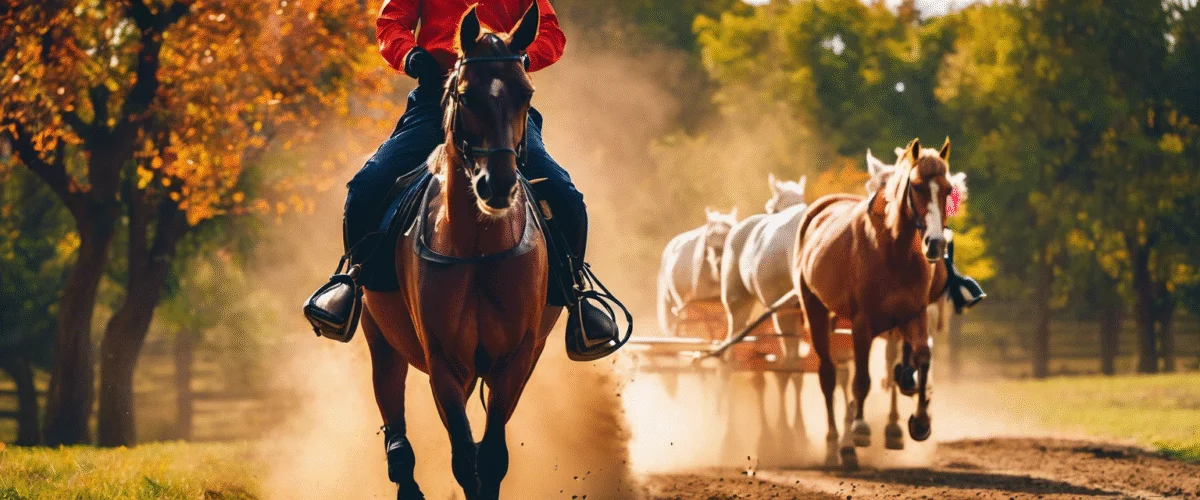
In the intersection of sport, tradition, and innovation, horse-driving captivates both enthusiasts and professionals with its diverse aspects: competition, leisure, knowledge transfer, economic opportunities, and rich interactions with horses. This article explores the reasons and methods for pursuing horse-driving training: who it targets, its benefits, and which programs and institutions to prioritize. Join us as we delve into a demanding discipline that is promising for the future while remaining accessible and human-centric.
Discovering an Accessible Discipline
Horse-driving is increasingly recognized as an activity open to everyone, with no specific prerequisites. Whether you are a beginner or an experienced rider, an adult seeking a career change, or a young enthusiast wanting to diversify your skills, horse-driving welcomes you. This discipline is not limited to an elite few; it combines fun, a new perspective on horses, and a sense of community.
- Introductory sessions tailored for beginners, including those without prior equestrian experience.
- Open to all ages: teenagers, young adults, and seniors.
- Adaptable to various profiles: leisure, family, group, associations, or individuals with disabilities.
A first discovery workshop or a school package allows participants to safely experience the fundamentals of driving. Here, one learns to establish a new form of communication with the horse, emphasizing observation, patience, and listening. Gradually, the discipline promotes inclusion and the diversity of profiles, inviting each participant to progress at their own pace and according to their desires.
Developing a Range of Skills Through Horse-Driving
Engaging in a horse-driving training program enables individuals to acquire essential skills. On a technical level, this includes learning how to harness correctly, ensuring safety during maneuvers and transport, and organizing collaborative work with the horse and team. However, horse-driving is also a remarkable school for human relationships:
- Non-verbal communication with the animal.
- Stress management and quick decision-making.
- Leadership and teamwork, crucial when working in groups or during competitive events.
- Development of adapted pedagogy (teaching, listening, adaptability).
These skills, tested in real situations (practical workshops, maneuver exercises, marathons, working on various terrains), prove beneficial in numerous personal and professional contexts. Several institutions offer modules focused on human management, equine ethology, or communication (see horse-driving training for tailored offerings).
Testimonial: “By incorporating horse-driving training into our corporate seminar, we strengthened team cohesion and trust. Everyone found their place, leading to smoother and more respectful communication in action!” — HR Manager, industrial sector
Tailored Modules for Every Objective
There is a wide variety of horse-driving training options, adaptable to individual experience, ambitions, and pace. Whether you are starting out, seeking to enhance your skills, or preparing for a certification, structured courses are available, designed with complementary modules:
- Discovery course: familiarization, initial actions, introduction to the horse.
- Initiation: acquisition of safety and technical basics (maneuvering, care, harnessing).
- Advanced training: specialized workshops, MATE (Marathon, Driving, Traction, Endurance) specialization, adaptation for competition or professional work.
- Certified training: Specialization certificate for driven horses, driving leader brevet, etc.
These courses systematically include modules on safety, care, horse management, driving techniques, and maneuverability. The content is validated by certified instructors (FFE, IFCE, Cheval Québec, National Studs). Trainees benefit from continuous evaluation and receive a certificate or equivalency as applicable.
Level / Module Objectives Certification(s) Discovery Initial contacts, safety, basics of driving Participation certificate Initiation / Advanced Harnessing, maneuvering, advanced care, maneuverability Validated modules (FFE, Cheval Québec), driving leader brevet Professionalization Autonomy, regulations, public/pro driving, vehicle maintenance, MATE Specialization certificate for driven horses (CS UCAC) Case in point: “After an intensive training focused on career change, I obtained the CS UCAC and joined a horse-driving tourism activity in the region. The modular aspect allowed me to progressively validate my technical and interpersonal skills.” — Franck, 42, new entrepreneur in equestrian tourism
Horse-Driving: A Growing Practice
The discipline of horse-driving is experiencing a significant revival. Historically central to transportation and agriculture, it now attracts interest due to its sporting aspect, ecological relevance, and openness to sustainable tourism. Practices are diversifying:
- Nature-based leisure activities (family outings, group excursions, themed hikes).
- National and international competitions (marathon, maneuverability, driven dressage).
- Event organization: rural festivals, weddings, demonstration shows.
- Development of short circuits in animal traction for municipalities or engaged farms.
- Agroecology: clearing, light transport, ecological maintenance of natural spaces.
A major advantage is its versatility: the discipline allows for a multitude of applications and attracts new audiences with its responsible and societal character. Professional horse-driving training now incorporates these new opportunities while maintaining a strong connection to tradition and knowledge transfer.
Numerous Professional Opportunities
Upon completing a horse-driving training, a wealth of professional opportunities arise in both the private and public sectors. Recognized certifying titles (CS UCAC, driving leader brevet, FFE or Cheval Québec modules) open many doors:
- Coach/driver in horse-driving tourism (carriage rides, tourist circuits).
- Service provider for local authorities: transportation of people, school transportation, event shuttles.
- Agricultural and forestry work, responsible animal traction.
- Leading or coordinating educational workshops (schools, IME, corporate team-building).
- Competitor in high-level horse-driving (marathon, maneuverability, driven dressage).
- Starting or taking over an equestrian business.
Recognized training programs, such as the Specialization Certificate for Driven Horses (CS UCAC) or the driving leader brevet (Canada Équestre, FFE), ensure legitimacy and also provide access to continuing education in horse-driving (CPF, alternation, job modules).
Job Sector Required Certification Professional Coach Tourism, urban CS UCAC, driving leader brevet Agricultural Driver Farming, forestry CS UCAC, field experience Educational Facilitator Leisure, schooling Specific educational modules Competitor Sport, competition Level, sports diploma
Benefits for the Human-Horse Partnership
Beyond technical learning, a horse-driving training fosters a new relationship between humans and horses. Respect, patience, and mutual trust form the foundation of this discipline, where non-verbal communication is paramount.
- Development of empathy and leadership with the horse.
- Consideration of equine well-being: gentle methods, ethology, and awareness of warning signals.
- Boosting self-esteem and adaptability.
- Educational and emotional dimensions, beneficial for all ages.
Experience shows that engagement in horse-driving profoundly alters one’s perception of horses and the human-animal relationship. Many drivers report a renewed joy in practice, increased safety, and a newfound meaning to their passion or profession.
Choosing Your Curriculum and Training Center
Selecting a driving school or training center requires careful consideration. Several selection criteria must be met to ensure quality, safety, and alignment with each candidate's project:
- Qualified supervision: certified instructors from IFCE, FFE, Cheval Québec, National Studs.
- Recognized labels and approvals (e.g., horse-driving training, CPF access, professional certifications).
- Modular programs: content tailored to each level and objective.
- Emphasis on practical experience, real-world situations, and personalized curriculum.
- Geographical proximity, accessibility, and responsiveness of the center for support.
It is highly recommended to review the horse-driving training offerings provided by specialized structures: direct connections with professionals facilitate access to tailored modules and recognized titles. Prioritize an adapted pedagogy that promotes safety, autonomy, and professional integration through practical tools.
Tip: Check if your chosen curriculum can be funded through CPF or integrated into continuing education. The support of a center of excellence offers additional security for your future.
FAQ: Funding, Certifications, Equivalencies
- Q: Can I finance my horse-driving training with CPF? A: Yes, many certifying courses are eligible for CPF, especially the CS UCAC or certain diplomas from FFE/IFCE.
- Q: Are there equivalencies for foreign diplomas? A: Some Quebec or European certifications may be recognized in France after review of the application.
- Q: Is practical experience mandatory? A: Yes, most organizations require a minimum number of supervised practice hours to validate the modules.
Conclusion
Choosing to pursue a horse-driving training is a decision filled with opportunities and purpose: you will develop solid and versatile skills, strengthen your bond with the horse, and gain access to a variety of growing professions or activities. With a modular training offer, numerous career prospects, and the human richness this discipline provides, everyone can find their path, from leisure to professionalization. We encourage you to take the plunge and inquire with qualified centers. Dare to write the next chapter of your equestrian adventure: consult the horse-driving training that aligns with your project without delay.