Managing Couch Grass in the Garden: Understanding and Sustainable Solutions
Le Blog Introduction🌱 Parmi toutes les plantes spontanées qui peuvent s’inviter au potager, le chiendent est sans doute l’une des plus redoutées. Lorsqu’il s’installe, il semble capable de coloniser rap...
Introduction🌱
Couch grass, or Elymus repens, is often regarded as one of the most formidable weeds in the garden. Once it takes hold, it has an uncanny ability to spread rapidly across an area. Many gardeners find themselves in a constant battle, uprooting it only to see it reappear weeks later as if nothing had happened.
This persistent nature can be discouraging, but understanding why couch grass thrives can be just as important as knowing how to eliminate it.
A Well-Equipped Plant
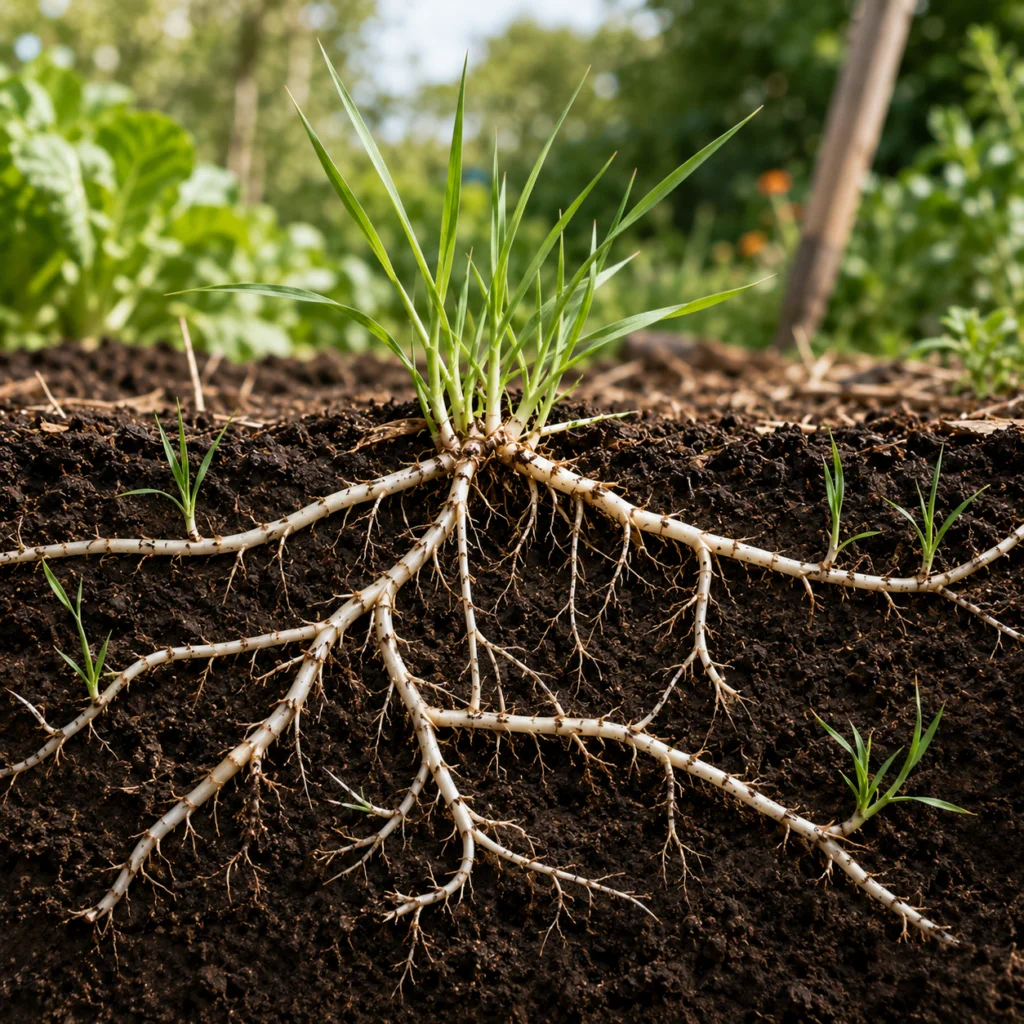
Couch grass is a perennial grass that spreads through an extensive network of underground rhizomes. These long white stems, often just a few centimeters beneath the surface, can extend several meters and consistently produce new shoots.
This underground system is what enables couch grass to colonize areas so effectively. Contrary to popular belief, the visible plant above ground is not the main concern; the real challenge lies beneath the soil.
Each rhizome serves as an energy reserve, allowing couch grass to regenerate as long as the network remains intact. This characteristic complicates management efforts.
What Couch Grass Reveals About Soil
Interestingly, unlike bindweed, couch grass is not necessarily indicative of degraded or poor soil. According to plant bio-indicator research by Gérard Ducerf, its presence often correlates with nutrient-rich soils, particularly those high in available nitrogen.
You are likely to find it thriving in gardens that receive regular applications of compost, manure, or other organic matter. This can seem counterintuitive: improving soil health seemingly invites couch grass.
In reality, this plant excels at exploiting fertility. When soil resources are not fully utilized by existing crops, couch grass can quickly capitalize on them. It also thrives in regularly worked soils, where tilling or using a rotary tiller breaks its rhizomes into fragments, each capable of growing into a new plant.
Thus, a heavily cultivated garden can inadvertently promote its spread. Additionally, couch grass favors sparsely occupied spaces, such as bare patches left for months or areas with low crop coverage, providing opportunities for it to establish itself.
Its presence often signifies a combination of soil fertility, mechanical disturbances, and a lack of plant competition rather than poor soil quality.
Why Tilling Often Exacerbates the Problem
In response to couch grass, many gardeners instinctively reach for a tiller to