How to Transplant a Miniature Rose from Pot to Garden
Learn how to properly transplant a miniature rose from pot to garden, including care tips and suitable varieties for container gardening.
How to Transplant a Miniature Rose from Pot to Garden
July 10, 2026
Receiving a potted miniature rose can bring joy, but it also raises questions about its care and appropriate placement. While many people view these plants as indoor options due to their size, understanding their specific needs is crucial for their health and blooming potential. This article will guide you on how to care for a potted rose, when to transplant it into the ground, and which varieties are best suited for container gardening.
Can a Miniature Rose Stay Indoors?
Most miniature roses sold at florists do not thrive indoors for extended periods. The warm, often dry air and insufficient light can lead to rapid decline in plant health, evident through yellowing leaves, aborted buds, and wilting flowers.
However, there are exceptions; certain varieties are specifically adapted for outdoor pots. In a cool, well-lit environment, and with regular outdoor exposure, the lifespan of these plants can be extended by a few weeks. Nonetheless, most miniature roses flourish best when moved outside as soon as possible.
Which Miniature Roses Are Suitable for Pots?
Miniature roses intended for pot cultivation are typically propagated through cuttings rather than grafting. This method results in a bushy growth habit, with most varieties reaching heights and widths of 20 to 40 cm. These characteristics make them ideal for balconies, small terraces, and shallow planters.
It's essential to keep the substrate airy to prevent compaction from frequent watering and summer heat. Adding drainage materials like perlite, vermiculite, or clay balls can enhance root health and moisture retention without oversaturation.
If you have limited outdoor space, opt for containers that are at least 20 cm deep and ensure proper drainage. Well-drained pots help prevent rot and minimize the risk of root diseases. Consider the plant's exposure to sunlight and protection from drying winds.
How to Water and Feed a Potted Rose?
Regular watering is vital for a potted rose, as the limited soil volume dries out quickly. Never allow the surface to dry out more than 2 cm deep, as water stress can weaken the plant and make it susceptible to pests. Adjust watering frequency based on temperature, humidity, and pot size.
Fertilization is necessary since the nutrients in a container can be depleted rapidly. Without consistent feeding, blooming may diminish, and foliage can lose its vibrancy. Use a balanced fertilizer according to the recommended dosage on the product label.
- Check moisture by inserting a finger into the soil.
- Water in the morning to minimize evaporation.
- Apply a flowering fertilizer every 4 to 6 weeks during the growing season.
- Avoid overwatering; prioritize good drainage.
When and How to Transplant a Miniature Rose into the Ground?
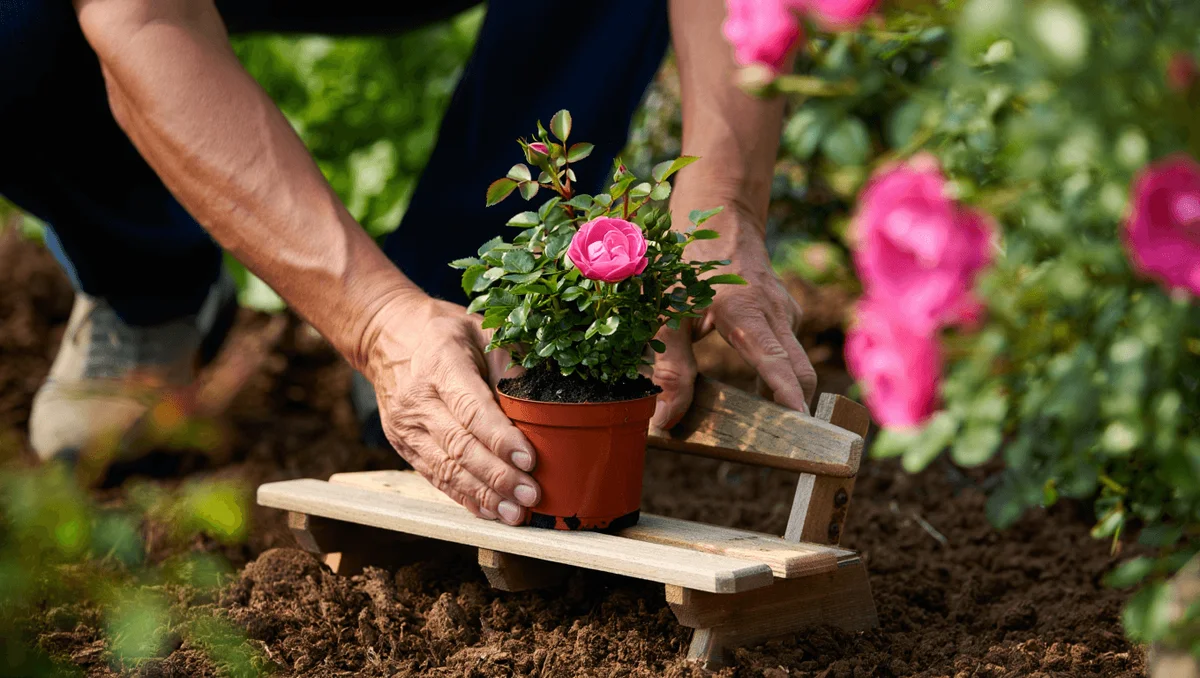
Autumn is the optimal time to transplant a potted miniature rose into the garden. Cooler temperatures reduce root stress and encourage establishment before winter. Choose a sunny location with rich soil to support the plant's growth.
Caring for a rose in the ground is straightforward: ensure well-drained soil and occasional organic inputs. Deadheading spent flowers will promote new blooms, and light pruning at the end of winter will help maintain a healthy, bushy shape.
Here’s a summary table to help you decide between pot and ground planting:
| Situation | Advantages | Tips | |---------------------------|---------------------------------------|------------------------------------------------------------| | Potted Rose | Mobility, ideal for balconies | Deep pot ≥20 cm, good drainage, regular watering | | Ground Planting | Better hardiness and lasting blooms | Plant in autumn, rich soil, sunny spot, winter mulching | | Specialized Mini Roses | Suited for containers, abundant blooms | Choose cutting-propagated varieties, airy substrate, fertilize |