Growing, Caring for, and Propagating the Two-Colored Centaurea
With purple-pink flowers from June, minimal care, and no winter protection, the Two-Colored Centaurea is a rewarding perennial for sunny gardens. Learn about its site, soil, pruning, and propagation tips.
With purple-pink flowers blooming from June, minimal care required, and no winter protection necessary, the Two-Colored Centaurea (Centaurea dealbata) is a rewarding perennial for sunny gardens. This article covers everything from site selection, soil requirements, pruning, and division, along with tips for ensuring abundant blooms.
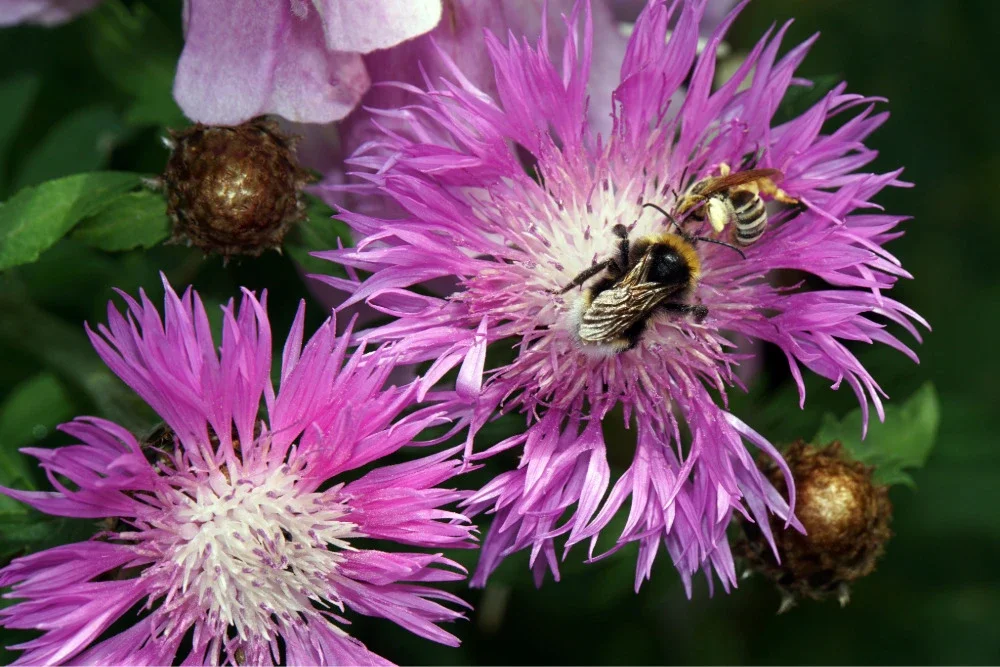
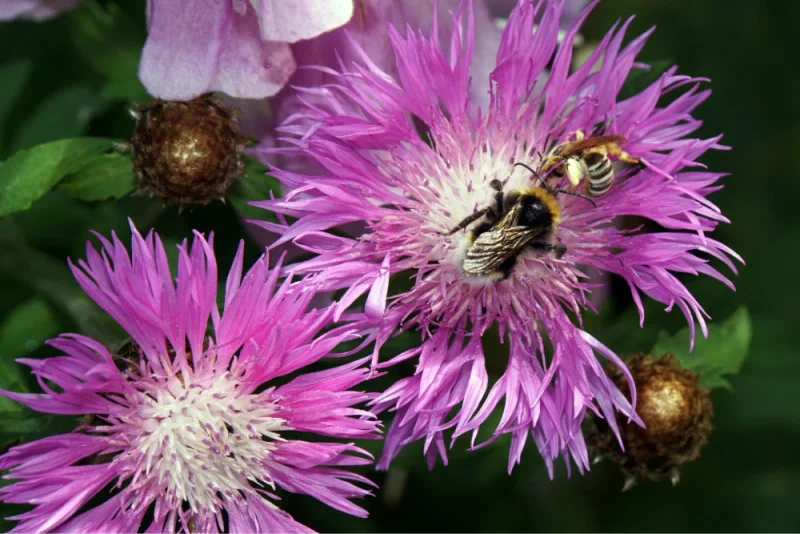
During a stroll through my garden in June, I first noticed the thistle-like buds of the Two-Colored Centaurea, seemingly self-seeded. Shortly after, the initial pink, finely fringed flowers with their lighter centers opened, turning the plant into a haven for bees. Since then, I have come to appreciate this low-maintenance perennial, especially since it tolerates minor care mistakes and thrives even in dry summers.
Overview of the Two-Colored Centaurea
Centaurea dealbata
- Height: 60 – 80 cm
- Width: 50 – 70 cm
- Blooming Period: June – July
- Location: Sunny
- Soil: Dry to fresh, well-drained
- Special Feature: Bee-friendly wildflower and cut flower
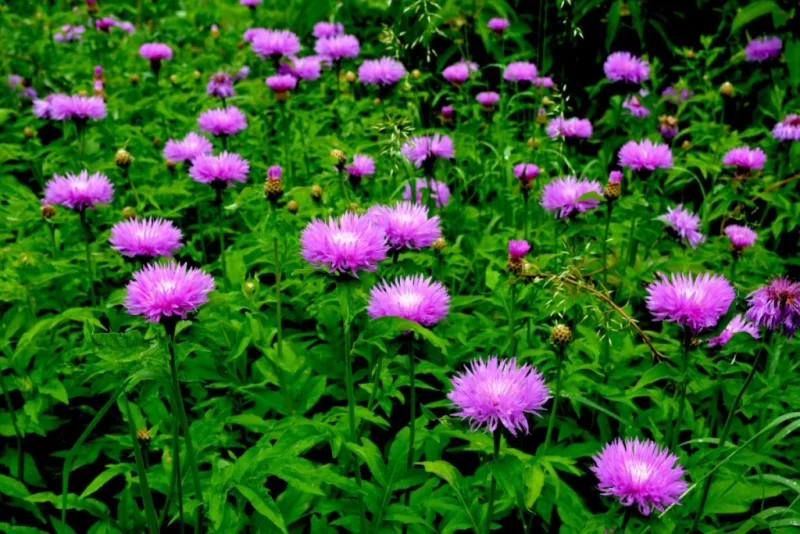
The Two-Colored Centaurea grows as a clump-forming perennial, reaching heights of 60 to 80 cm depending on its location. Its feathery foliage, rich green on top and silvery-white beneath, is noticeable even before flowering. The botanical name “dealbata” translates to “whitewashed,” which aptly describes its leaf coloration.
From June to July, the flower heads, measuring about 4 to 5 cm across, bloom with purplish-pink fringes surrounding a lighter center. This plant thrives in naturalistic plantings, cottage gardens, and sunny borders. Its long stems also hold up remarkably well in vases.
Plant Family and Origin
Botanically, Centaurea dealbata belongs to the daisy family (Asteraceae), sharing this classification with sunflowers, asters, and cornflowers. This species originates from the mountain meadows of the Caucasus, which explains both its frost resistance and preference for open, sunny locations. The Mountain Centaurea (Centaurea montana), belonging to the same genus, blooms a month earlier in rich blue-violet instead of pink.
Planted in spring between March and May, Centaurea dealbata will bloom in the same summer. If planted in early autumn, by mid-October at the latest, the roots will have time to establish. However, the plant is sensitive to winter waterlogging, making autumn planting advisable only in well-drained soil.
💡 Tip: Summer planting is also possible but requires regular watering during heatwaves.
Location Requirements
The most abundant blooms occur in sunny locations. While it can grow in light partial shade, it will flower less and may become leggy. Therefore, it is not suitable for consistently dark corners of the garden. In such areas, bee-friendly shade perennials like foam flower or Bergenia thrive better.
Soil Conditions
The ideal soil for the Two-Colored Centaurea is well-drained and moderately nutrient-rich. The plant tolerates lime well, and a slightly alkaline pH is not an issue. The only critical factor is avoiding waterlogged conditions, as prolonged wet soil can lead to root rot.
💡 Tip: To determine if your soil is suitable, conduct a simple test after heavy rain. If puddles drain within a day, you're in good shape. If water remains standing, improve heavy clay soil with sand or fine gravel before planting. Rich, humus-heavy soil is not particularly beneficial, which will be discussed further in the fertilization section.
Step-by-Step Planting Guide
- Loosen the soil to a depth of 20 to 30 cm and remove root weeds.
- Dig a planting hole about twice the size of the root ball.
- Briefly water the root ball of the Two-Colored Centaurea before planting, then place it so that the top of the ball is level with the soil surface.
- Maintain a planting distance of 50 to 60 cm. You only need 2 to 3 plants per square meter, as the perennial will fill in gaps with its runners.
- Firm the soil around the plant, water thoroughly, and keep it evenly moist during the first few weeks.
- A thin layer of mulch made from grass clippings or leaves can help retain soil moisture but is not essential.
Companion Plants for the Two-Colored Centaurea
The Two-Colored Centaurea pairs well with other perennials that have similar needs. Steppe sage and catmint bloom simultaneously in blue-violet, enhancing the pink tones of the flowers. Yarrow in yellow or white provides a calm contrast, while ornamental grasses like feather grass add lightness to the bed. Daisies are also a good match, as they prefer the same sunny, relatively barren conditions. For those looking to create a complete perennial bed, position the Centaurea as a mid-height companion in front of taller plants like delphiniums.
Caring for the Two-Colored Centaurea
Caring for the Two-Colored Centaurea involves just a few tasks throughout the year. The most common mistakes arise not from neglect but from over-attention.
Watering
Established Centaureas typically do not require additional watering during normal summers. Only during prolonged heat and in the planting year does the plant need water, ideally applied deeply in the mornings directly at the root zone.
Fertilizing
A layer of mature compost in spring, about 2 to 3 liters per square meter, is sufficient for the entire season. Mineral fertilizers are entirely unnecessary and can even be harmful, as excessive nitrogen can weaken the stems. After heavy summer rains, the flower heads may flop over in the garden. In contrast, on nutrient-poor soil, the plant remains compact and sturdy without the need for plant supports.
Pruning
After the main bloom in July, cut the faded stems back to about a hand's breadth above the ground. This encourages a second bloom in late summer in many cases and prevents excessive self-seeding. The complete cutback of the foliage should occur in early spring, as the leaf rosette protects the plant in winter, and the dry stems provide a winter habitat for beneficial insects.
Wintering
In the garden, the Two-Colored Centaurea requires no winter protection; its Caucasian origin makes it one of the most frost-resistant perennials. Only newly planted autumn specimens benefit from a loose covering of twigs.
💡 Tip: Wintering Container-Grown Two-Colored Centaureas Container plants are more sensitive, as their root balls can freeze completely. Therefore, move the pot against a sheltered wall, place it on a wooden or Styrofoam base, and wrap it in fleece or jute. Suitable winter protection sets for container plants provide ample insulation. It is crucial to use breathable materials, as plastic can trap moisture and harm the Centaureas. Such protection is unnecessary for garden plants.
Propagating the Two-Colored Centaurea
Centaureas can be reliably propagated through division and by sowing. Both methods are accessible even for beginners.
Propagation by Division
Dividing the Two-Colored Centaurea is the quickest method and also serves to rejuvenate the plant, as older clumps bloom less vigorously from the inside. Every three to four years, dig up the clump in spring or early autumn, remove the soil, and divide it into fist-sized pieces using a spade or hands. Each piece should have several buds and healthy roots and should be replanted immediately, followed by thorough watering.
💡 Tip: The basic principle applies to most clump-forming perennials, and a detailed guide on dividing perennials, including a tool list, can assist with initial attempts. A common beginner mistake is using pieces that are too small, which may result in minimal flowering in the first year.
Propagation by Sowing
Sowing can be done directly in the garden from April or in trays indoors from March. The seeds should be lightly covered with soil, kept evenly moist, and will germinate at temperatures between 15 and 18 °C, usually within two to three weeks. Young plants can be spaced at final distances once they reach about 10 cm in height, but they will typically not flower fully until the second year. The plant often self-seeds, as leftover seed heads will produce abundant offspring in suitable locations.
Experience: Planting the Two-Colored Centaurea in the Garden
In the garden, the Two-Colored Centaurea proves to be an exceptionally forgiving perennial that requires little attention after establishment. However, its propensity to spread is notable. Over time, it can cover considerable ground through short runners and seedlings, which can be a blessing in a natural garden but may become a nuisance in strictly planned borders.
Fortunately, it is easy to control. In spring, when the young shoots emerge, unwanted runners can be severed with a spade. The feathery foliage with its pale underside distinguishes them from weeds, and potted plants may even wander over to neighbors' gardens. The plant is mainly sensitive to excessive shade, which can lead to decreased flowering over the years. When positioned correctly, it reliably blooms, even in summers when other perennials struggle.