Exploring Animal Suffering Through Poetry
Teodora Mastrototaro's poetry collection explores the structural violence against animals, blending humor and poignant commentary on societal issues.
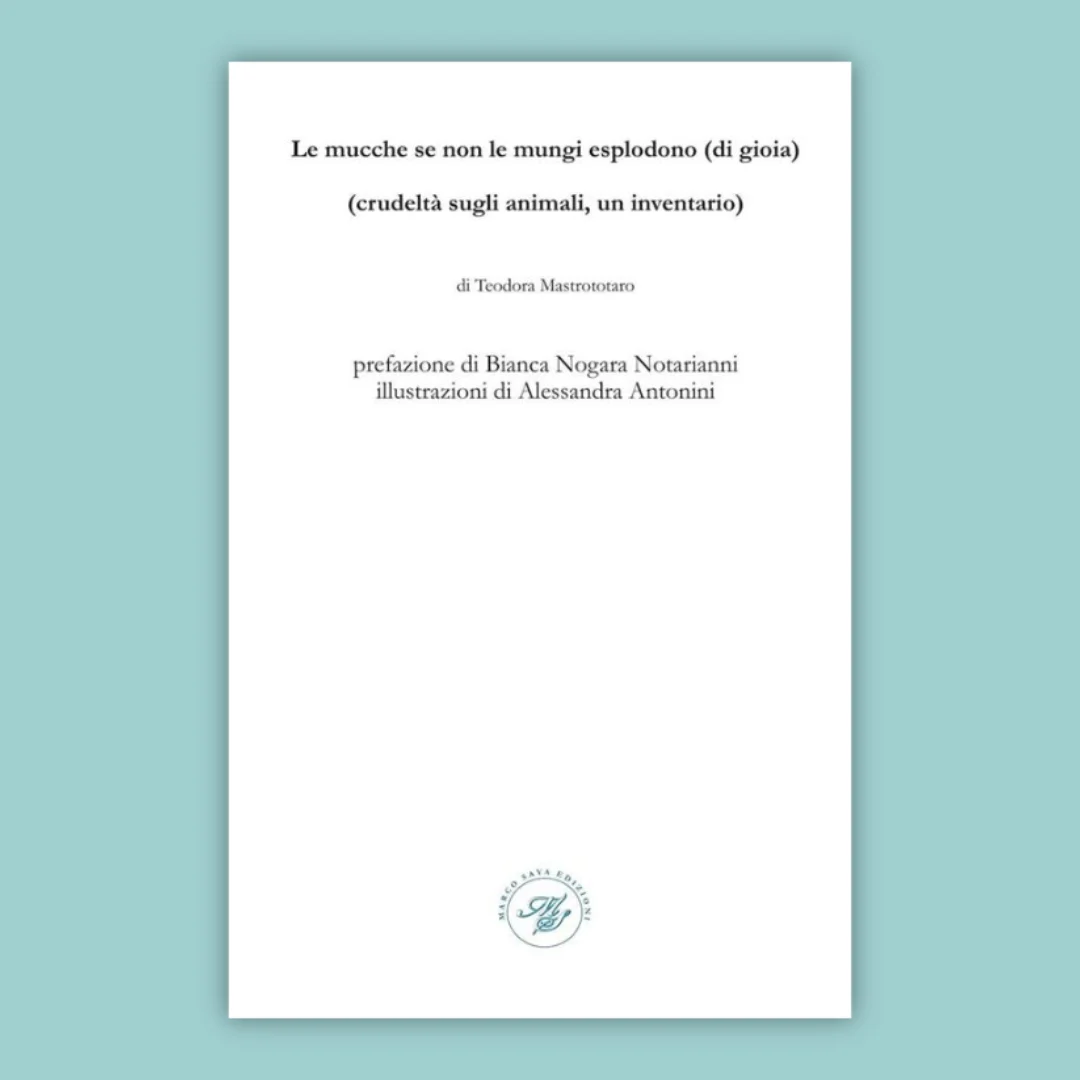
In the realm of literature, few works manage to blend humor with poignant commentary on societal issues, particularly regarding animal welfare. Teodora Mastrototaro's collection, Le mucche se non le mungi esplodono (di gioia), serves as a profound exploration of the structural violence faced by non-human animals, all while inviting readers to reflect on their emotional responses.
The challenge of discussing the systemic violence embedded in our society is significant, especially when it pertains to animals. Our capitalist, sexist, and speciesist frameworks create a myriad of justifications for the exploitation of animals, often rendering their suffering invisible. Mastrototaro's work encourages us to confront this uncomfortable reality, highlighting how deeply ingrained these injustices are in our daily lives.
The collection is unexpectedly a series of poems that capture the essence of animal suffering interwoven with moments of humor. Through vivid imagery and emotional depth, the poems catalog the myriad ways violence permeates our existence.
12 January 2025 E45 exit near Cesena – two pigs fall from the truck transporting them to the slaughterhouse. Traffic slows as one of the pigs remains seated in the middle of the road, motionless.
On the roadside meat for sale… fire not for warmth, but to cook.
Slow cars in line ask how much it costs per kilo.
The poems also evoke a sense of grief that goes beyond mere sadness; they affirm the value of lives lost and connect us to the experiences of other beings. This complex mourning is portrayed not just as sorrow but as a celebration of life, as seen in the lines reflecting on a captive elephant's liberation from illness.
Cells proliferating in a body in captivity are the only temptation of life… paradox of tyranny.
Like a metamorphosis from caterpillar to butterfly you begin to exist again an exit from the tomb resurrection after dying of cancer.
Mastrototaro's poetry also serves as a vehicle for expressing anger and solidarity, emphasizing the interconnected struggles of both human and non-human lives. The call for a new social contract reflects a desire to redefine our relationships with all beings, advocating for a world where life is valued beyond mere survival.
Let’s establish a new permanent work contract, without time constraints, only death.
In exchange for food and shelter, workers commit to give their lives.
The contract must be written in blood.
This collection not only critiques existing norms but also opens doors to new forms of agency for non-human animals. It resonates with the reader's emotions, urging us to acknowledge and articulate our feelings about the injustices faced by these beings. Poetry becomes a tool for transformation, allowing us to envision a different world where empathy and compassion prevail.
12 August 2024 Argentina – Kshamenk, a large male orca, has been confined for nearly thirty years in a small concrete tank at an Argentine marine park. The animal rights group Urgentseas released a video showing Kshamenk motionless, staring at the gate that separates him from dolphins for twenty-four hours.
Surrendering to sleep on the water and flooding your eyes with stillness.
In conclusion, Le mucche se non le mungi esplodono (di gioia) is more than just a collection of poems; it is a call to recognize the profound connections we share with non-human animals and to reimagine our roles within this world. Through poetry, Mastrototaro invites us to engage with these themes and to consider the possibilities of a more compassionate existence.