Creating an Edible Forest Garden in Urban Spaces: Is 20 m² Enough?
Explore how to create an edible forest garden in urban settings, even in small spaces of 20 m². Learn about plant layering, minimal maintenance, and sustainable food production.
A Natural Model for Small Spaces
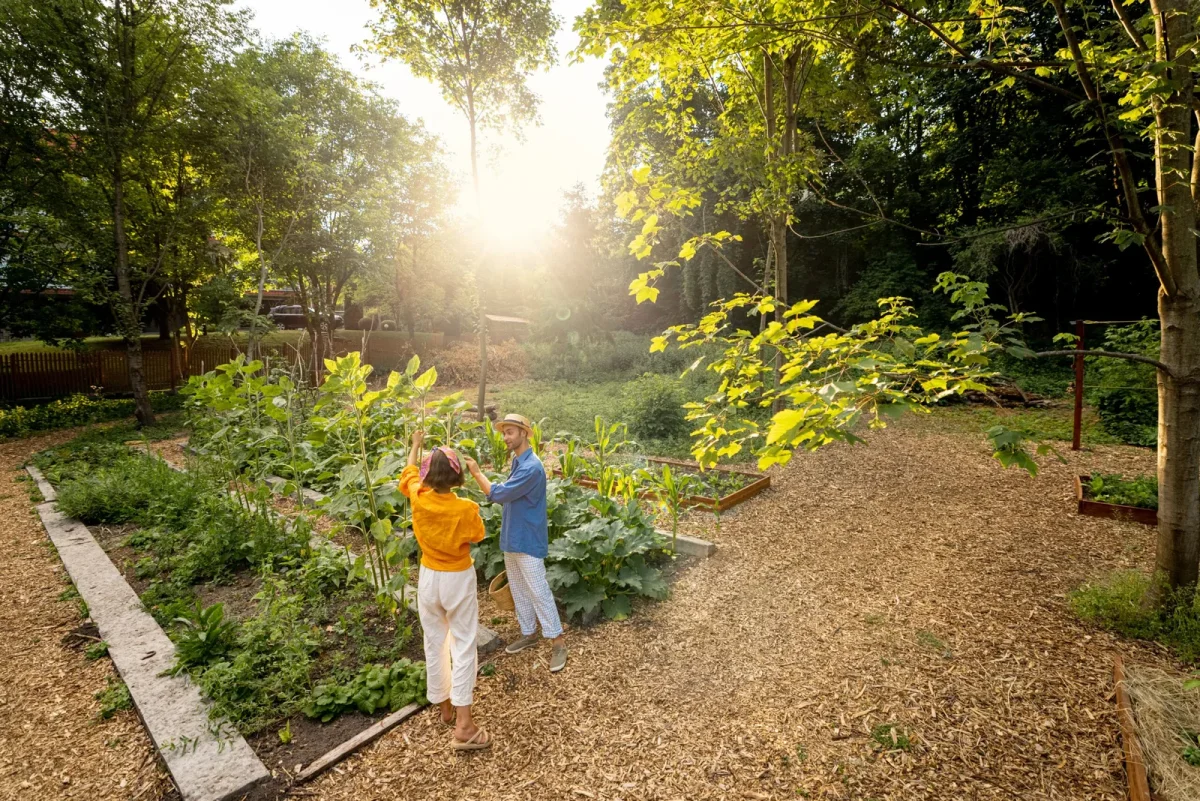
The concept of a forest garden is often associated with large rural areas, yet it can be adapted to small urban spaces. This gardening method mimics natural forests, scaling them down for home gardens. The idea is that a stable and diverse ecosystem can yield food while maintaining its own fertility. In urban settings, even a plot of 10 to 20 m² can transform into a productive, edible, and self-sustaining ecosystem by adhering to some fundamental principles.
Success in a forest garden relies heavily on observing and understanding the interactions among plants. Unlike traditional vegetable gardens, which are often seasonal and require regular upkeep, a forest garden focuses on perennial plants, natural associations, and a living soil. The goal is not just to grow vegetables, but to cultivate a resilient space capable of producing fruits, herbs, edible roots, and even wood with minimal effort and without chemical inputs.
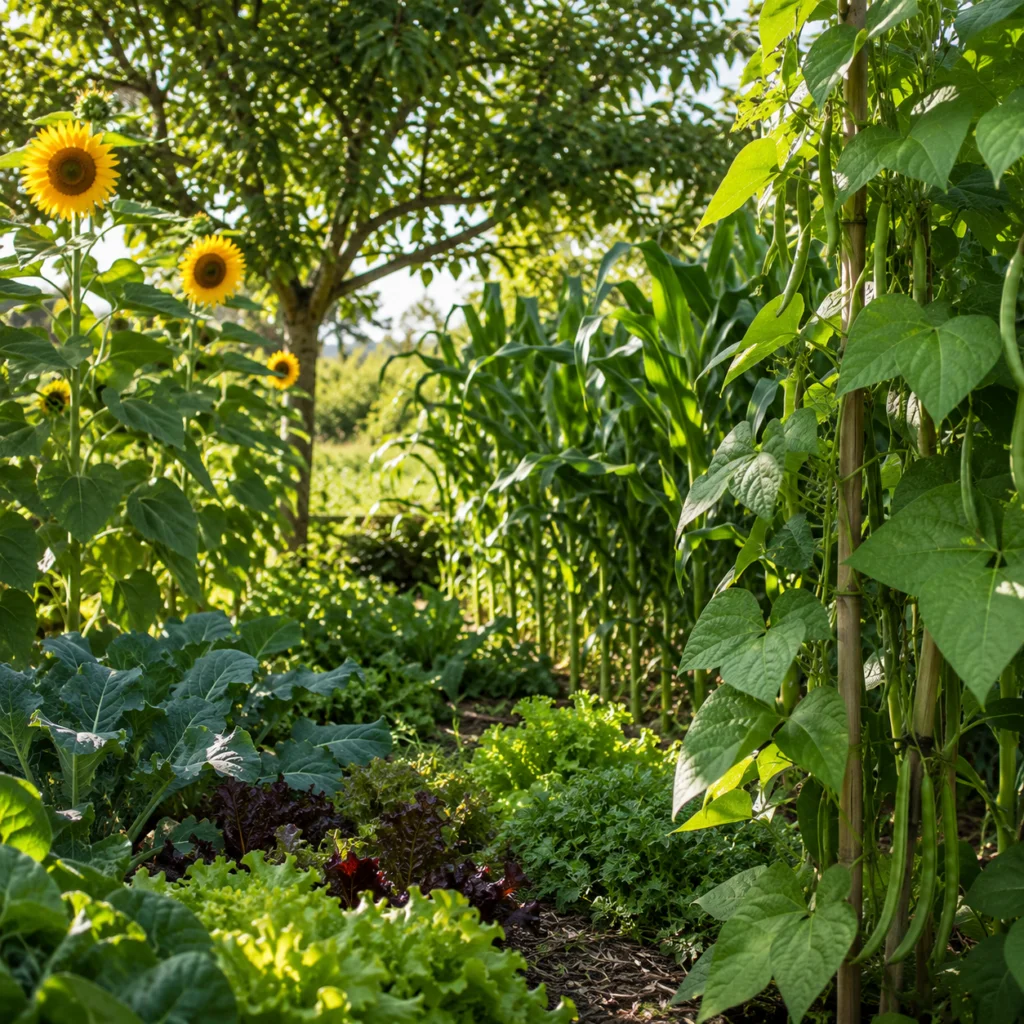
Forest gardens utilize a vertical structure, comprising multiple layers of vegetation that optimize space, even in confined areas. The upper layer typically features one or two small fruit trees, such as columnar apple trees, dwarf pear trees, or container-grown citrus. Below these, shrubs like currants, blackcurrants, and blueberries thrive.
Lower down, herbaceous perennials such as chives, sorrel, lemon balm, and comfrey enrich the soil while providing edible leaves. Ground covers like strawberries, oregano, or mint suppress unwanted weeds and retain moisture. Additionally, root vegetables such as garlic, onions, or Jerusalem artichokes can flourish in a living soil. Climbing plants like vines or pole beans can utilize vertical supports to maximize space.
Thus, even within a 20 m² area, it is possible to create a dense vegetation structure that encourages production, natural pest regulation, and water conservation.
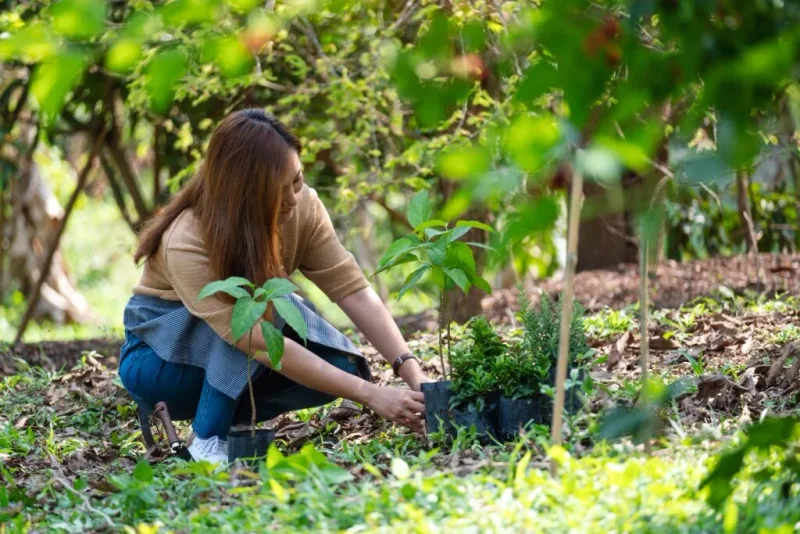
Designing Your Urban Forest Garden
Creating a forest garden begins with understanding your land. What is the sun exposure? Are there areas of permanent shade? What type of soil do you have? Urban environments often present more constraints, but these are not insurmountable. It is entirely feasible to amend poor soil using compost, mulch, and enriching plants like alfalfa or phacelia. The key is to never leave the soil bare.
Once you know the conditions, you can start planning. This involves arranging plants according to their size, light requirements, and roles within the ecosystem. Place trees in the center or back of the plot to avoid shading the entire area. Light-loving plants should be positioned in the south, while shade-tolerant species can go to the north or beneath shrubs.
In urban settings, forest gardens can also be partially established in containers or pots. Dwarf citrus or small fruit trees thrive in deep containers, provided they are well-drained and regularly nourished. Climbing plants can be trained on walls, trellises, or pergolas, ensuring that every nook and cranny becomes productive.
Minimal Maintenance, Maximum Benefits
One of the significant advantages of a forest garden is its growing autonomy. Once established, it requires minimal human intervention. The soil remains covered, retaining moisture and structure. Well-associated plants provide mutual protection against diseases and pests. Organic waste is recycled on-site, and water requirements are minimal, making fertilization unnecessary in the long term.
Of course, the initial two or three years may require a bit more attention as plants establish their roots and the ecosystem balances itself. However, by the third year, harvests can become abundant with little effort. You can harvest throughout the seasons: strawberries in spring, herbs in summer, apples and hazelnuts in autumn, and roots in winter.
This model also holds significant aesthetic and emotional value. The garden evolves into a vibrant space, inhabited by rich biodiversity. Pollinators, birds, hedgehogs, and earthworms all contribute to the overall balance. For urban gardeners, this becomes a source of joy, learning, and lasting satisfaction.
A Future Model for Food Autonomy
As the challenges related to ecological transition, rising food prices, and climate change intensify, the forest garden emerges as a practical and accessible solution. It enables local food production without external inputs and ensures a certain level of food resilience, even in urban areas.
This approach is not limited to experts. You don’t need to be a permaculture specialist or own an expansive plot to get started. A small space, a bit of patience, and a fresh perspective on gardening are all that is necessary. By altering our relationship with time, nature, and productivity, the forest garden offers an alternative path: one that harmonizes human needs with natural balances.
With some foresight, a patch of land or a courtyard can transform into a nourishing, aesthetically pleasing, and educational space. Even on 20 m², an urban forest garden is not only feasible but profoundly beneficial.