Choosing the Right Harness for Your Dog: A Comprehensive Guide
Discover how to choose the right harness for your dog, ensuring comfort and safety during walks. Learn about ergonomic designs, measurements, and recommended brands.
Key Takeaways
- An ergonomic harness distributes pressure across the chest, protecting your dog's neck and trachea.
- The Y-shape is the gold standard for allowing freedom of movement in the shoulders.
- For a perfect fit, measure the chest circumference rather than relying on weight, and ensure a two-finger gap.
- The choice of model depends on its intended use: walking, sports, or leash training.
If you're looking to provide your furry companion with the utmost comfort during walks, you've come to the right place to learn what constitutes a truly suitable harness for their anatomy.
The health and well-being of your dog begin with quality equipment. The goal is straightforward: find a harness that does not hinder or injure them, making your outings enjoyable for both of you. Let's explore how to make this choice without getting lost in the options available.
Identifying a Truly Comfortable Harness
Why is the Y-Shape the Best?
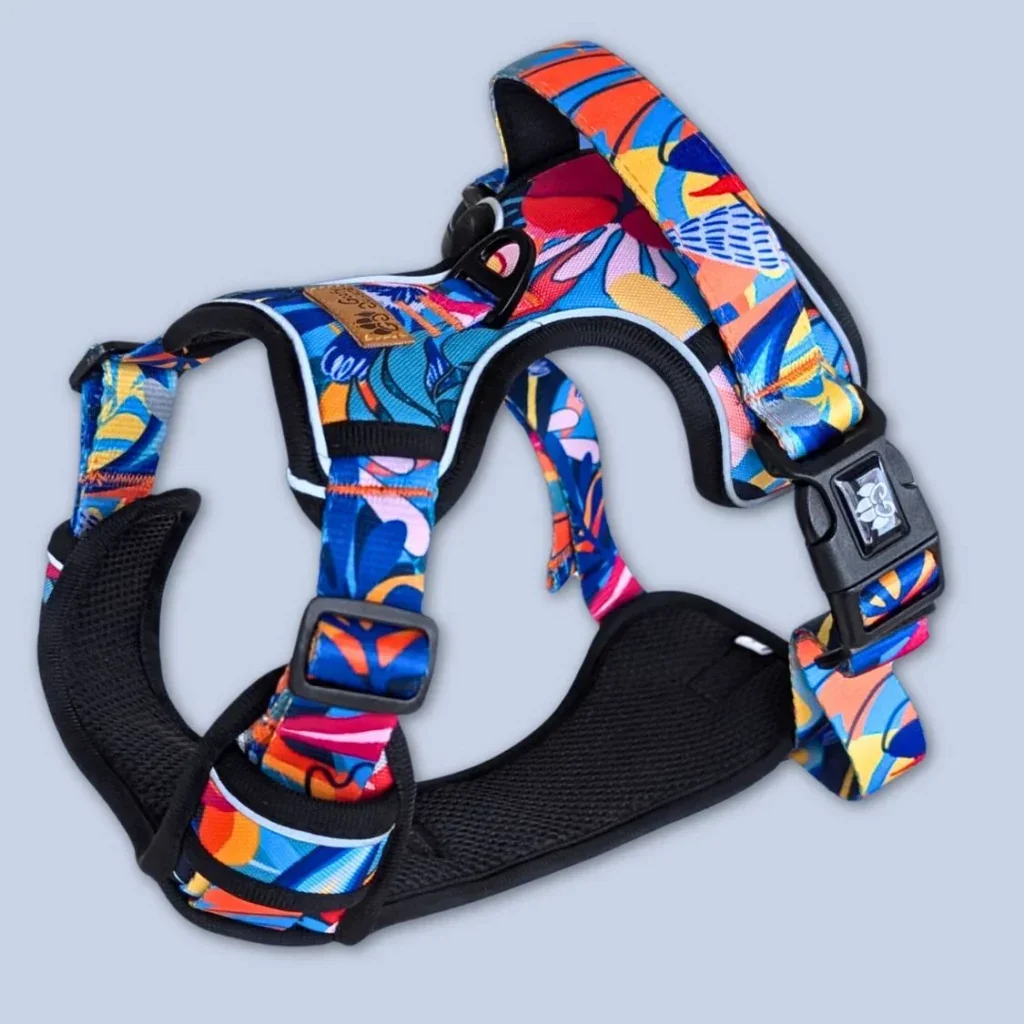
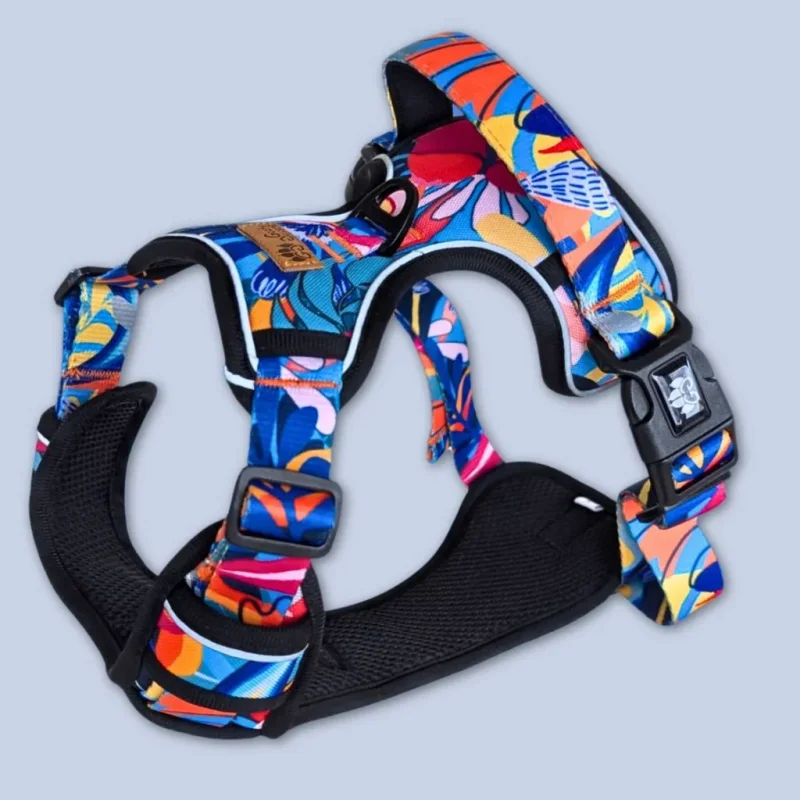
You might be wondering why the Y-shape is often recommended. The answer lies in its design: the Y-shape respects the canine anatomy by following the dog's natural structure. Unlike T-shaped harnesses, which can restrict shoulder movement, the Y-shape completely frees up the joints and trachea.
Some models are even developed with input from veterinarians and canine osteopaths, ensuring a design that prioritizes your pet's health. This kind of detail can make a significant difference in the long run.
Importance of Padding and Materials
An ergonomic harness also incorporates breathable materials. Neoprene is a popular choice due to its comfort and softness against the skin. For active dogs or during summer, 3D mesh, such as Mesh™, is an excellent option as it minimizes sweating.
Quality indicators include the finish, stitching, and durability of the buckles. A good harness should be easy to clean and withstand even the most vigorous play sessions.
Choosing Based on Activity and Body Type
Anti-Pull Harness for Dogs that Pull
If your dog tends to pull like a tractor, an anti-pull harness can be a fantastic training tool. It features a front attachment located on the chest. When your dog pulls, this attachment causes them to pivot slightly, redirecting them back toward you and encouraging them to slow down.
This is an effective way to learn how to walk calmly, without jolting or discomfort. Remember, this is a training aid, not a permanent solution. Once good behavior is established, you can transition to a back attachment.
Sport Harness for Active Dogs
For activities such as canicross, biking with dogs, or long hikes, a sport harness is essential. The focus here is on support and freedom of movement. Specialized models have a high attachment point on the back, allowing for smooth pulling without hindering their stride.
Harness for Sensitive Dogs and Puppies
For puppies, senior dogs, or brachycephalic breeds (like Bulldogs or Pugs), softness is key. Their necks and tracheas are particularly vulnerable. Opt for a padded Y-shaped harness with a back attachment for leisurely walks, ensuring it does not apply pressure on the throat.
Overview Chart for Clarity
| Use Case | Recommended Harness Type | Attachment Points | Example Models | |------------------------|--------------------------|-------------------------------|---------------------------------------| | Daily Walks | Y or H | Dorsal, sometimes frontal | Hurtta Venture, Ruffwear Front Range | | Dog that Pulls | Anti-pull (Y) | Frontal (chest) + dorsal | Julius-K9 JK9®GO, Hurtta Venture No-Pull | | Sports (canicross, hiking) | Specific, reinforced support | High on the back | Kyflie Otium, dedicated Hurtta models | | Puppy / Sensitive Breed | Padded, lightweight Y | Dorsal | On se la Pet, Rukka® Cube Mini |
Measuring: A Crucial Step
Even the finest harness will be uncomfortable if it is poorly fitted. Never rely on your dog's weight to determine size; this can be misleading.
Measuring Like a Pro
You'll need a flexible measuring tape. The most critical measurement is the chest circumference, taken just behind the front legs at the widest part of the chest. This measurement is foundational for most manufacturers' size guides.
For some models, the neck circumference is also necessary, measured at the base of the neck where a collar would typically sit.
The Two-Finger Rule
This is the ultimate test. Once the harness is on, you should be able to fit two fingers between the strap and your dog's body. Not more, not less. This indicates that the harness is well-fitted—not too tight to cause injury and not too loose to allow for escape.
Measurement Comparison Table
| Measurement | Where to Measure? | Importance | |-------------------|----------------------------------------------------|--------------------------------------| | Chest Circumference | Just behind the front legs, at the widest part of the chest | The base measurement for most manufacturers | | Neck Circumference | At the base of the neck, near the sternum | Essential for certain models like the MORSO® | | Back Length | From the base of the neck to the base of the tail | Crucial for sport harnesses and long-backed breeds |
Trusted Brands Known for Expertise
To assist you in making your choice, here are some brands that have established themselves as leaders in ergonomic harnesses:
- Hurtta: This Finnish brand is a reliable choice. Models like the Venture are renowned for their ergonomic design, comfortable 3D mesh padding, and durability, verified by SGS laboratory tests.
- Julius-K9: Known for robust and versatile harnesses, the JK9®GO stands out as an excellent example of an anti-pull Y-harness.
- Ruffwear: An American brand recognized for adventure dogs, the Front Range® offers exceptional comfort with bluesign® approved materials.
- On se la Pet: A rising French brand, their Y-harnesses are designed with input from veterinarians and canine osteopaths, ensuring your dog's well-being.
- Rukka®: This brand offers models like the Cube Mini, specifically designed for small dogs, featuring soft materials and an ergonomic design.
Frequently Asked Questions
What is the best type of harness for a dog? There is no one-size-fits-all answer. The Y-shape is generally recommended for its freedom of movement, particularly for active or sensitive dogs. The H-shape is a good daily choice if well-designed.
How can I tell if a harness is truly comfortable for my dog? Observe their behavior! They should not scratch, attempt to remove it, or show signs of discomfort. A perfect fit is essential.
Is an anti-pull harness a solution for a dog that pulls? It is an excellent training tool but not a magic fix. It should be combined with training efforts. Once good behavior is established, you can switch to a standard harness.
Can a puppy wear a harness? Absolutely! It is even recommended. Choose a lightweight and adjustable model like the Rukka® Cube Mini, and regularly check the fit as they grow quickly.
Are Goofy Goldens harnesses ergonomic? Goofy Goldens offers harnesses that respect canine anatomy by avoiding sensitive areas. Their models are designed for comfort and adaptability, featuring original designs. A portion of the profits is donated to animal protection organizations.

Elise Dubois
Landscape horticulturist & Urban herbalist
My journey into the plant world began at a young age in my grandmother's garden, where I discovered the magic of a seed transforming into a plant and the generosity of well-nourished soil. This fascination evolved into a vocation. After studying horticulture and landscaping, I chose to pursue this passion further.