
A Garden Fit for a Prince or a King
This week we visited one of the largest gardens in Spain, covering 150 hectares. A garden worthy of a prince, created by order of the then Prince of Asturias, later Charles IV.
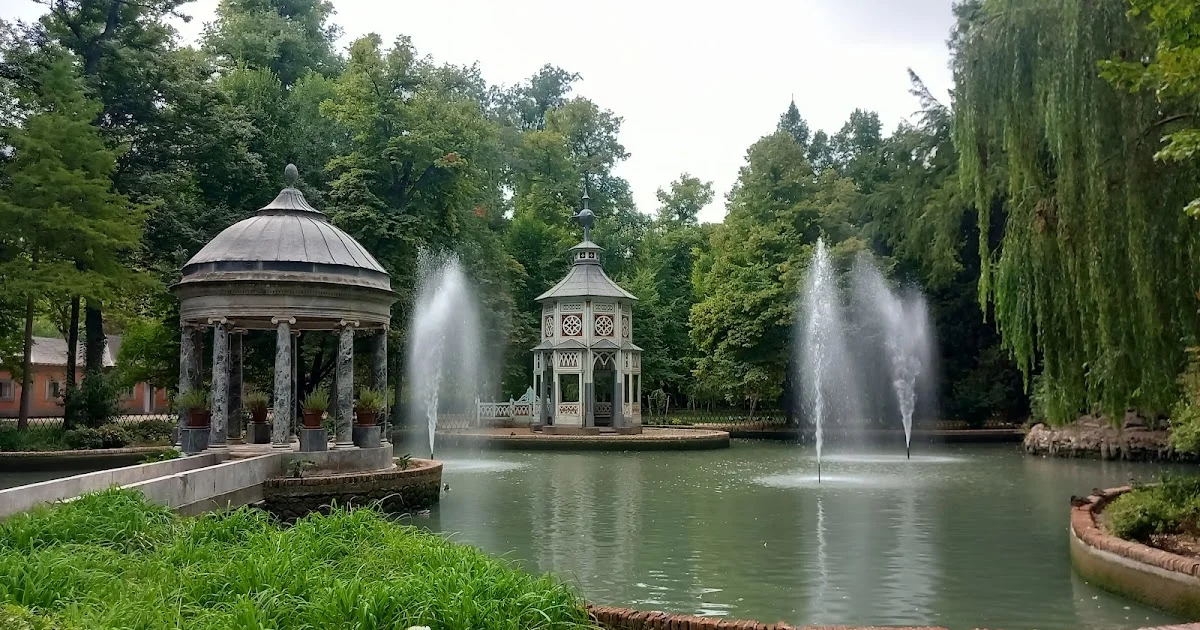
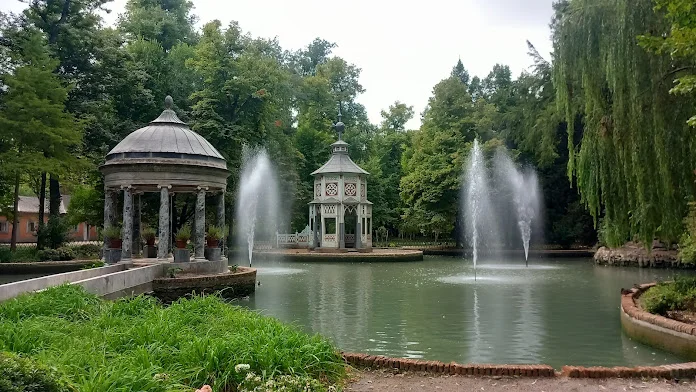
This week we stopped to visit one of the largest gardens in Spain, covering 150 hectares.
I say it is a garden worthy of a prince because it was created by order of the then Prince of Asturias, later Charles IV in 1709, and completed in 1808 when he became King of Spain.
Inspired by the English style, landscape or romantic, it is unique among Spanish royal gardens. While it is considered to be in the landscape style for including elements belonging to this artistic movement, the layout of avenues and paths often resembles more formal gardens (Italian/Renaissance or Baroque/French). This may be due to the inclusion of previous elements that had already been used by the royal family.
Aranjuez and its surroundings were a place where the monarchs and the court spent seasons; they could hunt in the so-called Ontigola Sea, nearby lagoons specifically dammed for hunting, and even exotic animals were released to be hunted in subsequent days by nobles and kings.
It is not surprising that, being inhabited by the royal family, the luxury of the palace and gardens was the common denominator. Interestingly, it seems that dromedaries (hundreds) were brought in as they damaged the gardens less than horses or mules during construction work. No expenses were spared... Even today, peacocks can be seen roaming the gardens.

The Prince's Garden is immense, bordered on one side by the Tagus River and the rest enclosed by a majestic fence with neoclassical style gates.
As I mentioned, this area was previously used as a vegetable garden, and there were some pavilions, docks for the royal family's parties and strolls along the Tagus (as evidenced today by the Royal Barges Museum located here, which displays luxurious barges from that era).

The Tagus River delineates part of the Prince's Garden in Aranjuez.
As spaces were included and remodeled in the new garden, enclaves such as the area of the hermit's house and its orchard, sunken walls or "ha-ha" used in landscape gardening to avoid cutting views... remain or are constructed, neoclassical fountains, islands, and artificial mountains... stand out the farmer's house created as a "landscape complement" and later expanded into a small palace for the royalty to "escape" from the constraints of official events. Near this building were the nurseries. There was also a zoo. Whatever the King desired...

Pavilion Garden in the Prince's Garden, Aranjuez

Santiago Rusiñol's Arbor, behind the old greenhouses. Prince's Garden, Aranjuez

Due to its origin, the garden had a multitude of varieties of fruit trees. This past September 2025, when I visited for the last time, there were many new trees planted, perhaps trying to recover that bygone aspect. Just as there was this vegetable garden area, many species brought from afar were planted, a demonstration of power. In this way, the King boasted of the vastness of his domains, and it was in Aranjuez where the tolerance of many new species to the Iberian Peninsula's climate was tested, which could have commercial interest for the nation.

Fruit tree areas with meadows
Perhaps more than by a conventional landscape design, which we can only appreciate in some areas (winding paths, natural appearance... the garden stands out for its size and diversity of species. We cannot think of this park as it was designed as a whole; rather, we should understand it as a collection of gardens that have merged over time, achieving a blending or blurring of their boundaries. Boundaries that any visitor can still recognize on a leisurely stroll. Among fountains, islands, constructions, classic flowerbeds, or more "wild" areas, visitors may also be interested in the multitude of animal species and threatened flora from the autonomous community of Madrid. After all, these gardens serve as "riparian forests" that are landscaped and anthropized to a greater or lesser extent. On my last visit, I crossed paths with several people with telescopes observing wildlife.
This garden retains its flood irrigation system through ditches, called "caceras" in Aranjuez. This reaffirms the horticultural past of this space. It is said that in this place, the well-known Shadow Plane Tree, Platanus x hispanica, began to be used and disseminated in gardening, as its scientific name proudly indicates.

Large avenues
As I mentioned, the roller coaster or Swiss mountain (an artificial mound), the farmer's house, the retaining wall next to the Tagus with its "planters" of masonry, the castle, and the dock... its monumental fountains and, of course, a common element in romantic gardens, the pond of the Chinescos (the first image of this entry).
These idealized constructions of pagodas or Asian elements were very common in European gardens. In many cases, these buildings resemble that childhood game of "broken telephone"... European travelers, upon their return, recounted how the buildings of Japan or China were, and others who had never seen them built them based on what they heard or adapted them to their taste or that of wealthy clients eager to have a piece of that trendy Eastern culture in Europe at the time. Achieving something intermediate between the original buildings and local architecture. For the younger ones, it would be like that meme of what you order on "x website" and what you receive... Overall, the quality of the work and the aesthetics, although distorted from the original, were resolved with elegance.


In the various gardens of Aranjuez, we find an extension and diversity of styles that will surely please any gardening enthusiast, although I must say that just like in the Granja (Segovia), I expected a greater level of care (I’m not saying they aren’t, mind you; I believe there are nods to new trends, recovering spaces, replaced trees...) so that they would shine as the impressive gardens they are. Not only is the palace, furniture, or paintings and tapestries part of the heritage...
These gardens attract tourism and could attract even more. That said, I cannot imagine the astronomical numbers involved in their conservation. Limited resources in a country with so much heritage to preserve like Spain, where every euro must be allocated to the most urgent needs, to what cannot wait... and it never seems to be enough for everything. It must be very complex to manage and very easy to opine from a blog...


I don’t know... when I visit these places, I always think that while there is an entrance fee to enter the palace, the gardens are free... a small symbolic amount from tourists could help raise funds, a "boost" for these green spaces.
If you thought the Prince's Garden was large, think that right next door, separated by a street, and next to the Aranjuez Palace, are the Island Garden, the Parterre Garden, the Isabel II Garden, the King’s Garden, and the Queen’s Garden. I don’t know if I have photos of all of them, but I will try to share more. Every time I go, I can never manage to see them all.
Can you imagine what it was like in its heyday? The outfits? The boat parties on the Tagus?
For now, I won’t reveal more; investigate or better yet, visit them and give me your opinion. Just don’t forget that although they are free, they have visiting hours.