
Busy Start to Spring | Wild Gardening
This was perfect: After the long snow period had stalled all gardening activities, the weather finally invited us to get to work in the garden since the last days of February.
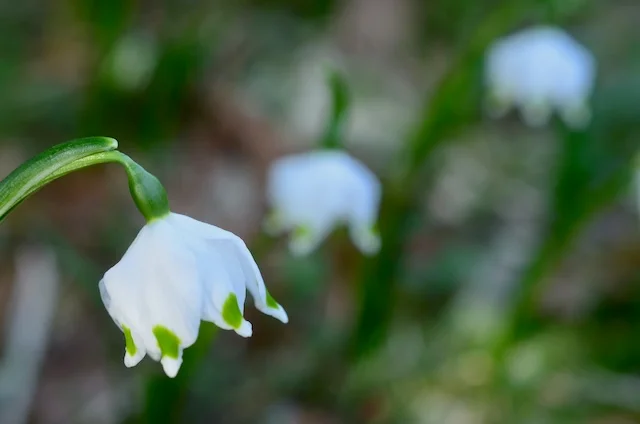
This was perfect: After the long snow period had stalled all gardening activities, the weather finally invited us to get to work in the garden since the last days of February. We were able to quickly rake the remaining leaves from the meadows and the garage roof, prune the perennials in the beds, complete the spring pruning of shrubs like wisteria and dogwood, bring the first pots from the cold house into the fresh air, and even cut down the giant miscanthus (Miscanthus x giganteus) before the warming sun stimulates new growth.
But it wasn't just us gardeners who started actively in spring. On sunny, mild days, more and more insects could be seen on early blooming geophytes, shrubs, and trees, replenishing their energy reserves—and delighting us with their buzzing and humming accompaniment while we worked in the garden.
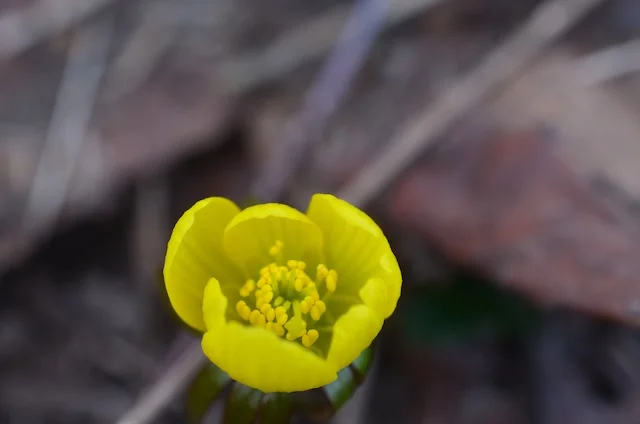
One of the first to provide nectar and pollen for hungry winged visitors is the winter aconite (Eranthis hyemalis). These delicate bulbous perennials thrive particularly well under deciduous trees—preferably in alkaline soils—and spread out in groups. In our garden, they stand in a small Himalayan birch grove (Betula utilis), where their yellow cup-shaped flowers shine next to the white tree trunks.
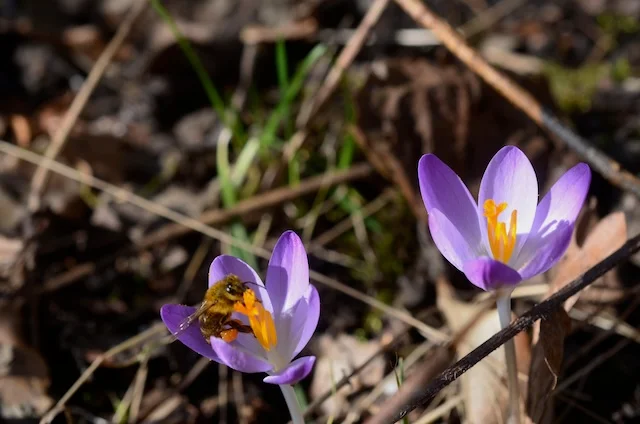
Crocuses are a must-have in any spring garden. Here, a honeybee has already gathered quite a bit of pollen in the baskets on its hind legs, known as pollen baskets.
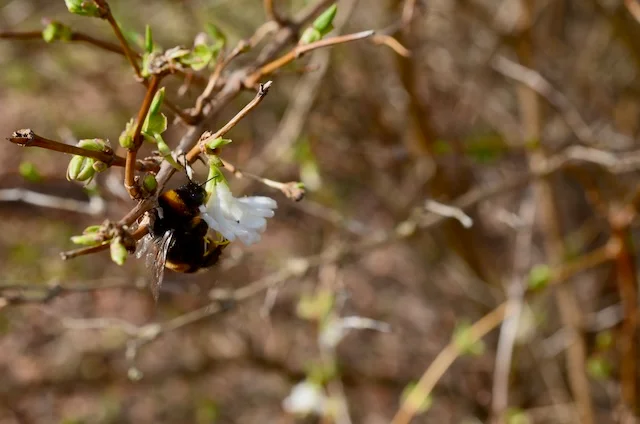
Even before the goat willows (Salix caprea) bloom, the fragrant honeysuckle (Lonicera x purpusii) opens its flowers and attracts with nectar-rich food. Regular guests include the earth bumblebee queens, who also venture out of their winter quarters very early in the year.
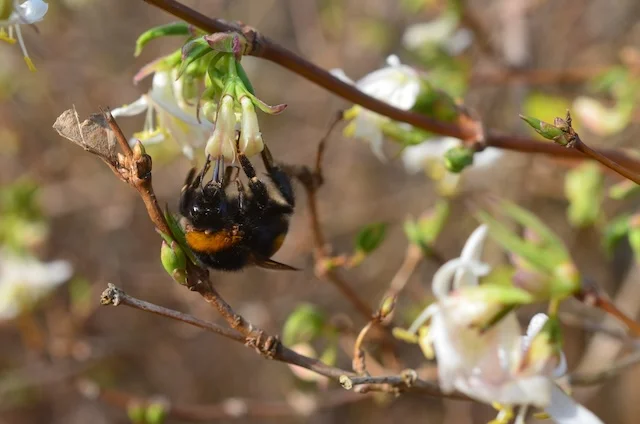
Some bumblebees have mites settled on them (visible on the first yellow band). They feed on the waste in the bumblebee nest and then use the "plush mites" as a means of transport out into the world.