
The Tree of 'Chorizos'
In the years I have spent as a trainer, I sometimes resort to these associations of ideas to help students remember a tree, a technique, or a tool...
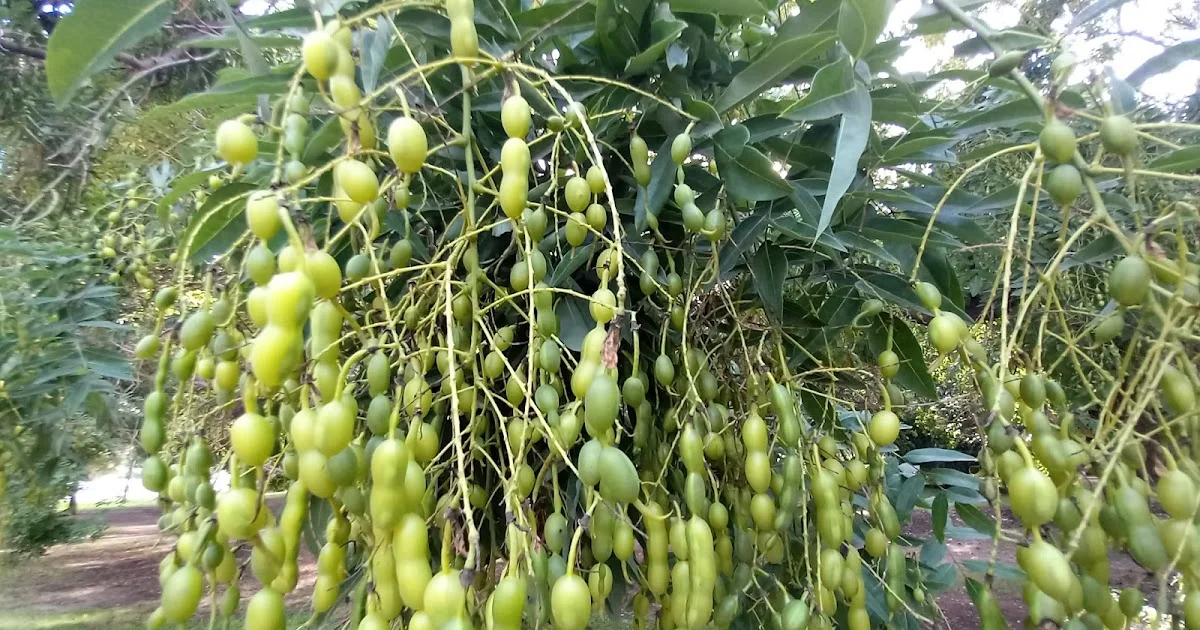

In the years I have spent as a trainer, I sometimes resort to these associations of ideas to help students remember a tree, a technique, or a tool... for example, when they learn about Liquidambar, many find it easier to associate it with "COVID" due to the shape of its fruits, and in this case
to balloon animals or if you are more "foodies," to strings of chorizos. It may seem like a joke, but it works.
Today, we are talking about the Japanese Acacia Sophora japonica or Styphnolobium japonicum depending on whether you consult an old or new book. Although it might seem that this plant is native to the land of the rising sun, it actually originates from neighboring China, from where it was introduced to Japan, where it has thrived and then spread to the gardens of the old world a few centuries ago (around the 18th century, but it didn't become common until the 20th).
This tree belongs to the Leguminosae or Fabaceae family, is deciduous, its leaves are compound with odd leaflets (odd-pinnate), can reach over 15m in height, and has a globular/rounded crown. The whitish aromatic flowers (which appear in mid-summer when many species have already lost theirs), attract a multitude of pollinators, are grouped in inflorescences that then produce legumes that narrow between the seeds, giving the fruit the appearance of a string of sausages or a "balloon animal." It has no thorns like other well-known "acacias." There are varieties with different growth habits, including a weeping form (hanging branches) widely used in gardening, others with pinkish flowers, variegated leaves, twisted branches...

Sophora japonica in a park in Valencia
These trees are widely used as they are resilient and can withstand "whatever is thrown at them." They adapt to cold, heat, drought, poor soils, environmental pollution, and proximity to the coast with its harmful salt that burns or kills other plants. They prefer sunny exposures and clay soils as long as they maintain some moisture. As you can see, this Sophora is quite versatile. In some regions, it has adapted so well that it is considered invasive; in Spain, at least for now, although one must be cautious with these matters... in my city, I only know a few specimens, and they do not seem to thrive beyond their tree pits... and it's better that way.

Japanese Acacias in a park in Madrid, also weeping variety.
They provide good shade and are widely used in streets, parks, and gardens in many cities. Since they grow relatively quickly, they tolerate pruning (if not very thick branches, as this can cause injuries that, when bearing weight, on windy days or when a pruner climbs, can cause the branch to break), resist pollution... they provide shade and are decorative.
It seems they have some medicinal properties, and their wood is used in cabinetmaking... I cannot elaborate on this as I am not familiar with it.
They can be propagated from seeds, but if we want to maintain the variety, we will have to multiply vegetatively, either by cuttings or grafting...

Another weeping variety of Sophora in Palencia (with a p)
It is resistant to pests but can be attacked by diseases, although as I said, it is a relatively tough plant. As a downside, the falling flowers and fruits can create "mess" on sidewalks and paths, causing usual inconveniences for some passersby, but especially for cleaning and gardening service workers who have to deal with their removal...
It is not a tree that "drives me crazy," but lately, every time I see a specimen, I smile. I smile, thinking that somewhere, someone, when they see a Japanese Acacia, may not remember that it was a Sophora japonica or Japanese Acacia, but they will surely remember the name we gave it: The Tree of Chorizos (and by extension, of me).
I hope that now you will be the ones who smile at my anecdote when you see this tree.
See you next week!!!
P.S. By the way, I cannot say goodbye without mentioning that the fruits are NOT edible for humans and can affect our health.