
Really Winter | Wild Gardening
More winter is hardly possible. For a good two weeks, we had snow, then a week of frost, and now the second wave of white – such an intense winter feeling hasn't been experienced here in ages.
More winter is hardly possible. For a good two weeks, we had snow, then a week of frost, and now the second wave of white – such an intense winter feeling hasn't been experienced here in ages. This means for the garden: The only tasks that need to be done regularly are shoveling snow, freeing bamboo from heavy wet snow, and of course, providing the birds with enough food several times a day. Even tree pruning is off the table due to the freezing temperatures. However, a different kind of “pruning” is taking place: Our deer are strolling through the garden in full family strength, nibbling on just about everything green they can reach. If something delicious is suspected under the snow, energetic hoof scraping quickly clarifies the situation – beneath the still uncollected leaves, there are some chestnuts and acorns. Particularly clever specimens lick oats out of the bird feeder with their long tongues. No wonder our garden is so popular with the deer.
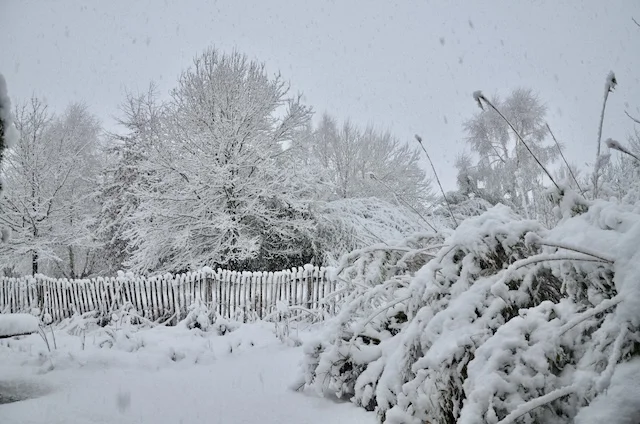
Winter Wonderland at the beginning of January: For the first time this season – by our standards – there is a decent amount of snow. The Fargesia, as well as some Phyllostachys species with thinner stems, are spreading out nicely and blocking some paths.
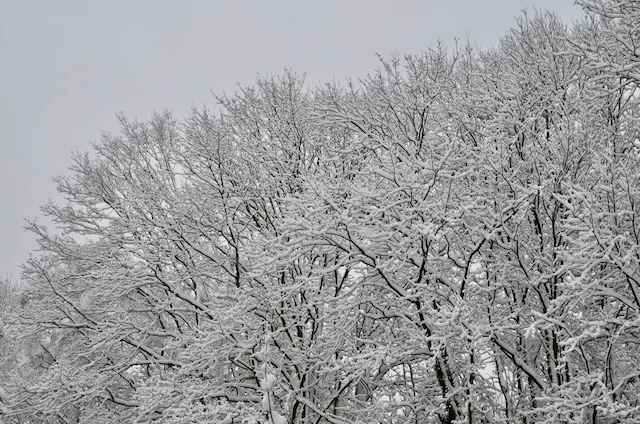
The large maples are unaffected by the weight of the snow.
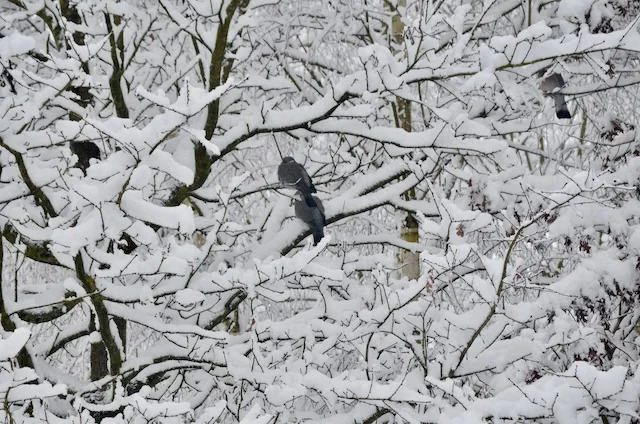
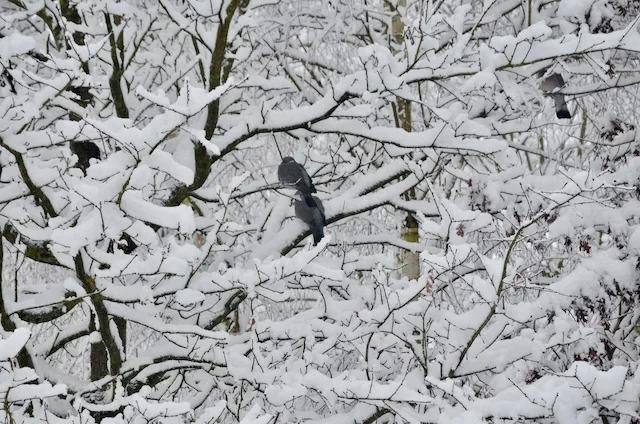
Every fine branch is adorned with a delicate white band, yet the ringdoves still land on them.
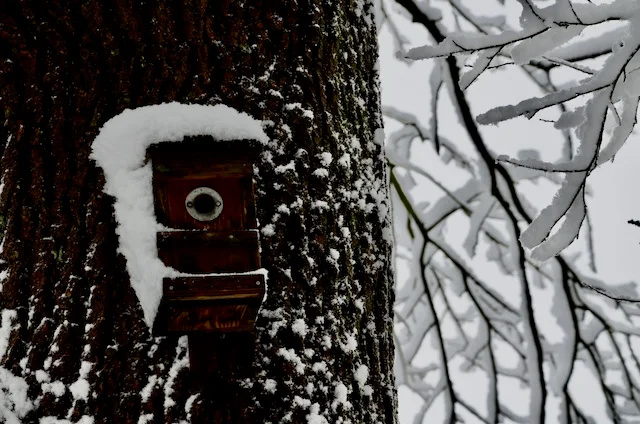
Some birds or squirrels prefer to spend the cold nights sheltered in the nesting boxes.
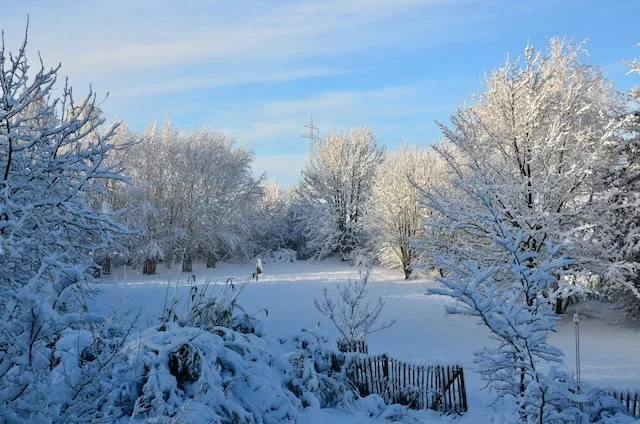
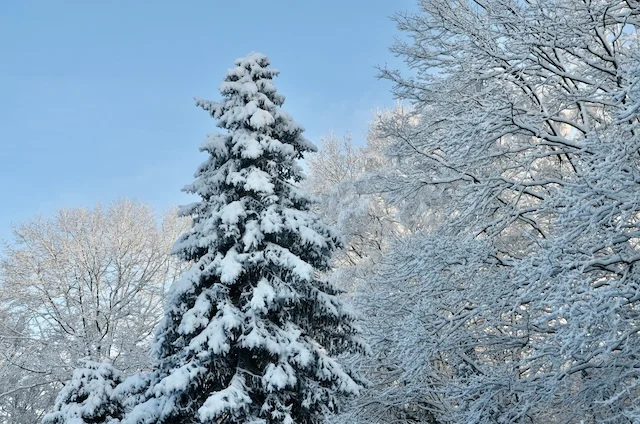
The sun beautifully highlights the white splendor.
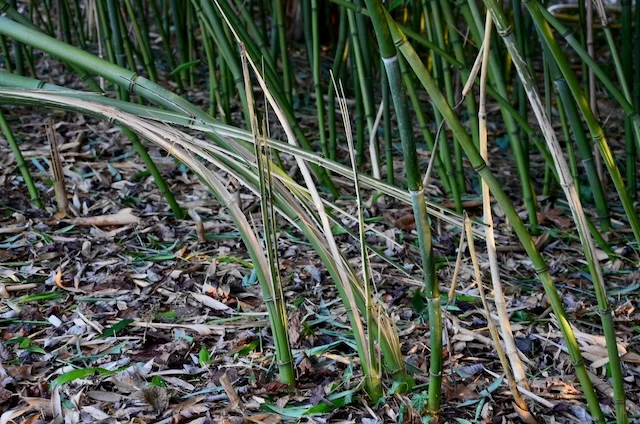
After the first snow melt, the unpleasant consequences become apparent: Strong gusts have blown so many heavy flakes onto some stems of Phyllostachys bissetii that they have split under the weight. What a shame. Nevertheless, I am happy about the renewed snow: It contributes to insulation and ensures that the evergreens can supply themselves with water for longer during prolonged frost periods.