
Old Winter Damage, New Growth | Wild Gardening
Spring gardening continues with dry conditions. Tackling winter damage on bamboo and observing new growth in various plants and flowers.
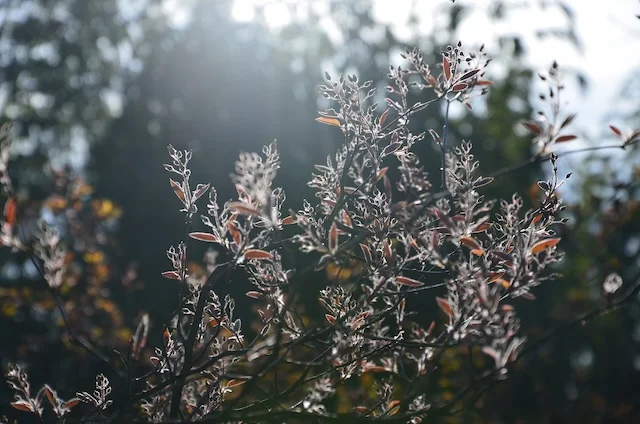
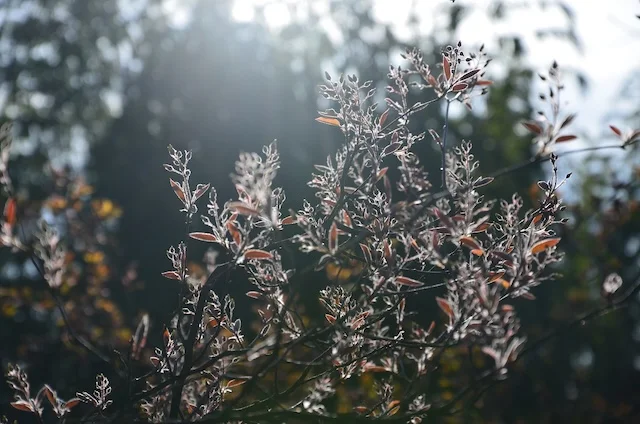
And the spring gardening continues. With only 26.5 mm of precipitation, April was very dry for us – not exactly suitable for the nature that is blooming again, but perfect for working in the green. First, we had to tackle the unsightly sight of the stems of my favorite bamboo Phyllostachys vivax 'Huangwenzhu' that were damaged by the prolonged frost, before the new growth starts. A battery-operated saw is invaluable for these bamboo clearings: it allows us to precisely saw off the approximately ten-meter-high dead stems close to the ground. Nevertheless, each of the beautiful stems hurts the heart – of course, it always affects the particularly well-grown ones.
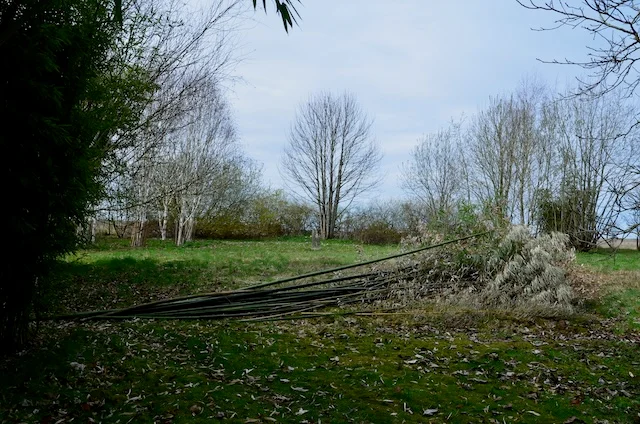
Although the minimum temperature of minus 15.4 degrees Celsius on a January day was not so dramatic, the long frost period in January/February did take a toll on some of the lushly leafed stems of Phyllostachys vivax 'Huangwenzhu', causing them to die off.
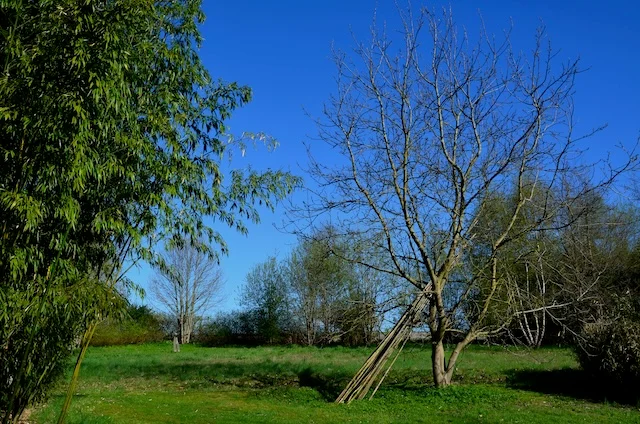
We pruned the most beautiful specimens, cutting off the upper part. They are perfect as decorative elements and for other uses in the house and garden. The walnut serves as a temporary storage.
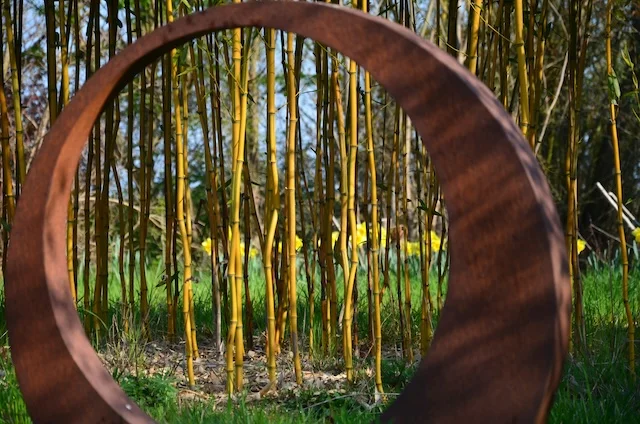
Here, Phyllostachys aureosulcata 'Spectabilis' offers significantly smaller stem dimensions (this plant is also much younger, but will certainly not reach ten meters in height with us). The yellow daffodil flowers in the background correspond with the buttery yellow of the bamboo stems.
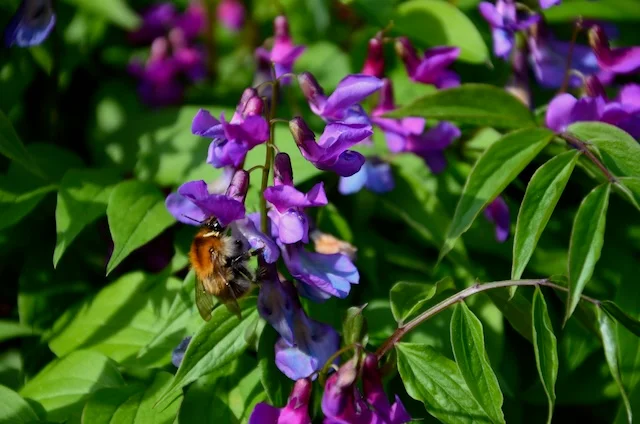
In April, not only does the flora finally awaken from its winter slumber, but more and more insects also crawl out of their quarters and set out in search of food. A popular landing spot is the spring vetch (Lathyrus vernus). Unfortunately, we can only keep it directly at the house in a pot – hidden from the deer – as the fresh pea shoots are otherwise enjoyed before blooming. Here, a bumblebee has discovered one of the pots in front of the house.
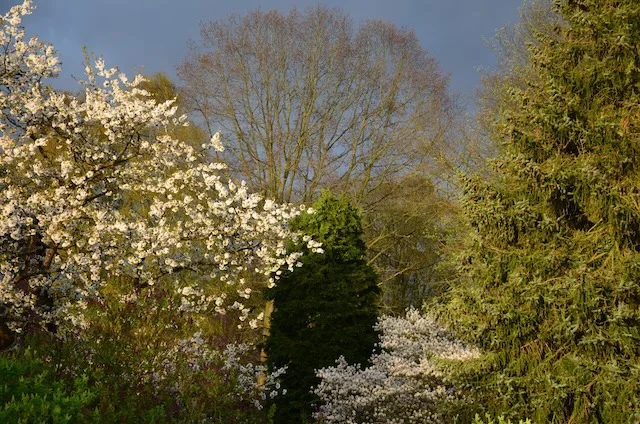
The white flowers of the cherries and copper beech (Amelanchier lamarckii) are other well-visited bee pastures. It will take a few more days until the fragrant lilac flowers open.
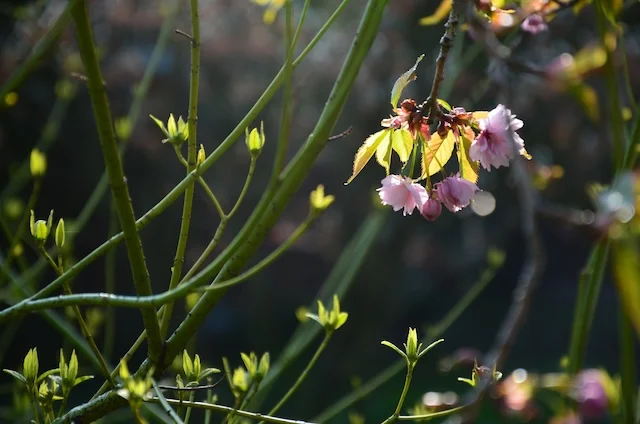
Only in May does the yellow-stemmed dogwood (Cornus stolonifera 'Flaviramea') bloom, although the leaf growth begins already now.
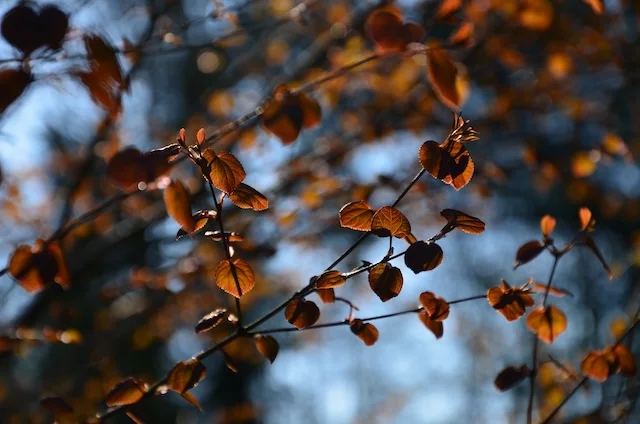
Among the most enchanting leaf growths for me is that of the katsura tree (Cercidiphyllum japonicum).
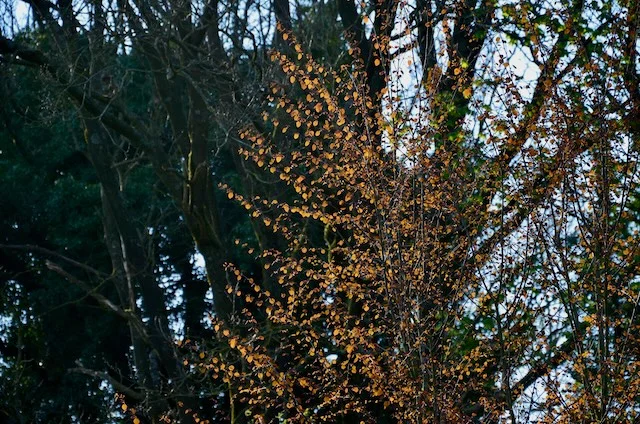
Backlit, the young leaves glow golden red in front of the stately pedunculate oaks.
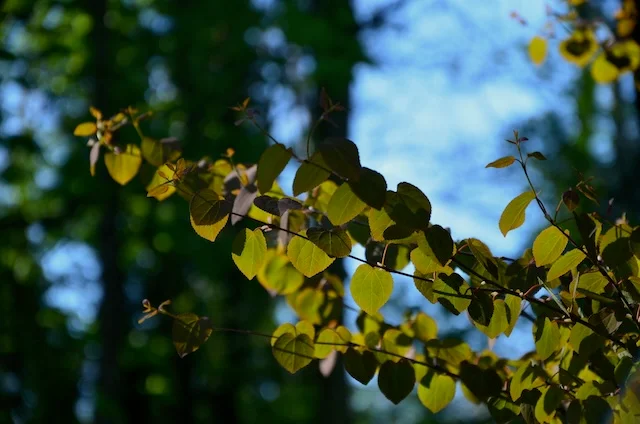
After a few days, the color changes to bluish-green.
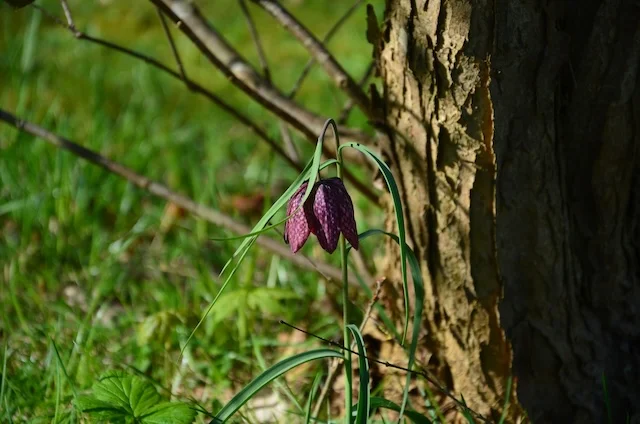
Next to the trunk of the katsura tree, a checkered lily (Fritillaria meleagris) has settled.
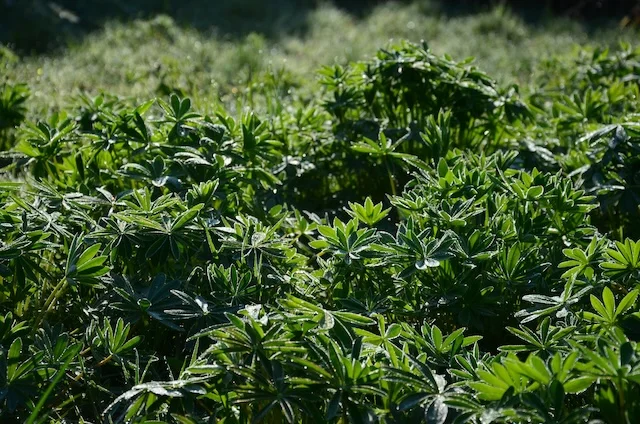
The finger-like leaves of the multi-leaved lupine glisten in the morning dew. Lupinus polyphyllus can spread well in our meadows – its bitter alkaloids protect it from the omnipresent deer browsing.