
Ficus elastica 'Tineke' - Flowering Balcony - The Gardening Blog
A comprehensive guide to cultivating Ficus elastica 'Tineke', including care tips and insights from an experienced gardener.
- by francescodiliddo
- article from May 21, 2026
- No comments
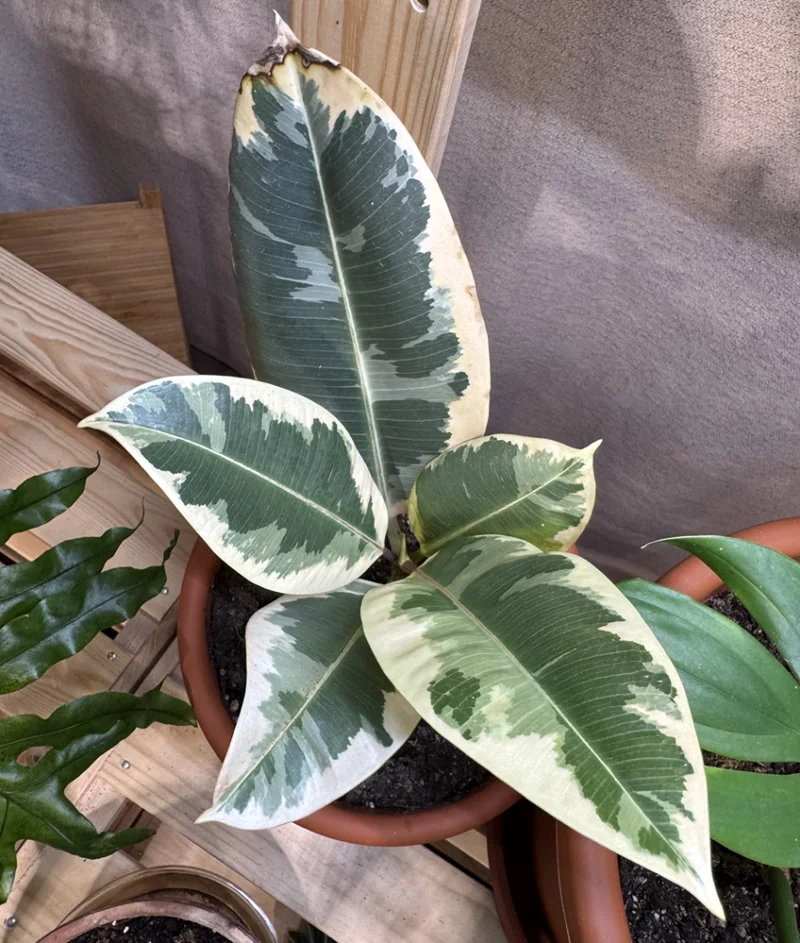
A cutting of Ficus elastica ‘Tineke’ was gifted to me in February 2025 by my dear friend Esmeralda during my move, and I planted it directly in the ground. I have been cultivating Ficus elastica for 14 years (it has survived two moves), and due to lack of space, it has been living indoors (in the attic) for a year and a half. It is an easy-to-cultivate plant that, in southern Italy, in areas with a mild climate, can be grown in the garden, reaching truly significant dimensions. I placed it under the skylight where it receives plenty of light and grows lushly. Below, I share my cultivation tips and some snapshots from these days. Have a great day, Francesco Diliddo.
Curiosities and Care Tips for Ficus elastica ‘Tineke’
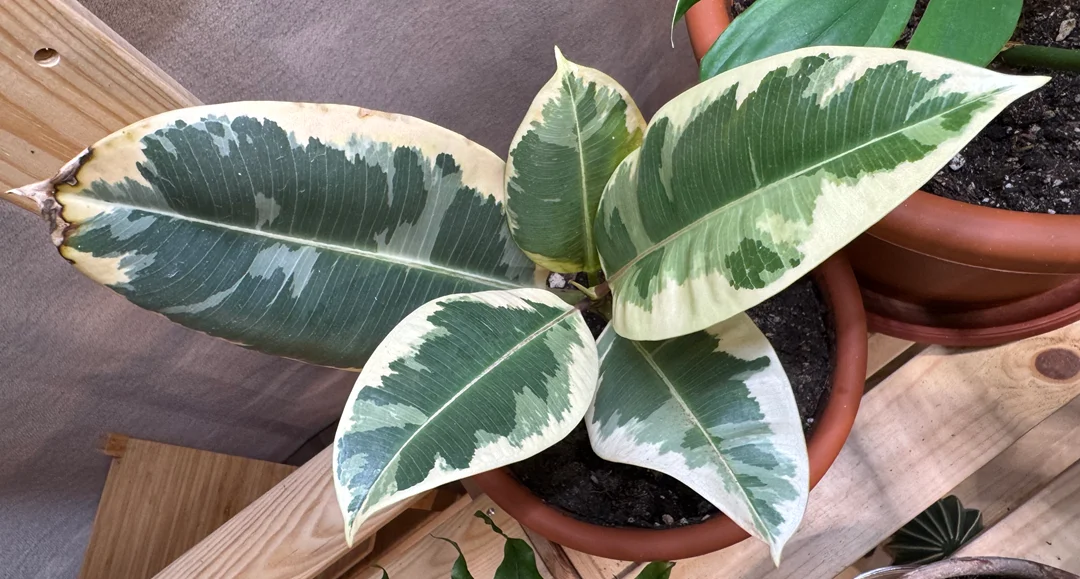
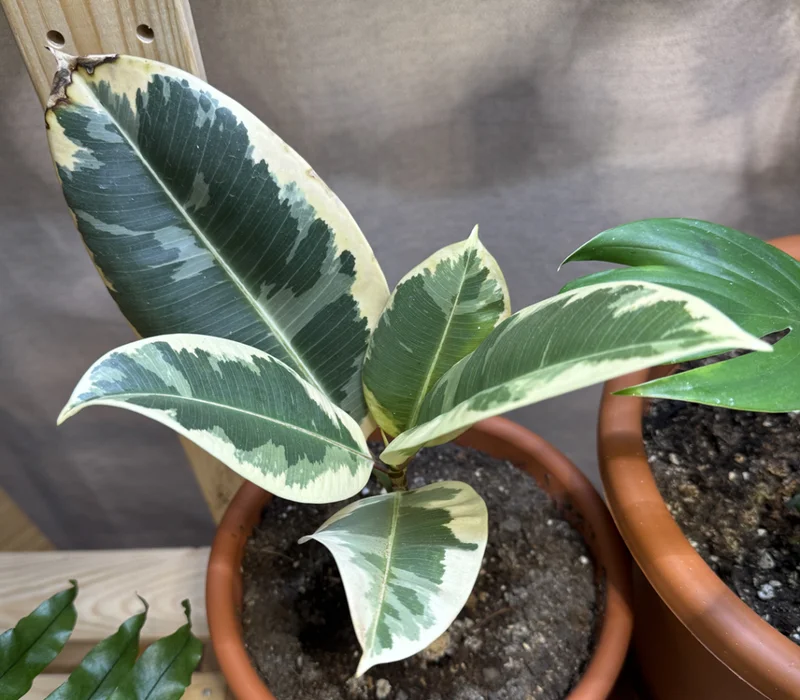
The Ficus elastica is native to tropical Asia (particularly India and Malaysia) and belongs to the Moraceae family. Commonly known as the “Rubber Tree” or “Rubber Fig,” it features large, glossy, leathery leaves and can reach heights of up to 30 meters in its natural habitat. In the past, before the intensive use of Hevea brasiliensis, its latex was extracted to produce commercial rubber. Among modern varieties, the famous Ficus elastica ‘Tineke’ stands out with its spectacular camouflaged variegations that blend from sage green to cream. Regarding its position, it adapts to any form of lighting, and if we decide to place it in the sun, we should proceed with gradual exposure. The cutting of Ficus elastica ‘Tineke’ that I grow under grow lights requires even brighter environments since poor lighting causes the loss of light shades. Indoors, it is sensitive to cold drafts, nearby radiators (dry air in winter), and does not appreciate frequent relocations. As for watering, it should be watered only when the top 3-5 centimeters of soil are completely dry. It is always recommended to use a porous substrate, composed of potting soil for green plants enriched with perlite or pumice to avoid waterlogging. Excess water manifests as yellowing and dropping of lower leaves or the appearance of dark spots. For fertilizing Ficus elastica ‘Tineke’, I recommend a balanced liquid fertilizer for green plants (rich in nitrogen) once a month, exclusively in spring and summer. To keep the leaves beautiful and healthy, it is helpful to clean them with a damp cotton cloth as dust blocks light and slows down photosynthesis. If a leaf or branch of the Ficus elastica is cut, the plant secretes a thick, sticky milky sap that contains natural rubber and serves as a defense mechanism to seal wounds and keep away herbivorous insects.
- balcony, ficus elastica, ficus elastica tineke, flowers, gardening, garden, green