
100 Percent Deer Resistant | Wild Gardening
Every year, May confronts me with an emotional dilemma: I look forward to the day when I discover the first young fawn in the garden. However, every new addition to our wildlife population means another hungry mouth that will be guided to various delicacies in our garden.
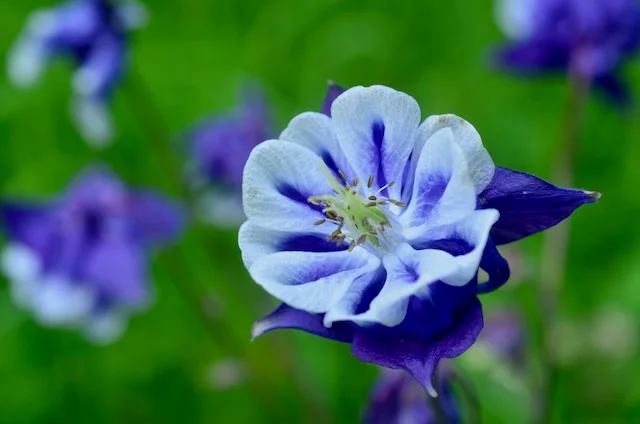
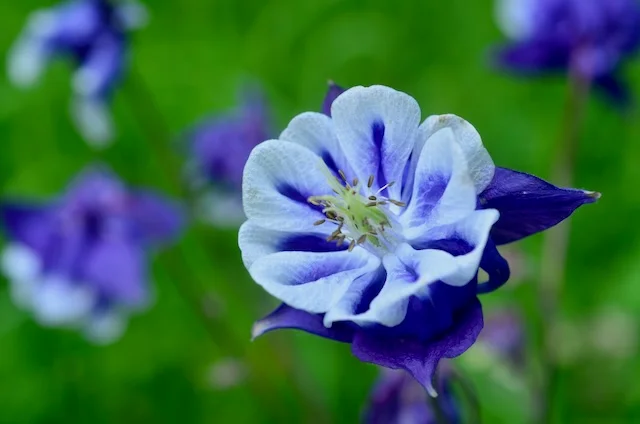
Every year, May confronts me with an emotional dilemma: I look forward to the day when I discover the first young fawn in the garden (and I wonder each time how many days I might have overlooked it thanks to its good camouflage). At the same time, every new addition to our wildlife population means another hungry mouth that, after weaning from its mother's milk, will be guided straight to various delicacies in our garden by its mother. The consequence: no more spontaneous purchases of any kind of plants. Thus, only perennials that have proven to be absolutely deer resistant, or wildlife-resistant, in our garden for decades are allowed as new acquisitions. Not infrequently, this requires a great deal of willpower...
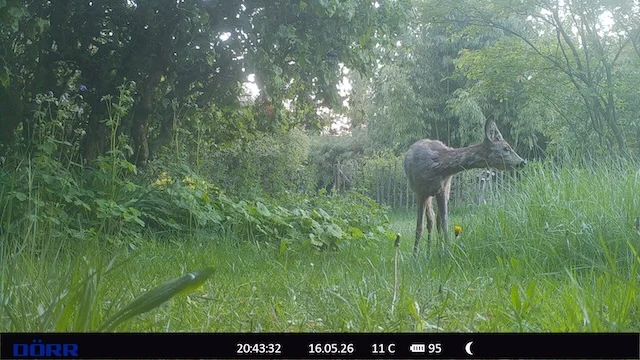
Hardly any greenery is spared from their curiosity – followed by at least a small taste test: The roe deer have seen our garden as a gourmet restaurant with self-service for years.
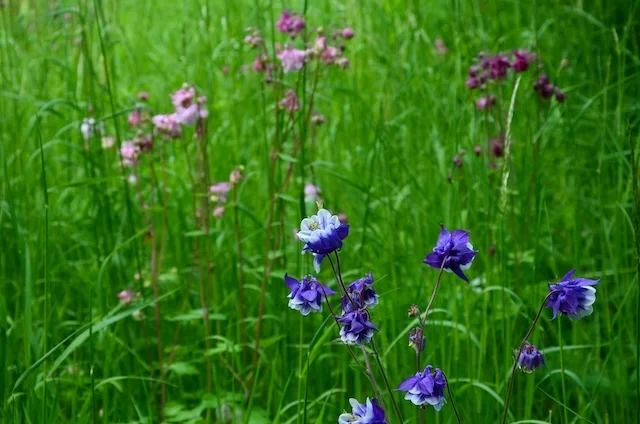
Among the few selected species that do not appear on their menu is the Common Columbine (Aquilegia vulgaris). It belongs to the buttercup family and is slightly toxic due to a glycoside – perhaps a protection against deer browsing. However, bees and other pollinators benefit from its nectar and pollen. The fact that toxicity alone does not guarantee protection from browsing is evident with ivy: Despite the saponins contained in the plant parts, leaves and berries are enjoyed.
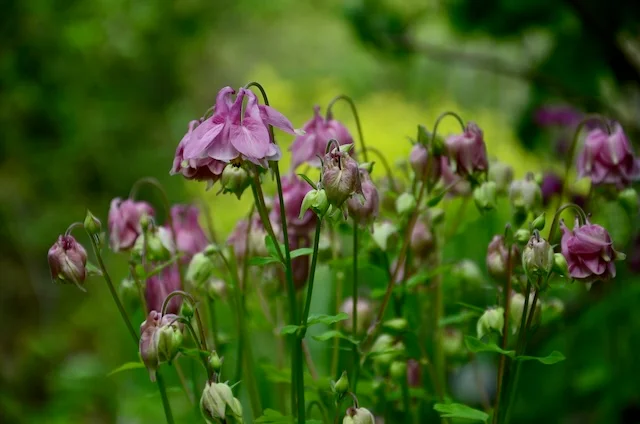
Columbines self-seed vigorously in our garden and hybridize strongly.
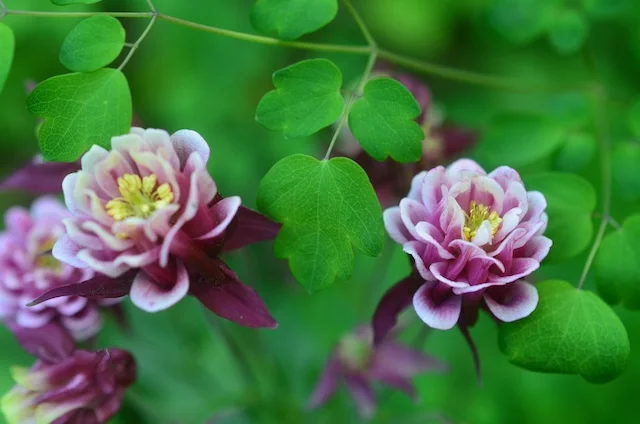
The color palette of the flowers is broad.
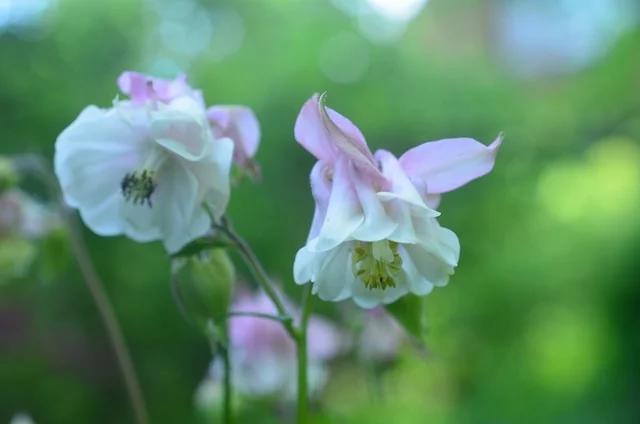
From delicate white-pink
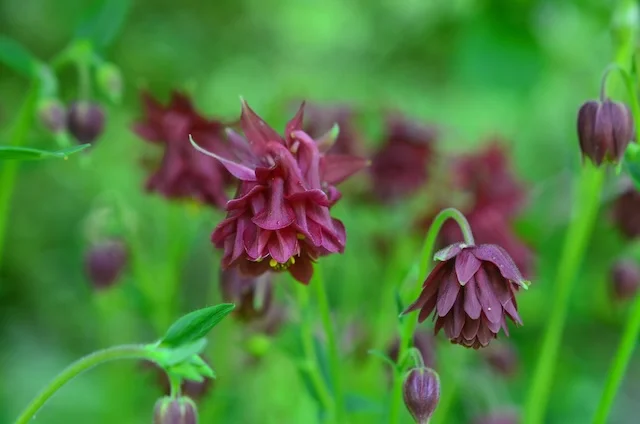
To dark red
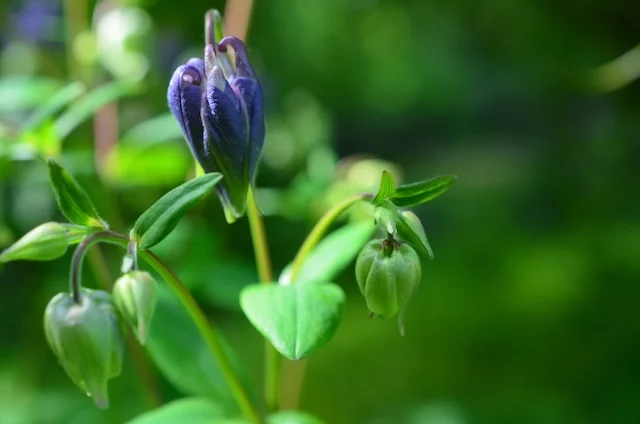
And blue.
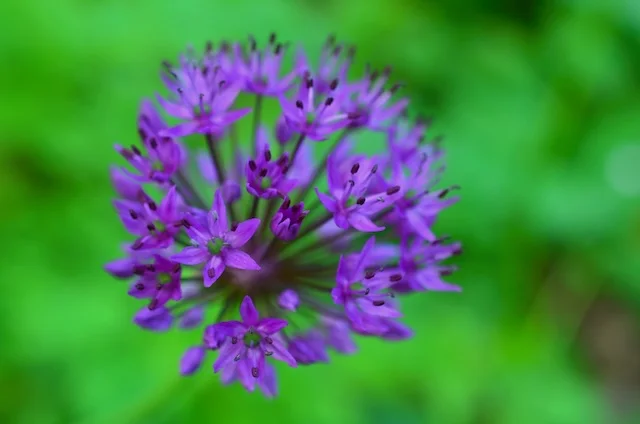
Also avoided by the roe deer is the Purple Allium (Allium 'Purple Sensation'). Here, sulfur-containing leek oils and essential oils contribute to making the four-legged creatures lose their appetite – but not the insects.
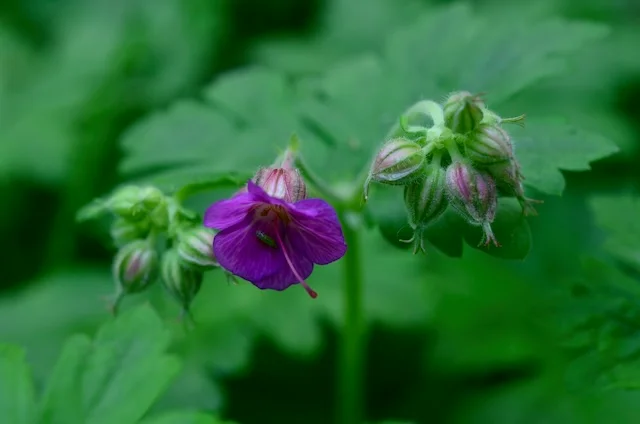
An absolute no-go for deer is also the drought-resistant Balkan Geranium (Geranium macrorrhizum): Essential oils in this plant are the reason for its strongly aromatic leaves – they successfully keep the animals at bay.
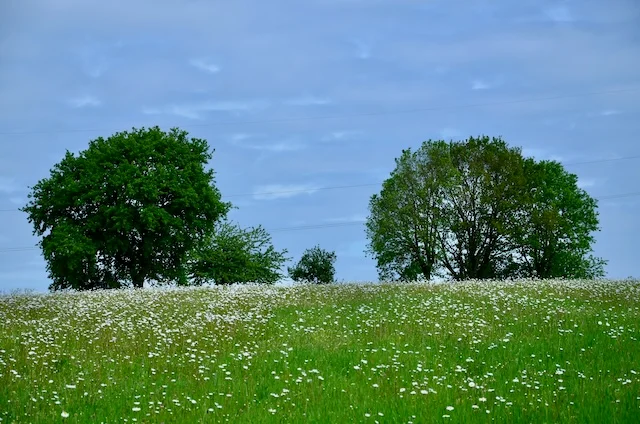
Our flowering field is not only a popular hiding place for partridges and rabbits; the deer also disappear lying down among the grown wildflowers and grass blades. Due to the sheer amount of greenery, the browsing in the field goes unnoticed.
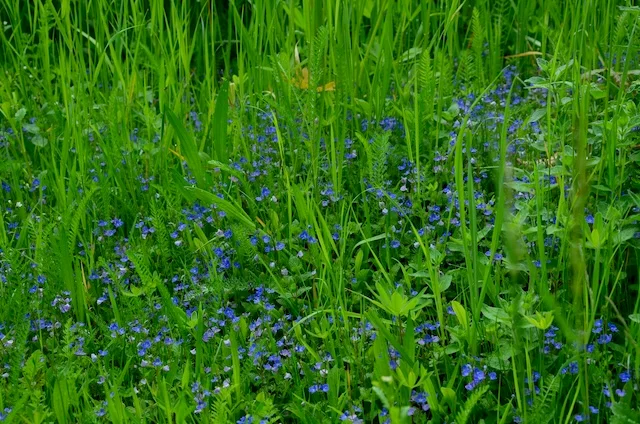
Creeping Speedwell (Veronica chamaedrys) does not seem to be highly regarded by the deer. I have never seen a bitten-off stem on this plant. It spreads well in the meadows through its creeping roots.
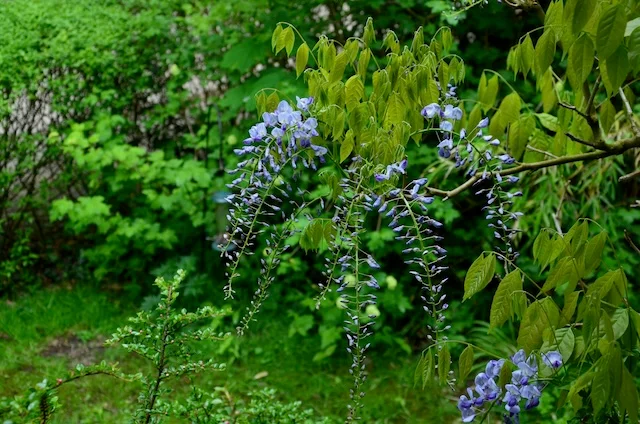
Among the woody plants, there are also some species that are safe from wildlife browsing (at least I haven't noticed any since 2005). This includes the Chinese Wisteria (Wisteria sinensis): From May onwards, this vigorous climber is adorned with fragrant flower clusters – they exert a magnetic effect on insects. However, the plant is highly toxic in all parts (including alkaloids and glycosides), which evidently does not please the roe deer.
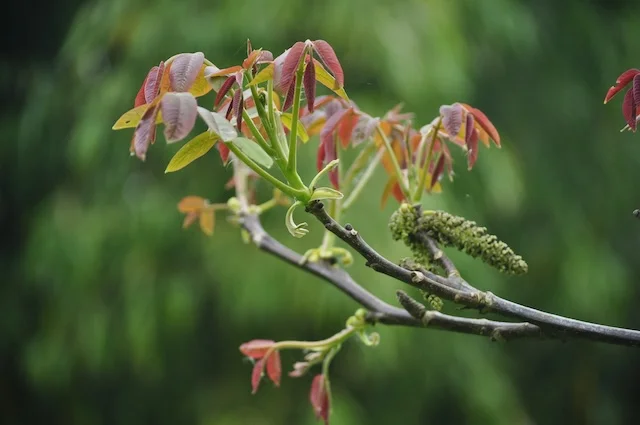
Tannins and essential oils in the leaves may be the reason why the Walnut (Juglans regia) is also left alone by wildlife. However, the fruits that ripen later in the year have a large fan base among birds and squirrels.