Choosing the Right Height for Your Garden Fence
Choosing the right height for your garden fence is essential for privacy, security, and compliance with local regulations. Learn about optimal heights based on purpose and local guidelines.
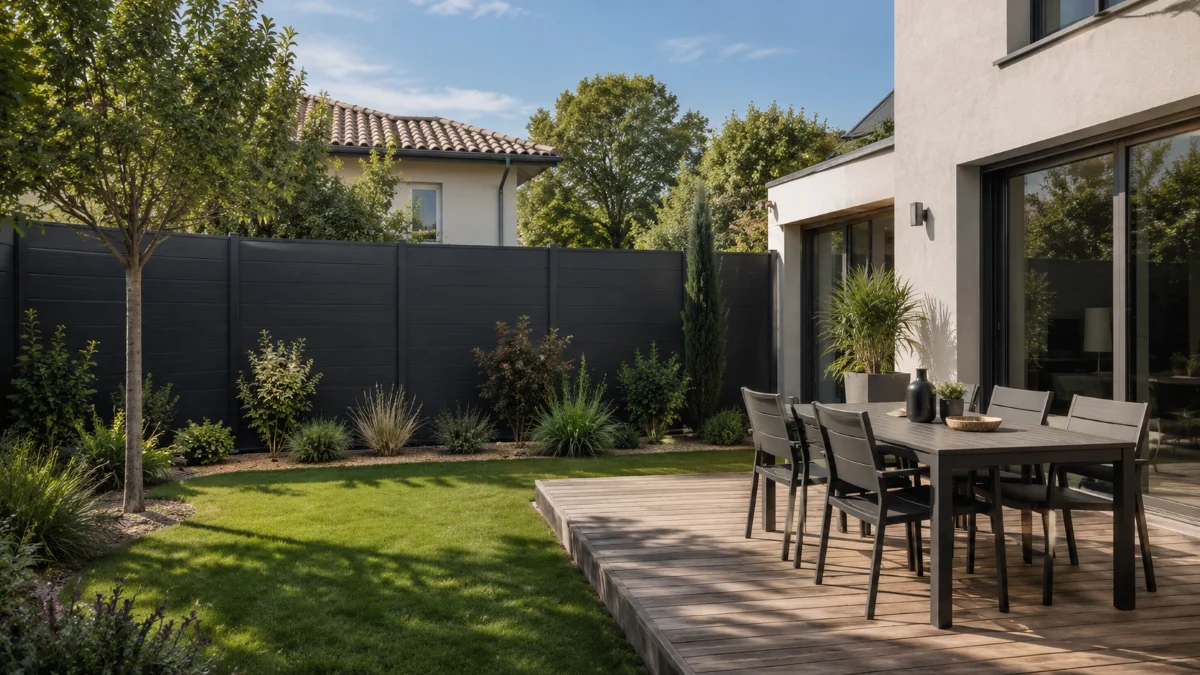
When it comes to garden fencing, striking a balance between defining your property, ensuring security, and maintaining privacy is essential. For most gardens, a fence height ranging from 1.50 to 1.80 meters achieves this balance effectively. A lower fence, between 1 and 1.20 meters, can delineate boundaries or enhance an entrance, while a height of 1.80 to 2 meters is often favored for privacy around patios or for enhancing security.
However, the ideal height is influenced by several factors including the terrain configuration, the presence of children or pets, wind exposure, and particularly, local zoning regulations.
Determining Fence Height Based on Purpose
Before selecting materials like panels, wire, or palisades, it’s crucial to define the primary purpose of the fence. A decorative fence for enhancing the entrance will differ in height from one designed to shield a terrace.
| Primary Objective | Generally Suitable Height | Possible Solution | |---------------------------------------|---------------------------|----------------------------------------------| | Decorate and structure the entrance | 1 to 1.20 m | Lattice, railing, or decorative panels | | Clearly delineate the property | 1.20 to 1.50 m | Flexible wire or rigid panels | | Secure the garden for young children | 1.50 to 1.80 m | Rigid panels and secure gate | | Prevent a dog from escaping | 1.50 to 2 m depending on the animal | Rigid wire with possible underground support | | Shield from views | 1.70 to 2 m | Privacy fence, slats, or screening | | Enhance property security | 1.80 to 2 m | Rigid panels, matching gate and fence |
These dimensions serve as practical guidelines rather than universally authorized heights. Always verify local regulations before purchasing materials.
A 1.20 Meter Fence for Delimitation
A fence at a lower height is suitable for marking property boundaries without creating a sense of enclosure. It allows light and visibility to flow, making it ideal for smaller gardens.
This height works well around vegetable patches, along driveways, or in front of homes in quiet areas. An open structure helps maintain a visual connection with the street while clearly identifying the property.
However, a fence of 1 or 1.20 meters offers minimal protection against prying eyes and can be easily crossed. Therefore, it may not suffice in areas with agile dogs, gardens directly facing the street, or where enhanced security is needed.
A 1.50 Meter Fence for Security
At approximately 1.50 meters, a fence becomes more deterrent while remaining relatively unobtrusive. This height is often suitable for family gardens, residential neighborhoods, and spaces where it is necessary to contain small to medium-sized pets.
It also allows for the possibility of adding greenery along the boundary. Climbing plants, shrubs, or a hedge set back can complement the fence without creating a solid wall.
Consideration of the pet's behavior is essential. Some dogs might jump over a fence, while others may dig underneath it. In such cases, incorporating a base or underground mechanism may be as crucial as the visible height.
A 1.80 Meter Fence for Privacy
A height of 1.80 meters tends to be the most versatile compromise for residential gardens. It effectively limits direct sightlines when neighboring properties are at similar elevations while remaining compatible with various fence panel styles.
This height is particularly relevant around terraces, dining areas, or pools. However, it may not always be necessary to have a solid privacy fence all around. Targeted screening, placed strategically against the most intrusive views, can preserve light and reduce wind exposure.
For comparing panels, posts, bases, and necessary accessories, it is advisable to consult resources like Clôture et Jardin. Calculating the total height after installation is vital, rather than focusing solely on the panel height.
Is a 2 Meter Fence Always Allowed?
No, a 2-meter fence is not automatically permitted everywhere. Local zoning plans may impose maximum heights, specify levels of openness, or dictate materials and colors. Regulations may also differ between fences facing the street and those separating two gardens. Additionally, developments or co-ownerships may have their own requirements. Thus, checking with the local urban planning office is essential before ordering panels. This verification is especially critical in protected areas, near historical monuments, or in municipalities with specific fence regulations.
Do You Need to Submit a Work Declaration?
In general, installing a fence other than a wall may not require formalities. However, a prior declaration is necessary when the property is in a protected area, in a zone defined by the local zoning plan, or in a municipality that requires declarations for fences. For a fence measuring 2 meters or more, a declaration must also be filed. This threshold does not mean that all fences or panels below 2 meters are automatically authorized; they must still comply with local zoning regulations.
According to Article 663 of the Civil Code, in the absence of specific local regulations, certain separation walls between neighbors must have a minimum height of 2.60 meters in municipalities with fewer than 50,000 inhabitants and 3.20 meters in larger cities, including the cap. These values represent minimum heights rather than maximums. This provision pertains specifically to dividing walls as defined by the Civil Code and should not be interpreted as a blanket permission to install any fence of 2.60 or 3.20 meters.
Choosing the Height in Presence of Overlooking Neighbors
To eliminate overlooking issues, the fence height should be determined based on the actual positions of people and neighboring openings. A 1.80-meter fence can be effective when both gardens are at the same level, but it will be less effective if the neighboring house is elevated or if its windows are on an upper floor.
In such cases, significantly raising the entire fence height may not be the best solution. It might be more effective to combine several features:
- A reasonably high fence;
- Localized screening near the terrace;
- A pergola or shade sail;
- Shrubs planted back;
- A small tree positioned correctly.
This combination allows for protecting living spaces without unnecessarily depriving the garden of light.
Choosing a Fence Height for Wind Exposure
The taller and more opaque a fence is, the more wind resistance it will encounter. In exposed areas, on open terrain, or by the sea, a completely solid 2-meter fence requires properly sized structures, posts, and foundations.
A lattice or semi-opaque fence may be preferable in such cases. It filters views while allowing some air circulation. Before adding screening slats to an existing fence, it is also important to ensure that the panels, posts, and their anchoring can withstand this additional stress.
Calculating the Total Height of the Fence
The height of the panel does not always correspond to the final height of the installation. Considerations include:
- The base made of concrete or composite;
- The height of the rigid panel;
- Any existing wall;
- The cap placed atop a wall;
- Any differences in ground level.
For instance, a 1.53-meter panel installed on a visible 25-centimeter base results in a total height close to 1.78 meters. This total height must be compared to local regulations.
In sloped terrain, the measurement method may vary according to local regulations. It is advisable to present a sketch with different levels to the urban planning office to avoid unintentional exceedance.
Private vs. Shared Fences: What’s the Difference?
A private fence must be entirely installed on the owner’s property without encroaching on the neighbor’s parcel. Prior to construction, a boundary survey may be advisable if the exact limit is uncertain. The right to fence one’s property remains subject to compliance with local zoning regulations, servitudes, and neighbors’ rights. A shared fence belongs to both neighbors, and its placement, funding, and maintenance must be agreed upon jointly. For a shared wall, maintenance costs are typically divided among co-owners proportionally to their rights. Even if a fence complies with the height stipulated by the local zoning plan, it must not create undue disturbances for neighbors, such as disproportionately blocking sunlight from the neighboring property.
The Best Height for Your Fence
A height of 1.50 to 1.80 meters is suitable for most residential gardens. This range secures the property and reduces overlooking without creating a solid wall effect. For simple delineation, 1 to 1.20 meters may suffice. For strong screening, a height of up to 2 meters may be necessary, depending on specific needs and local regulations.
FAQ: Garden Fence Height
- What height fence should I choose to avoid seeing my neighbors?
- Can I install a 2-meter fence without permission?
- Does the base count towards the height of the fence?
- Can my neighbor refuse my fence?
Understanding the appropriate height for your garden fence is crucial for ensuring privacy, security, and compliance with local regulations. By carefully considering your needs and local guidelines, you can create an effective barrier that enhances your outdoor space.